Understanding the Notice of Action (Form 14C) under the Courts of Justice Act
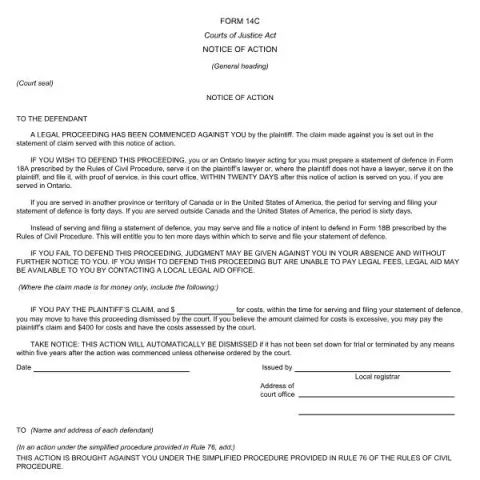
The Notice of Action (Form 14C) is an official legal document issued under the Courts of Justice Act in Canada. Its primary purpose is to formally inform a defendant that legal proceedings have been initiated against them by a plaintiff. This notice serves as the official starting point for civil litigation, setting the stage for the defendant's response and subsequent legal process.
Purpose and Significance of the Notice of Action
The Notice of Action functions as the official communication that a legal claim has been filed in court. It provides essential details about the nature of the claim, identifies the parties involved, and outlines the necessary steps for the defendant to respond. Serving this notice ensures that the defendant is aware of the proceeding and has an opportunity to defend themselves within the legal timeframe.
Failure to respond to this notice can result in a default judgment against the defendant, meaning the court may decide the case in their absence. Therefore, understanding the contents and implications of the Form 14C is critical for anyone served with it.
Preparing a Response: How to Defend Yourself
Filing a Statement of Defence
If you wish to contest the claim, you or your lawyer must prepare a Statement of Defence using Form 18A, as prescribed by the Rules of Civil Procedure. This document must be served on the plaintiff's lawyer or the plaintiff directly if they are unrepresented. It must then be filed with proof of service at the court office within:
- Twenty days if served in Ontario;
- Forty days if served in another Canadian province or territory or in the United States;
- Sixty days if served outside Canada and the United States.
Alternatively, you can serve a Notice of Intent to Defend using Form 18B, which grants an additional ten days to serve and file your defence.
Legal Aid and Financial Assistance
If you are unable to afford legal representation, legal aid services may be available to assist you. Contact your local legal aid office to inquire about eligibility and support options.
Important Deadlines and Consequences
Timely response is crucial. If you do not serve and file your defence within the prescribed period, the court may issue a judgment against you in your absence, without further notice. This can lead to enforcement actions such as wage garnishments or property liens.
In cases where the claim involves money only, and you choose to pay the amount claimed (plus costs), you may request the court to dismiss the proceeding. If you believe the costs claimed are excessive, you can pay the claim plus a set amount (e.g., $400 for costs) and request a court assessment.
Fill in your form directly online
No printing: type your details into the boxes of the official form, tick, then download the PDF ready to send.
- 1Type into the form boxes
- 2Tick in one click
- 3Save and download the PDF
Additional Notices and Limitations
The Notice of Action will be automatically dismissed if the case has not been set down for trial or terminated within five years of commencement, unless the court orders otherwise. This emphasizes the importance of timely action to protect your legal rights.
Contact and Filing Information
The notice includes details about where and how to file your response, including the address of the court office and the name of the local registrar. Ensure your defence documents are properly prepared, served, and filed within the specified deadlines to avoid default judgments.
Summary
The Notice of Action (Form 14C) is a fundamental component of civil litigation in Ontario, serving as the official notification of legal proceedings. Understanding its purpose, preparing an appropriate response, and adhering to deadlines are vital steps in protecting your legal interests. If in doubt, consult a legal professional to guide you through the process.