Understanding the T5 Schedule of Parties: A Guide for Ontario Landlord and Tenant Applications
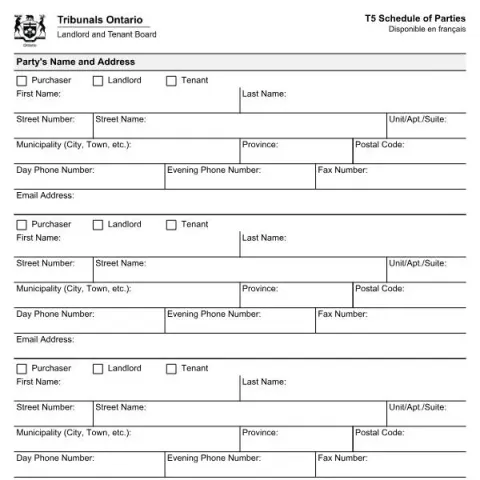
The Form T5: Schedule of Parties is an official document issued by the King's Printer for Ontario designed to facilitate the collection of essential contact information from parties involved in residential tenancy disputes. This form is a critical component of the application process managed by the Landlord and Tenant Board (LTB), ensuring that all relevant parties are properly identified and reachable throughout the resolution process.
What Is the Purpose of the T5 Form?
The T5 Schedule of Parties serves as a standardized way to gather detailed information about each involved party—specifically the purchaser, landlord, and tenant. Its primary purpose is to streamline communication and ensure the LTB can effectively contact and process applications related to residential tenancy issues under the Residential Tenancies Act, 2006.
When you submit an application to the LTB, the T5 form helps to clearly identify all parties involved, including their names, addresses, and contact details. This information becomes part of the official record and is used for correspondence, notices, and legal proceedings.
Who Should Fill Out This Form?
This form is relevant for any individual or organization involved in a tenancy dispute who needs to provide their contact details to the LTB. Typically, the parties include:
- Landlords seeking remedies or addressing issues with tenants
- Tenants responding to applications or disputes with landlords
- Purchasers involved in property transactions that impact tenancy rights or obligations
Each party must complete a separate section of the form, providing accurate and current contact information to ensure proper communication throughout the legal process.
What Information Does the Form Require?
The T5 form requests specific details for each party involved, including:
| Information | Description |
|---|---|
| Party's Name | First and last name of the individual or organization |
| Address | Street number, name, unit/apt/suite, municipality, province, postal code |
| Contact Numbers | Daytime and evening phone numbers, fax number (if applicable) |
| Email Address | Preferred email for official correspondence |
Parties are advised to double-check their information for accuracy to prevent delays or miscommunications during the application process.
How to Submit the T5 Form
The completed T5 Schedule of Parties can be submitted as part of your application package to the Landlord and Tenant Board. Submission methods may vary, but generally, forms can be filed online through the Tribunals Ontario digital platform, by mail, or in person at designated LTB offices. It is important to follow the specific instructions provided by the LTB or the official guidance accompanying your application.
Fill in your form directly online
No printing: type your details into the boxes of the official form, tick, then download the PDF ready to send.
- 1Type into the form boxes
- 2Tick in one click
- 3Save and download the PDF
Points of Attention and Confidentiality
The LTB has the authority to collect and use the information provided on the T5 form to resolve your tenancy dispute under section 185 of the Residential Tenancies Act, 2006. Once filed, the information may become part of the tribunal's public records, including decisions and orders, in accordance with Tribunals Ontario's Access to Records Policy and the Tribunal Adjudicative Records Act, 2019.
If parties wish to keep certain records or information confidential, they must request a confidentiality order from the adjudicator. For questions regarding confidentiality or access to records, parties can contact the LTB by email at [email protected] or call the Contact Centre at 416-645-8080 or toll-free at 1-888-332-3234.
Summary
The T5 Schedule of Parties is a straightforward but vital document for anyone involved in residential tenancy applications in Ontario. Accurate completion ensures smooth communication, proper record-keeping, and efficient resolution of disputes. Whether you're a landlord, tenant, or purchaser, understanding the purpose and proper use of this form helps protect your rights and facilitates a fair process under Ontario law.