Understanding the Official Form for Lessee’s Response to Rent Increase and Lease Modification in Canada
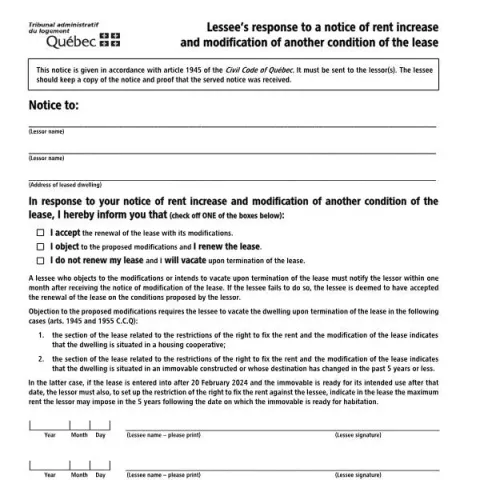
If you are a tenant in Quebec and receive a notice from your landlord proposing a rent increase or changes to your lease, it’s essential to understand your rights and the proper procedures for responding. The official form, identified as TAL-810A-E, is a standardized document used by tenants to formally reply to such notices, ensuring your response is legally recognized and properly documented.
Purpose and Use of the Form
This form is designed to facilitate communication between tenants and landlords regarding modifications to a lease, specifically when a landlord proposes a rent increase or other changes to lease conditions. It provides a clear, official way for tenants to accept, object, or notify their intention not to renew the lease following a notice of modification.
According to the Civil Code of Quebec, landlords must serve tenants with a notice of rent increase or lease modifications. The tenant then has a one-month window to respond using this form. Properly completing and submitting this document ensures your rights are protected and your intentions are officially recorded.
Key Sections of the Form
Notice to the Tenant
The form begins with the landlord’s details, including their name and address of the leased dwelling. It then presents the tenant with three options:
- Accept the lease renewal with the proposed modifications
- Object to the modifications but agree to renew the lease
- Decide not to renew and vacate the premises upon lease termination
Tenant’s Response and Deadlines
The form emphasizes that tenants must respond within one month of receiving the notice. Failure to respond is deemed acceptance of the proposed lease renewal and modifications. If a tenant objects or plans to vacate, they must notify the landlord within this period.
Special Conditions for Objections
Objections are particularly relevant if the modifications relate to restrictions on rent setting or the status of the dwelling as a housing cooperative or a recently constructed immovable. In such cases, tenants are required to vacate upon lease termination if they object to the modifications, as stipulated by articles 1945 and 1955 of the Civil Code of Quebec.
Filling Out the Form: Step-by-Step Guide
- Identify the landlord: Fill in the landlord’s name(s) and address of the leased property.
- Choose your response: Check the box that corresponds to your decision—accept, object, or not renew.
- Sign and date: The tenant must print their name, sign, and date the form to validate their response.
- Optional receipt confirmation: If served in person, the landlord or their representative should sign to confirm receipt.
Submitting Your Response
The completed form must be sent to the landlord within the specified one-month period after receiving the notice. It’s advisable to keep a copy for your records and consider sending the response via registered mail or another method that provides proof of delivery. This documentation can be useful if disputes arise or if the matter proceeds to the Tribunal administratif du logement.
Next Steps After Submission
If you object to the modifications, the landlord has one month from receipt of your response to apply to the Tribunal administratif du logement for a ruling on the rent or other lease conditions. If the landlord does not take this step, the lease is automatically renewed under the same terms and rent. The Tribunal’s decision, when requested, is binding and aims to resolve disputes fairly and legally.
Fill in your form directly online
No printing: type your details into the boxes of the official form, tick, then download the PDF ready to send.
- 1Type into the form boxes
- 2Tick in one click
- 3Save and download the PDF
Additional Resources and Assistance
To better understand your rights and prepare for negotiations, the Tribunal recommends using its "How to agree on the rent" tool. This resource, available at your local Tribunal office or online, can help you negotiate effectively, especially with supporting invoices and data justifying the proposed rent increase.
In summary, the TAL-810A-E form is a crucial document for tenants to formally respond to lease modifications or rent increase notices. Proper completion and timely submission protect your rights and ensure that any disputes are handled according to Quebec’s legal framework.