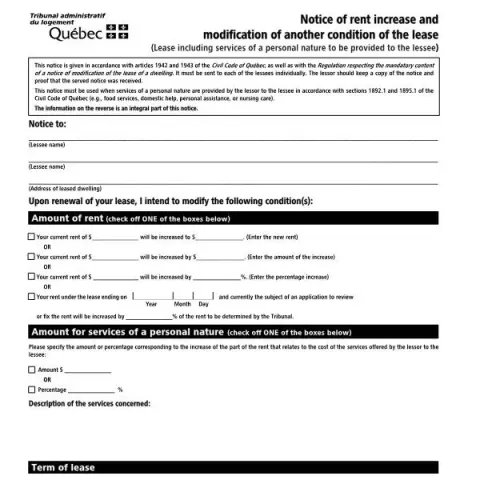
Understanding the Official Notice of Rent Increase and Lease Modification in Quebec
If you are a tenant in Quebec, you may receive a formal notice from your landlord regarding proposed changes to your lease agreement, including rent increases or modifications of services of a personal nature. This document, issued by the Tribunal administratif du logement (TAL), is a legal requirement when landlords intend to adjust certain conditions of your tenancy. It is essential to understand the purpose of this notice, how to interpret it, and your rights and obligations under Quebec law.
What is the Purpose of the Notice?
The notice serves as an official communication from the lessor (landlord or their mandatary) to inform you of upcoming changes to your lease. These modifications may include an increase in rent, adjustments to the services provided (such as personal assistance or domestic help), or other lease conditions like parking or heating arrangements. The purpose is to ensure transparency and give you an opportunity to accept or oppose the proposed changes within a specified timeframe.
Who Must Fill Out and Send This Notice?
The landlord or their authorized representative must complete this form, identified by the code TAL-819A-E. It must be sent individually to each tenant, especially when multiple tenants share the property. The notice must include details such as the tenant’s name, the address of the rented dwelling, the proposed modifications, and the effective dates. The landlord is responsible for keeping a copy of the notice and proof of delivery, whether by personal service or other accepted methods.
Key Sections of the Notice and How to Complete Them
Identifying the Tenant and Property
- Lessee Name: Clearly write the full name of the tenant(s).
- Address: Specify the exact address of the leased property.
Proposed Modifications
- Rent Increase: Choose one of the options—whether a specific amount, a percentage, or a new total rent. Enter the corresponding figures.
- Services of a Personal Nature: Specify the amount or percentage increase related to services like nursing, domestic help, or personal assistance, and describe the services concerned.
- Lease Term and Other Changes: Indicate the new lease start and end dates, and specify any additional modifications such as parking, heating, or other conditions.
Signature and Receipt Confirmation
The landlord or mandatary must sign and date the notice. The tenant must acknowledge receipt by printing their name, signing, and dating the document, confirming they received the notice on a specific date.
Important Timelines and Tenant Response
Upon receiving the notice, tenants have a one-month period to respond if they object to any proposed modifications. If you refuse the changes or plan to move at the end of your lease, you must reply within this timeframe. Failure to respond is presumed to mean acceptance, and the lease will be renewed under the new conditions.
What to Do If You Disagree with the Proposed Changes
If you object to the rent increase or any other modification, you can file an application with the Tribunal administratif du logement within one month of receiving the notice. The tribunal will then review the case and decide on the appropriate rent or conditions. Both parties must comply with the tribunal's decision, and the costs related to the application are generally borne by the landlord.
Fill in your form directly online
No printing: type your details into the boxes of the official form, tick, then download the PDF ready to send.
- 1Type into the form boxes
- 2Tick in one click
- 3Save and download the PDF
Additional Resources and Support
The TAL provides a calculation tool on its website to assist tenants and landlords in negotiating rent increases. You can also find a response template to formally oppose modifications, available on the tribunal’s website, at local offices, or by mail.
Understanding your rights and obligations under Quebec law ensures that both tenants and landlords can manage lease modifications fairly and transparently. Always keep copies of all notices and correspondence related to your tenancy for your records.