Understanding the Official Notice of Amendment to Tenancy Agreements for Supportive Housing Units in Canada
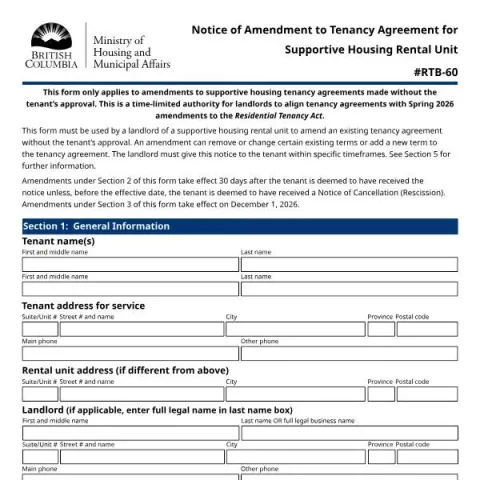
The Notice of Amendment to Tenancy Agreement for Supportive Housing Rental Unit (form RTB-60) is an official document issued by the Residential Tenancy Branch of Canada. It is designed specifically for landlords to modify existing tenancy agreements in supportive housing settings without needing the tenant’s approval, within a specific legal framework and timeframe. This article provides a comprehensive overview of when and how this form should be used, what information it requires, and key points for both landlords and tenants to consider.
When and Why to Use this Form
This form is applicable exclusively to amendments made to supportive housing tenancy agreements without tenant approval. These amendments are permitted by the Residential Tenancy Act, particularly during the period from July 30 to October 26, 2026, as part of legislative updates introduced in Spring 2026. The amendments can involve adding, changing, or removing specific terms related to:
- The landlord’s entry into the rental unit for health or safety reasons
- Occupants or proposed occupants of the unit
- The presence and rights of guests on the property
It is important to note that these amendments are time-limited and are intended to align tenancy agreements with recent legislative changes. They do not require tenant approval but must be communicated properly within the prescribed period.
Key Elements of the Form and Required Information
The RTB-60 form gathers essential details to ensure clarity and legal compliance. It includes sections for:
Section 1: General Information
- Tenant details: Names, addresses, and contact information
- Landlord details: Full legal name or business name, contact information
- Rental unit address: If different from tenant address
- Method and date of service: How and when the notice was delivered
Section 2: Amendments Concerning Entry, Occupants, and Guests
This section specifies amendments related to:
- Landlord’s entry for health or safety reasons
- Adding or removing occupants or proposed occupants
- Regulations concerning guests on the property
Landlords must clearly specify any previous terms being changed or removed, and attach additional pages if necessary, ensuring each page is properly labeled and numbered.
Section 3: Changes to Terms Inconsistent with New Legislation
This section addresses amendments to remove or modify terms that conflict with new legislation effective December 1, 2026. The form must be provided within the specified window, depending on the tenancy start date, to ensure legal compliance.
Important Considerations for Landlords and Tenants
While landlords can amend certain terms without tenant approval, it is crucial to observe the following:
Fill in your form directly online
No printing: type your details into the boxes of the official form, tick, then download the PDF ready to send.
- 1Type into the form boxes
- 2Tick in one click
- 3Save and download the PDF
- The amendments become effective 30 days after the tenant is deemed to have received the notice unless a rescission notice is issued before the effective date.
- Amendments related to entry, occupants, and guests are time-sensitive and must be communicated within the designated period.
- Amendments that are inconsistent with new legislation are scheduled to take effect on December 1, 2026, and must be properly documented and served.
Tenants should review any notices carefully to understand the changes being made, especially regarding entry rights, guest policies, or changes to the tenancy terms. If tenants believe the amendments are invalid or improperly served, they may seek advice or assistance from the Residential Tenancy Branch or legal counsel.
Conclusion
The Notice of Amendment to Tenancy Agreement for Supportive Housing Rental Units is a critical legal document that facilitates necessary updates to tenancy agreements in line with legislative changes, without requiring tenant approval during a specified period. Both landlords and tenants should be aware of the timing, content, and legal implications of this process to ensure compliance and protect their rights within the supportive housing framework in Canada.