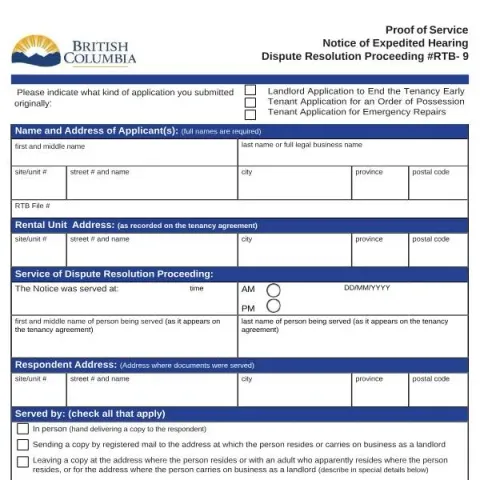
Understanding the Proof of Service - Notice of Expedited Hearing (Form RTB-9)
If you are involved in a dispute under the Residential Tenancy Act in British Columbia, you may need to serve a Notice of Expedited Hearing to the other party. The Proof of Service - Notice of Expedited Hearing form, designated as RTB-9, is the official document used to confirm that this notice has been properly delivered. This guide explains the purpose of the form, who should fill it out, and the steps involved in completing it correctly.
Purpose and When to Use Form RTB-9
This form is used to document the service of a Notice of Expedited Hearing issued by the Residential Tenancy Branch (RTB). An expedited hearing is typically requested when urgent issues need resolution, such as illegal rent increases, urgent repairs, or other urgent tenancy concerns. Proper service of this notice is critical because it ensures that all parties are informed and that the hearing process complies with legal requirements.
Who Should Fill Out the Form?
The form is completed by the party who has served the Notice of Expedited Hearing, whether it is the landlord or tenant. It is essential that the person completing the form accurately records the details of the service, including how and when the notice was delivered, and the identity of the respondent (the person being served).
Step-by-Step Procedure for Completing the Form
1. Indicate the Type of Application
Start by selecting the applicable application type:
- Proof of Service
- Notice of Expedited Hearing
Ensure you specify that the application relates to a Dispute Resolution Proceeding with the form code RTB-9.
2. Fill in the Applicant's Details
Provide the full legal name(s) of the applicant(s), whether individual or business, along with the complete address of the applicant, including site/unit number, street, city, province, and postal code.
3. Record the Dispute Details
Include the RTB file number and the address of the rental unit as recorded on the tenancy agreement.
4. Document the Service of the Notice
Specify where and when the Notice of Expedited Hearing was served:
- Date (DD/MM/YYYY)
- Time (AM/PM)
- Name of the person served (as it appears on the tenancy agreement)
Describe the respondent's address where the documents were served, including site/unit number, street, city, province, and postal code.
5. Describe the Method of Service
Check all applicable methods used to serve the notice:
Fill in your form directly online
No printing: type your details into the boxes of the official form, tick, then download the PDF ready to send.
- 1Type into the form boxes
- 2Tick in one click
- 3Save and download the PDF
- In person (hand delivery)
- Registered mail
- Leaving a copy at the address or with an adult residing there
- Attaching a copy to the door or a conspicuous place
- By email (provide email address for service)
- As ordered by the Director of the RTB (attach order)
6. Provide Special Details
Describe any additional information about how the documents were left or with whom, especially if service was made in a manner other than direct hand delivery.
7. Confirm the Service
Use the confirmation section to provide evidence of service:
- Hand delivery receipt: include name and signature of the person receiving the notice, along with the date
- Service by leaving a copy: include the date, witness name, and witness signature
- Registered mail: attach proof of mailing and tracking report
- Email: include proof that the email was sent to the respondent's provided email address
After Completing the Form
Once the form is filled out and all relevant evidence of service is attached, the person who served the notice must sign it to confirm the accuracy of the information. The completed RTB-9 form should then be submitted to the Residential Tenancy Branch as part of your case documentation.
Proper completion and submission of this form are vital to ensure that the service of the Notice of Expedited Hearing is legally recognized. Failing to document service correctly could delay proceedings or impact the enforceability of the hearing outcome.