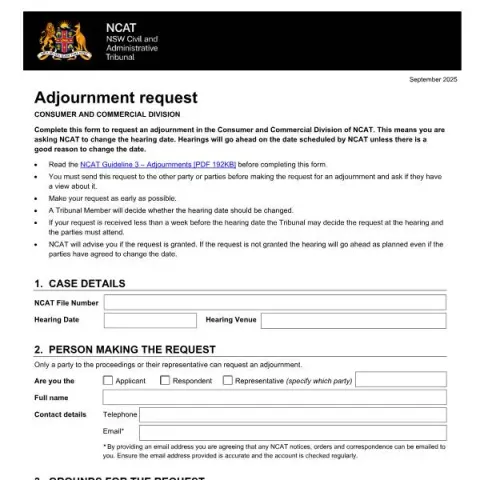
Understanding the Adjournment Request Form for NCAT Consumer and Commercial Division
If you are involved in a case before the New South Wales Civil and Administrative Tribunal (NCAT), there may be situations where you need to delay your hearing. The Adjournment Request form is the official document used to ask NCAT to reschedule a hearing date. This article explains who should complete this form, how to do so properly, what supporting documents are needed, and the procedures involved in submitting your request.
What is the Purpose of the Adjournment Request Form?
The primary purpose of this form is to formally ask NCAT to change the scheduled hearing date. Hearings are typically held on the date set by NCAT unless a valid reason is provided for postponement. The form allows parties involved in the case—whether applicants or respondents—to request a new hearing date, ensuring they have adequate time to prepare or address unforeseen circumstances.
Who Should Fill Out the Form?
Only a party to the proceedings or their legal representative can submit an adjournment request. This means the applicant, respondent, or their authorized agent must complete and submit the form. It is important to note that the request must be made before the scheduled hearing date and must be supported by valid reasons.
How to Complete the Adjournment Request Form
Step 1: Fill in Case Details
- NCAT File Number: Enter the unique reference number for your case.
- Hearing Date and Venue: Specify the scheduled date and location of the hearing.
Step 2: Provide Your Details
- Party Type: Indicate whether you are the applicant, respondent, or their representative.
- Full Name and Contact Details: Include your telephone number and email address. Providing an email allows NCAT to communicate notices and updates directly.
Step 3: State Your Grounds for the Request
Clearly explain the reasons why you are requesting an adjournment. Common grounds include illness, unavoidable commitments, or other significant circumstances. Attach any supporting documents that substantiate your reasons, such as medical certificates or evidence of scheduling conflicts.
Step 4: Decide on the Hearing Method
The form asks whether the adjournment can be decided based on the documents alone, or if an in-person or telephone hearing is necessary. If you believe your reasons can be adequately assessed without a hearing, select 'Yes' and provide relevant details.
Step 5: Sign and Date
Complete the form with your name, signature, and the date of submission. This confirms your request and its accuracy.
What Happens After Submitting the Request?
Once your request is received, NCAT will review the grounds and supporting documents. The tribunal has the discretion to:
- Grant the adjournment: Reschedule the hearing to a later date.
- Refuse the request: Proceed with the original hearing date.
- List the request for a hearing: Decide whether the matter can be resolved based on the documents or requires a hearing.
It is advisable to submit your request as early as possible to allow sufficient time for consideration. If the request is made less than a week before the scheduled hearing, the tribunal may decide on the adjournment during the hearing itself, and all parties must attend.
Fill in your form directly online
No printing: type your details into the boxes of the official form, tick, then download the PDF ready to send.
- 1Type into the form boxes
- 2Tick in one click
- 3Save and download the PDF
How to Lodge the Adjournment Request
The form can be lodged via the NSW Online Registry, which is the recommended method for convenience and efficiency. Alternatively, you can submit the form by post or in person at any NCAT Registry office. Ensure that all sections are completed accurately and supporting documents are attached to avoid delays.
Important Considerations and Common Errors
When completing the form, avoid common mistakes such as:
- Failing to attach relevant supporting documentation.
- Not sending the request to the other party for their views before submission.
- Submitting the request too close to the hearing date, which may reduce the chances of approval.
- Providing incorrect or incomplete contact details, which could hinder communication from NCAT.
Remember, the tribunal’s decision will be based on the information provided, so clarity and completeness are essential for a successful adjournment request.