Understanding the Application for a Protection Order in Queensland
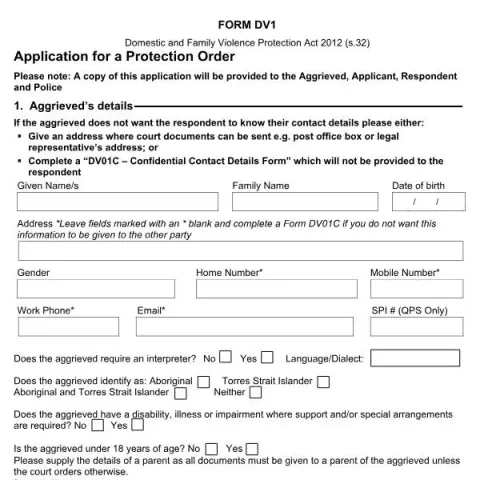
The Application for a Protection Order (Form DV1) is a legal document used within Queensland to seek court protection under the Domestic and Family Violence Protection Act 2012. This form is designed for individuals who have experienced domestic or family violence and wish to obtain a court order to prevent further harm. It is essential for applicants to understand the purpose, eligibility, and the process involved in filling out this form.
Purpose and Scope of the Form
The primary aim of the Application for a Protection Order is to obtain legal protection from the respondent—an individual accused of domestic or family violence. The form facilitates the court’s ability to issue orders that can restrict the respondent’s contact with the aggrieved, provide safety measures, or impose other conditions deemed necessary for protection.
This application can be lodged by the aggrieved person themselves or by a person acting on their behalf, such as a legal representative, police officer, or guardian, depending on the circumstances. Once submitted, copies of the application are provided to the respondent, the police, and the applicant, ensuring all parties are informed of the proceedings.
Eligibility and Conditions for Filing
To be eligible to apply for a protection order, the applicant must demonstrate that they have experienced domestic or family violence from the respondent. This includes physical, emotional, psychological, or economic abuse. The applicant must also be a current or former partner, family member, or someone with a close relationship to the respondent.
It is important to note that applicants under 18 years of age may require additional support or representation, often involving a parent or guardian, unless the court orders otherwise. The form includes specific sections to provide details about both the applicant and respondent, including their relationship, contact details, and any special needs or circumstances.
Step-by-Step Procedure for Completing the Form
1. Filling in Personal Details
The applicant must provide comprehensive details about themselves, including their name, date of birth, contact information, gender, and any language or disability considerations. If privacy is a concern, the applicant can opt to provide alternative contact details, such as a post office box or legal representative’s address, by completing a separate confidentiality form.
2. Providing Respondent Details
Details about the respondent, such as their name, date of birth, contact information, and relationship to the applicant, are required. If the respondent is under 18, additional information about their parent or guardian must be supplied.
3. Indicating the Nature of the Application
The applicant must specify whether they seek a temporary protection order, which provides immediate safety measures, or a permanent order. If requesting a temporary order, reasons must be provided to justify the urgency, especially if the respondent has not yet been served with the application.
4. Establishing the Relationship
Details about the relationship between the applicant and respondent are essential. The form asks whether the relationship is intimate, family, or informal care, and requires information on the duration, nature, and level of dependency or intimacy involved.
5. Outlining Grounds for the Protection Order
The applicant must clearly state the reasons why a protection order is necessary, emphasizing the incidents of domestic violence or threats experienced. Supporting evidence or specific examples can strengthen the application.
Fill in your form directly online
No printing: type your details into the boxes of the official form, tick, then download the PDF ready to send.
- 1Type into the form boxes
- 2Tick in one click
- 3Save and download the PDF
Important Considerations and Deadlines
Once the form is completed, it must be lodged at the appropriate Queensland Courthouse. The court may issue an interim or temporary protection order based on the information provided, especially in urgent situations. The respondent will be notified and given an opportunity to respond or attend a hearing.
Applicants should be aware of the legal implications and ensure all information provided is accurate and truthful. The court process involves scheduled hearings where both parties can present their case, and the court will decide on the most appropriate protection measures.
After Lodging the Application
Following submission, the court will review the application and may issue a temporary protection order if justified. The respondent will be served with the application and has the right to contest or respond to the allegations. A full hearing will be scheduled to determine whether a longer-term protection order should be granted.
It is advisable for applicants to seek legal advice or support from local domestic violence services to navigate the process effectively and ensure their safety throughout the proceedings.