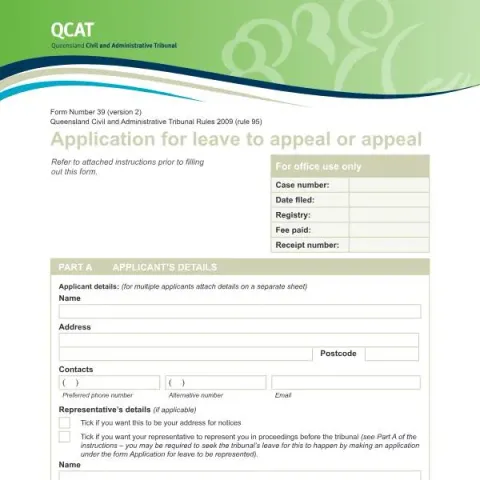
Understanding the Application for Leave to Appeal or Appeal to the Queensland Civil and Administrative Tribunal
The Queensland Civil and Administrative Tribunal (QCAT) provides a streamlined process for individuals or entities wishing to challenge decisions made by the tribunal or other entities. The primary form used for this purpose is the Application for Leave to Appeal or Appeal, identified as Form Number 39 (version 2). This form is essential for those seeking to obtain permission to appeal a decision or to proceed with an appeal within the tribunal’s jurisdiction.
Purpose and Scope of the Form
This form allows applicants to formally request leave to appeal or to lodge an appeal against a decision made by QCAT or another relevant authority. It is used in cases where the applicant believes the original decision was incorrect, unjust, or based on an error of law or fact. The form is relevant for parties involved in civil, administrative, or justice-related proceedings within Queensland, and it ensures that the tribunal’s review process is initiated correctly.
Who Should Use This Form?
The form is intended for:
- Individuals or organisations who have received a decision from QCAT or another entity and wish to challenge it.
- Applicants seeking to obtain the tribunal’s permission (leave) to lodge an appeal, especially when the original decision is not automatically appealable.
- Parties involved in proceedings who want to escalate their case to a higher level of review within the tribunal system.
Key Sections of the Form and How to Complete Them
Part A: Applicant and Respondent Details
This section requires detailed information about the applicant and, if applicable, their representative. The applicant must provide their full name, address, contact numbers, and email address. If the applicant is represented, details of the representative—including their name, organisation, ABN, and contact details—must also be included.
Similarly, the respondent’s details must be provided, especially if there are multiple respondents. This includes their name, address, and contact information. If a representative acts for the respondent, their details should be listed as well.
Part B: Details of the Decision Being Appealed
Applicants must specify the case number if known, the tribunal or entity that made the decision, and the date when the decision was issued. Providing accurate information here is crucial for the tribunal to locate and review the original decision.
Part C: Grounds of Appeal
In this section, the applicant must briefly outline the reasons for their appeal. This may include legal errors, procedural issues, or factual inaccuracies that they believe justify a review of the decision.
Part D: Orders Sought
This part details the specific orders or outcomes the applicant is requesting from the tribunal. Clear and precise requests help streamline the tribunal’s consideration of the appeal.
Filing and Submission Procedures
Before submitting the form, applicants should:
- Complete all sections carefully, following the instructions provided with the form.
- Attach any supporting documents or evidence as required.
- Pay the prescribed fee, which varies depending on the nature of the appeal. The fee must be paid at the time of lodging the application.
- Ensure that the correct number of copies of the application and attachments are prepared, as specified in the instructions.
The completed application can be lodged with the relevant QCAT registry, either in person, by mail, or via electronic submission if available. It is essential to keep copies of all documents submitted for your records.
Fill in your form directly online
No printing: type your details into the boxes of the official form, tick, then download the PDF ready to send.
- 1Type into the form boxes
- 2Tick in one click
- 3Save and download the PDF
Important Deadlines and Considerations
Applicants should be aware of specific timeframes for lodging their appeal, which are typically outlined in the decision notice. Failing to meet deadlines may result in the application being dismissed. Additionally, applicants may need to seek the tribunal’s leave (permission) to appeal if the decision does not automatically allow for an appeal.
Post-Submission Process
Once the application is filed, the tribunal will review the submission to ensure all requirements are met. An acknowledgment of receipt will be issued, and further directions or hearings may be scheduled. Applicants should monitor their correspondence and be prepared to provide additional information if requested.
Conclusion
The application for leave to appeal or appeal is a vital step for those seeking to challenge tribunal decisions in Queensland. Proper completion of the form, adherence to deadlines, and a clear statement of grounds and desired outcomes are essential for a successful process. For further guidance, applicants can contact QCAT directly or consult the instructions accompanying the form.