Understanding the Application for Grant of Bail in New South Wales
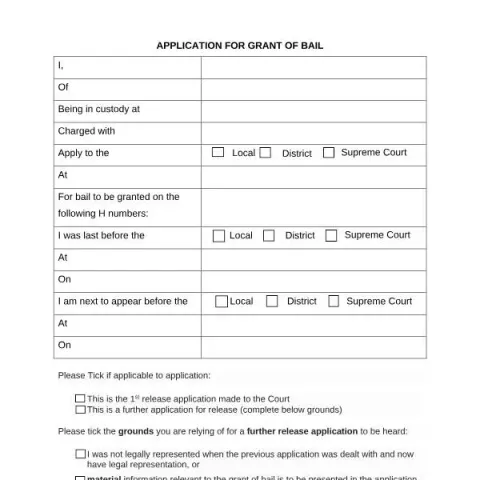
If you or someone you know is involved in a legal case in New South Wales (NSW), understanding the process of applying for bail is crucial. The Application for Grant of Bail form is a vital document used to request the court's permission for a person in custody to be released pending their court hearing. This article guides you through the purpose of the form, how to prepare it, and the steps involved in submitting and following up on your application.
The Purpose of the Bail Application Form
The primary aim of this form is to formally request the Local Court of NSW to grant bail to an individual who has been charged with an offence and is currently in custody. Bail allows the accused person to be released from detention while awaiting trial, subject to certain conditions set by the court. The form ensures that all relevant information about the applicant, the charges, and the proposed bail conditions are clearly presented to facilitate a fair review by the court.
Preparing Your Bail Application
Gathering Necessary Details
- Personal Information: Full name, current address, and custody location.
- Case Details: The charges faced, case or H numbers, and previous court appearances.
- Legal Representation: Indicate if you are represented by a lawyer or if this is your first application.
Completing the Form
The form requires accurate and comprehensive information, including:
- The date of the current application.
- Details of the last court appearance, including date and location.
- Whether this is a first or subsequent bail application.
- The grounds for seeking bail, especially if this is a follow-up application—such as new legal representation, new material evidence, changed circumstances, or if the applicant is a child.
Proposed Bail Conditions
Applicants should attach proposed bail conditions on a separate page. Common conditions include reporting to police, residence restrictions, or abstaining from alcohol or drugs. Clear and reasonable conditions can improve the likelihood of bail being granted.
How to Submit the Bail Application
Submission Methods
The form can be submitted in person at the courthouse or via an online platform if available. It is essential to check the local court's procedures beforehand, as some jurisdictions may prefer electronic submissions through the NSW online court services or via legal representatives.
Supporting Documents
Ensure all supporting documents, such as legal representation details, evidence supporting bail, or previous court orders, are attached or provided as required. For example, if this is a further application, include details of the previous application and reasons for requesting a new hearing.
Follow-Up and Court Review
Once submitted, the court will review the application, considering factors like the risk of flight, public safety, and the likelihood of the accused complying with bail conditions. The court may grant bail with or without conditions or refuse it, depending on the circumstances.
Applicants or their legal representatives will be notified of the court’s decision, often through a court date or a formal letter. If bail is refused, there may be options to appeal or reapply, especially if circumstances change.
Fill in your form directly online
No printing: type your details into the boxes of the official form, tick, then download the PDF ready to send.
- 1Type into the form boxes
- 2Tick in one click
- 3Save and download the PDF
Contacts and Additional Support
For assistance with completing the form or understanding your rights, legal aid services or community legal centres in NSW can provide guidance. The Local Court of NSW also offers resources and contact details on their official website for further support.
Applying for bail is a critical step in the legal process, and proper preparation can significantly influence the outcome. Ensure all information is accurate, complete, and supported by relevant evidence to facilitate a smooth review by the court.