Navigating the MO031 Form: A Guide for Retired Medical Practitioners
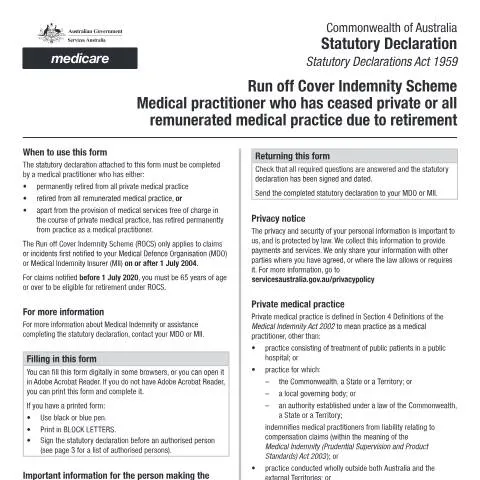
Retirement from the medical profession is a significant milestone, and for many practitioners, it requires certain formalities to ensure a smooth transition. One crucial document in this process is the Statutory Declaration ROCS - Medical practitioner who has ceased private or all remunerated medical practice due to retirement form (MO031), issued by Services Australia. This comprehensive guide will illuminate the purpose of the MO031 form, the steps involved in its completion, and the subsequent administrative processes that follow.
The Role of the MO031 Form in Retirement Procedures
The MO031 form is not merely a piece of paperwork; it serves a pivotal role in the retirement of medical practitioners. This statutory declaration provides formal recognition of a practitioner’s cessation from private or remunerated medical practice, which is essential for both legal and administrative reasons. This encompasses ensuring that all financial and medical liabilities are addressed prior to retirement.
Upon submission of the MO031 form, the relevant authorities can update their records, ensuring that the practitioner is no longer accountable for ongoing patient care or financial transactions associated with their practice. The importance of this form lies not only in compliance with administrative regulations but also in protecting the retired practitioner from potential legal issues that may arise from any outstanding obligations.
Who Needs to Complete the MO031 Form?
This form is specifically designed for registered medical practitioners in Australia who have decided to retire from all forms of medical practice—whether that be private practice or any other remunerated roles. It’s important to note that this document applies to practitioners of various specialties, and understanding the nuances of the form will be essential for each individual.
- Full Retirement: Practitioners who are retiring completely from the medical field.
- Partial Retirement: Those who may be reducing their practice hours but not fully retiring may need to consider whether this form is applicable.
- Timing: Ensure the form is completed at the appropriate time in relation to your retirement date.
Decoding the Sections of the MO031 Form
Each section of the MO031 form has been meticulously designed to capture essential information. Understanding these sections not only simplifies the completion process but also minimizes the chances of errors that could delay processing.
Personal Details Section
This section requires the practitioner to provide their personal information, including their full name, address, and contact details. It is crucial to ensure that all information is accurately captured, as any mistakes can lead to complications in processing.
Medical Registration Confirmation
Practitioners must provide their medical registration number and confirm their status with the relevant medical board. This verification helps ensure that the declaration is valid and that the practitioner is officially recognized as having ceased practice.
Details of Medical Practice
In this section, practitioners should outline the details of their practice, including the nature of their work and any associated institutions. This information is vital for the administration to understand the context of the retirement.
Statement of Cessation
The heart of the MO031 form is the declaration statement wherein practitioners must explicitly state that they have ceased all medical practice. This declaration is a legal statement, and thus it’s essential to ensure that it is completed truthfully and accurately.
Submission Process: From Completion to Confirmation
Once the MO031 form has been completed, the next step is submission. While the form can be lodged online through myGov, understanding the submission process is critical to avoid unnecessary delays.
Online Submission via myGov
Utilizing the myGov platform for submission allows for a streamlined process where practitioners can track the status of their application. It’s advisable to keep a record of the submission confirmation for future reference.
Email and Mail Options
For those unable to submit online, the form can also be sent via email or traditional mail. When using these methods, ensure you keep copies of the document and any correspondence for your records. It’s also wise to send the form via registered post to confirm receipt.
What Happens After Submission?
Once the form is submitted, the processing begins. It’s important for retired practitioners to understand what to expect in this phase.
Processing Timeframes
While processing times can vary, practitioners should generally allow several weeks for their application to be reviewed. Keeping an eye on the myGov portal can provide updates on the application status.
Receiving Confirmation
Upon successful processing, practitioners will receive a confirmation of cessation from Services Australia. This document is vital for both personal records and any future inquiries regarding their retired status.
Special Considerations: Unique Circumstances
Several unique scenarios may arise during the retirement process that can impact the completion and submission of the MO031 form. Understanding these can help practitioners navigate potential challenges.
International Practitioners
For practitioners who may have worked internationally, additional considerations may be required regarding their medical qualifications and registration. It’s advisable to consult with Services Australia for guidance specific to these circumstances.
Practitioners with Complex Situations
Some practitioners may find themselves in complex situations, such as pending legal matters or outstanding complaints. These factors can complicate retirement procedures, and it is recommended to seek legal advice before submitting the MO031 form.
Distinguishing the MO031 Form from Other Forms
The MO031 form may often be confused with similar declarations or forms related to medical practice. It’s crucial for practitioners to understand the distinctions to ensure they are completing the correct documentation.
Comparison with Other Statutory Declarations
| Form | Purpose | Key Difference |
|---|---|---|
| MO031 | Declaration of retirement from medical practice | Specifically for medical practitioners, focused on cessation of practice |
| Other Statutory Declarations | General declarations for various purposes | May not pertain to medical practice or retirement |
Tracking Your Submission: Follow-Up Steps
After submitting the MO031 form, practitioners may wish to follow up to ensure that their application is being processed. Understanding how to do this effectively can alleviate concerns and provide peace of mind.
Using MyGov for Updates
Practitioners can log into their myGov account to check the progress of their application. This portal provides real-time updates and can inform practitioners of any further information required or issues encountered during processing.
Contacting Services Australia
If there are any delays or concerns, reaching out to Services Australia directly can provide clarity. Having your reference number on hand when contacting them will streamline the process.
Final Thoughts on the MO031 Form
While retirement marks the end of a significant chapter in a medical practitioner’s life, the completion of the MO031 form is a crucial step in ensuring that this transition is smooth and legally compliant. By understanding the details of this form and the subsequent processes, practitioners can navigate retirement with confidence and clarity. Whether dealing with unique circumstances or simply ensuring accuracy in the completion of the document, thorough preparation will ease the transition into retirement.
Understanding the ROCS Framework for Medical Practitioners
The ROCS (Remuneration and Occupational Classification System) is an essential tool for managing the retirement and transition of medical practitioners in Australia. It aims to standardize how practitioners can officially declare their status when they cease private or all remunerated medical practice due to retirement.
One key aspect of this framework is the Medical Practitioner - Retirement Form (MO031). This form ensures that medical professionals can complete a statutory declaration that reflects their change in status accurately. Understanding the details involved in completing this declaration can prevent potential complications in transitioning to retirement.
When filling out the MO031, it’s crucial for practitioners to accurately disclose the nature of their medical practice, including specifics about their previous roles, practice locations, and any ongoing professional responsibilities they might hold post-retirement. This clarity helps in determining whether practitioners can claim any relevant benefits or entitlements post-retirement.
The statutory declaration serves as an official record, which may be referenced by various bodies, including Medicare and the Australian Health Practitioner Regulation Agency (AHPRA). Therefore, ensuring the accuracy of the information provided in the MO031 is paramount for a smooth transition into retirement.
Implications of Cessation of Practice on Medical Registration
When a medical practitioner ceases practice, particularly due to retirement, there are significant implications for their medical registration. In Australia, the AHPRA governs the registration processes and ensures compliance with national standards. Practitioners who officially declare their cessation of practice through the MO031 need to notify AHPRA to avoid any lapses in their registration status.
One critical factor to consider is the timing of the statutory declaration in relation to the annual renewal of registration. If a practitioner completes the MO031 and submits it effectively, they may be able to avoid any unnecessary fees associated with annual renewals if they are not intending to practice further. However, failing to communicate this change can result in undue charges or complications should a practitioner decide to resume practice in the future.
Moreover, the cessation of practice impacts obligations regarding Continuous Professional Development (CPD). Even as a retiree, former practitioners must stay informed about their professional obligations, as failing to comply with ongoing CPD requirements can affect the reinstatement of their medical registration should they wish to return to practice.
Financial Considerations During Retirement
The transition to retirement for medical practitioners is not solely a legal or procedural matter; it also heavily involves financial considerations. As medical professionals, practitioners generally have unique financial portfolios that include superannuation, private insurances, and potential ongoing payments from past practices.
When completing the MO031, practitioners should also take into account their financial status and the implications of their retirement on these assets. For instance, if a practitioner has been involved in private practice, they must understand how ceasing practice affects their entitlements to superannuation funds. The rules surrounding accessing superannuation can differ significantly based on the specific circumstances of each individual, including their age and the type of fund they are enrolled in.
Additionally, practitioners retiring from remunerated practice may still receive income from investments or part-time consulting roles. It’s vital to correctly assess these income streams when considering future financial stability. Engaging with financial advisors who specialize in retirement solutions for medical professionals can enhance the planning process, ensuring that practitioners have a well-rounded approach to managing their resources in retirement.
Understanding tax implications is another crucial aspect. The Australian Taxation Office (ATO) provides guidelines regarding income during retirement, including how to report income derived from investments or ongoing consultancy roles. Practitioners must maintain a valid Tax File Number (TFN) and ensure their tax obligations are met in accordance with the fiscal year, which runs from 1 July to 30 June each year.