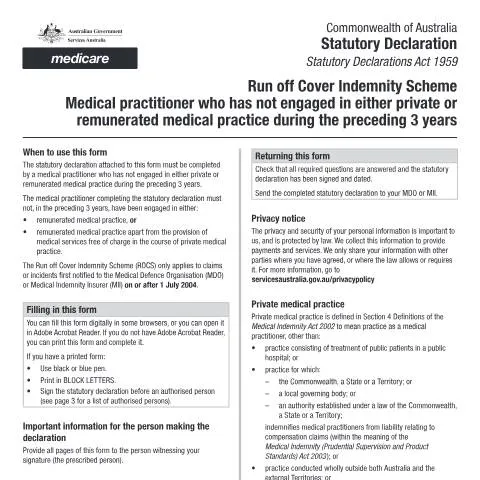
Understanding the Statutory Declaration ROCS (MO034): Essential Insights
In the complex landscape of Australian healthcare, navigating the regulatory requirements can often feel daunting, especially for medical practitioners who haven't engaged in private or remunerated practice for the past three years. The Statutory Declaration ROCS - Medical practitioner who has not engaged in either private or remunerated medical practice during the preceding 3 years form (MO034), issued by Services Australia, is a pivotal document within this context. This declaration serves a specific purpose in the broader spectrum of compliance and eligibility within the healthcare system.
The Context of MO034 in Australian Healthcare
This declaration finds itself embedded within the administrative framework that governs healthcare services in Australia. Its primary function is to confirm the professional status of medical practitioners who have not participated in any paid medical practice for three years. Understanding the necessity of this form begins with recognizing the regulatory bodies that oversee healthcare in Australia. Services Australia administers various programs, including Medicare and health-related services, ensuring that practitioners provide accurate and honest information regarding their practice history.
The Role of the Statutory Declaration
The statutory declaration is not merely a formality; it holds significant weight. For medical practitioners, it reaffirms their commitment to ethical standards and compliance with legal requirements. By filling out the MO034, practitioners are essentially providing a legal affirmation of their professional status, which can affect their eligibility for certain programs or benefits within the healthcare system.
Submission Channels: Navigating Your Options
Once the MO034 form is completed, your next step is determining the most suitable submission channel. This decision can depend on various factors, including personal preference and submission deadlines. Here are the primary channels available for submitting the MO034:
- Online Submission: Utilizing the myGov platform allows for an efficient and streamlined process. By logging in, you can upload your completed form directly, which often results in faster processing times. Ensure you have created a myGov account connected to Services Australia to access this option.
- Paper Submission: If online submission is not feasible, you can print the completed form and send it via postal service. It is recommended to use registered mail to ensure it is tracked until it reaches the relevant Services Australia office.
- In-Person Submission: For those who prefer face-to-face interaction, visiting a local Services Australia office can provide valuable assistance. Bring along your completed form and any necessary identification documents.
Processing the Declaration: What to Expect
Once your statutory declaration is submitted, it enters the processing phase. This stage can vary in duration, and practitioners often wonder how to follow up on their submissions to avoid delays. Here’s what to consider:
Tracking Your Submission
After submitting your MO034, it’s crucial to monitor its status. Here’s how you can do it:
- Upon online submission, you should receive a notification confirming receipt. Keep this for your records.
- If you submitted by mail, consider using the tracking service provided by Australia Post for registered mail. This ensures you know when it has been delivered.
- For in-person submissions, it’s wise to request a receipt from the Services Australia representative, which can serve as proof of your submission.
Response Timeframes
While specific timelines may depend on various factors, Services Australia generally aims to process declarations within a reasonable timeframe. However, it’s advisable to check the official website or contact their helpline for current processing times, especially during peak periods.
Deciphering the Form: A Detailed Walkthrough
Completing the MO034 form requires careful attention to detail. Each section of the form is designed to elicit specific information that collectively ensures compliance and integrity within the healthcare system. Let's break down the key sections of the form:
Section One: Personal Information
This section requires practitioners to provide their personal details, including:
- Full Name: Ensure spelling is correct to prevent issues in processing.
- Date of Birth: Format as DD/MM/YYYY.
- Address: Include current residential address, as it may differ from your practice address.
- Contact Information: Provide up-to-date phone numbers and email addresses to facilitate communication.
Section Two: Professional Details
Here, practitioners must detail their professional qualifications. Key points include:
- Medical Registration Number: Verify with the Medical Board of Australia to ensure accuracy.
- Specialty: If applicable, denote your area of specialization.
Be aware of the importance of this information as it establishes your professional identity within the system.
Section Three: Declaration Specifics
In this critical section, you'll affirm that you have not engaged in private or remunerated medical practice for the last three years. The phrasing of this declaration is legally binding, so it's paramount to be truthful. Misrepresentation can lead to serious repercussions.
Final Review and Declaration Signature
Before submitting the MO034, take a moment to review all the information provided. A simple error could lead to delays or even rejection of your declaration. Ensure:
- All fields are completed accurately.
- Your signature is included, along with the date of signing.
Dealing with Challenges: Refusals and Missing Information
Despite careful completion, complications may arise during the processing of your statutory declaration. Understanding how to navigate these challenges is crucial for maintaining compliance.
What to Do in Case of Refusal
If your declaration is rejected, Services Australia will usually provide a clear reason. Common reasons for denial may include:
- Inadequate supporting information.
- Discrepancies in personal or professional details.
Upon receipt of a refusal, you have options:
- Review the feedback carefully to understand the reasons for denial.
- Gather any required supporting documents or additional information.
- Submit a revised declaration, addressing the issues outlined in the feedback.
Handling Missing Documentation
In scenarios where supporting documents are missing, promptly provide the required evidence to Services Australia. This might include:
- Proof of identity.
- Verification of your medical registration.
Failure to respond to requests for additional documentation can result in delays or denial of your application.
Insights into the Regulatory Framework Surrounding MO034
The necessity of the MO034 form is grounded in the broader legal and administrative landscape of Australia. The Administrative Decisions (Judicial Review) Act 1977 (Cth) provides the foundation for the review of administrative decisions, ensuring that practitioners have the right to contest decisions that affect them adversely.
Medical practitioners must adhere to a range of regulations set forth by bodies like the Australian Health Practitioner Regulation Agency (AHPRA) and the Medical Board of Australia. The requirement for a statutory declaration, particularly for those who have not engaged in practice, arises from the need to maintain rigorous standards for healthcare professionals in the country.
Connecting with Services Australia: Resources and Support
If challenges arise during your completion or submission of the MO034, there are resources designed to assist. Services Australia provides various support channels:
- Online Resources: Their website features comprehensive guides and FAQs specifically tailored for healthcare practitioners.
- Helpline: A dedicated support line is available for direct assistance, providing clarifications on procedures and processes associated with the MO034.
- Local Offices: Visiting a local Services Australia office can provide personalized help and guidance in filling out the declaration or addressing any concerns.
Embarking on the completion of the MO034 form can feel overwhelming, especially considering the implications for your professional practice. However, understanding the significance of this statutory declaration, the processes involved in its submission, and being proactive about potential issues can greatly ease the burden.
Staying informed and engaged with the requirements set by Services Australia not only serves to protect your professional standing but ensures the integrity of the healthcare system as a whole. By adhering to the stipulated processes and maintaining transparency, practitioners contribute to a system that values compliance, ethics, and accountability.
Understanding the Importance of Statutory Declarations in Medical Practice
In Australia, statutory declarations hold significant legal weight, particularly in the medical field. They are often required for various applications, including those related to medical registrations, employment, and other legal processe. A statutory declaration is a written statement of facts that the declarant believes to be true, made under oath or affirmation. It serves as an essential tool in assuring authorities, such as the Australian Health Practitioner Regulation Agency (AHPRA), that the information provided is genuine and accurate.
The significance of statutory declarations extends beyond mere compliance. For medical practitioners who have not engaged in private or remunerated practice, like those filling out the ROCS form (MO034), this declaration serves to confirm their professional standing and commitment to ethical practice. Authorities rely on this information to make informed decisions regarding licensing and registration, ensuring that every practicing medical professional in Australia meets the necessary criteria.
Furthermore, failing to provide an accurate statutory declaration can lead to serious consequences, including penalties or denial of registration. It is imperative that medical practitioners understand the importance of both the declaration itself and the potential ramifications of misrepresentation. This adds a layer of responsibility to the process, ensuring that all medical professionals maintain the highest standards of integrity within the healthcare system.
Common Scenarios Requiring Statutory Declarations
Medical practitioners may encounter various situations where a statutory declaration is necessary beyond the ROCS form (MO034). Understanding these scenarios can provide clarity on when and how to utilize statutory declarations effectively.
1. Gaining Employment: Many healthcare employers, including hospitals and clinics, require prospective employees to submit a statutory declaration as part of their hiring process. This declaration often confirms the applicant's qualifications, work history, and any potential legal issues that may impact their suitability for the role.
2. Registering for Continuing Professional Development (CPD): CPD is fundamental for medical practitioners in maintaining their registration. Some CPD programs may ask for a statutory declaration to verify the hours completed and the relevancy of the activities undertaken. This ensures that practitioners are engaging in relevant educational activities that contribute positively to their professional skills.
3. Resolving Legal Matters: Practitioners may need to provide a statutory declaration in legal proceedings, where accurate representation of facts is crucial. This could involve disputes regarding malpractice claims, licensing issues, or other professional conduct matters, where the declaration acts as a testament to the practitioner's account of events.
4. Applying for Financial Assistance: In certain instances, medical practitioners who have faced financial difficulties may need to submit a statutory declaration when applying for grants, loans, or subsidies, particularly during crises like the COVID-19 pandemic. The declaration can facilitate the assessment of their financial situation and need for assistance.
Best Practices for Completing the ROCS Form (MO034)
Filling out the ROCS form (MO034) requires attention to detail and adherence to specific guidelines to ensure that the statutory declaration is valid and accepted by the relevant authorities. Here are some best practices for practitioners:
1. Read the Instructions Thoroughly: Before starting the form, take the time to read the accompanying guidelines carefully. This includes understanding what information is required and how to present it clearly.
2. Provide Accurate and Complete Information: Ensure that all details entered in the ROCS form are accurate. This includes dates, professional qualifications, and any other relevant background information. Inaccuracies can lead to delays or rejection of your declaration.
3. Utilize Clear and Concise Language: Avoid jargon or overly complex language when completing the form. Use plain English to ensure clarity, making it easier for reviewers to understand your circumstances. This is particularly important if you are explaining why you have not engaged in private or remunerated medical practice.
4. Gather Supporting Documents: If applicable, gather any supporting documents that may strengthen your declaration. This may include certificates of completion for courses or programs undertaken during the preceding three years, which can validate your professional development activities during your time away from practice.
5. Seek Professional Advice: If you are unsure about any part of the ROCS form or the statutory declaration process, consider seeking advice from a legal professional or a peer who has successfully navigated the process. They can provide insights that may help you avoid common pitfalls and ensure your submission meets all requirements.
6. Review and Revise: Before submitting, carefully review your completed form. Look for typographical errors, missing information, or unclear statements. A second pair of eyes can be beneficial, so consider asking someone else to review it for you.