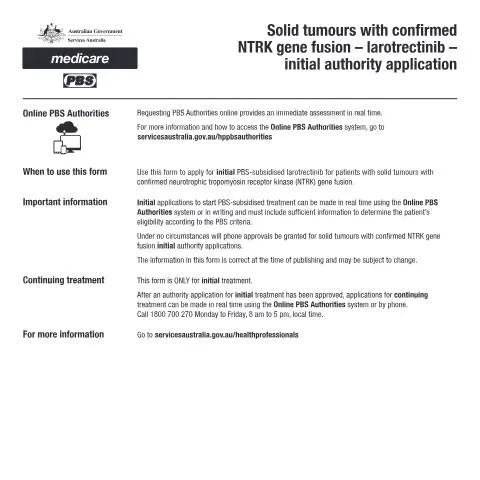
Understanding the PB333 Form: A Closer Look at NTRK Gene Fusion Applications
When a patient is diagnosed with a solid tumour that has a confirmed NTRK gene fusion, the pathway to treatment can be complex and nuanced. The PB333 form, known as the Solid Tumours with Confirmed NTRK Gene Fusion - Larotrectinib - Initial Authority Application Form, plays a crucial role in facilitating access to essential medication. Understanding this document is vital for healthcare professionals and patients alike, as it directly impacts treatment decisions and health outcomes.
Navigating the Application Process: From Submission to Approval
The lifecycle of the PB333 application begins with an oncologist or health professional identifying the need for larotrectinib treatment in a patient. The application process can be divided into specific stages:
- Initial Assessment: The oncologist must first confirm the presence of an NTRK gene fusion through validated testing methods.
- Form Completion: The PB333 form must be accurately filled out with patient details, clinical information, and evidence of the gene fusion.
- Submission: The completed form is submitted to Services Australia for assessment.
- Review Process: An evaluation by the relevant medical authorities occurs, assessing both clinical necessity and compliance with regulatory standards.
- Decision Notification: Upon conclusion of the review, services will notify the applicant about the approval status.
Each of these steps is critical to ensuring that the application is processed efficiently, directly influencing the timeline for treatment commencement.
Key Distinctions: PB333 Compared to Similar Forms
While the PB333 form might seem similar to other authority application forms for medications, there are distinct characteristics that set it apart:
- Specificity of Diagnosis: The PB333 form is tailored explicitly for patients with an NTRK gene fusion, unlike broader cancer medication applications that may cover various conditions.
- Focus on Innovative Therapy: Larotrectinib is an example of targeted therapy, and the PB333 form reflects the necessary clinical and genetic evidence required for such treatments.
- Regulatory Compliance: Different forms may have different regulatory frameworks guiding their approval processes; PB333 is governed under specific protocols associated with precision medicine.
Understanding these distinctions helps health professionals avoid mistakes when navigating the application landscape, ensuring that patients receive the correct treatments promptly.
Preparing Documentation: What You Need for PB333
Completing the PB333 form involves more than simply filling out the application; it requires a careful gathering of documentation to support the application. Here’s what is typically needed:
- Patient Identification: Full details including name, date of birth, and Medicare number.
- Clinical Information: Documentation of the solid tumour diagnosis and confirmation of the NTRK gene fusion from a recognized laboratory.
- Previous Treatments: A history of previous treatment attempts and their outcomes may bolster the case for the requested therapy.
- Healthcare Provider Information: Details of the prescribing oncologist, including their qualifications and contact information.
Organizing these documents prior to initiating the application will enhance its completeness and accuracy, reducing the chance of delays during the review process.
The Role of the PB333 in the Broader Context of Treatment Access
The application process for medication access in Australia is governed by various regulations and frameworks. The PB333 form is a crucial component of this system, directly influencing a patient's ability to receive targeted therapies.
The form's significance can be viewed through the lens of the broader healthcare framework:
- Health Equity: Forms like PB333 aim to ensure that patients with rare or specific genetic profiles can access cutting-edge treatments that may otherwise be out of reach.
- Data Collection: Information submitted through the PB333 contributes to a larger pool of data that can inform future treatment protocols and health policies.
- Streamlining Approval Processes: By establishing clear criteria for treatment eligibility, the PB333 form helps streamline the approval process, which can often be convoluted.
Thus, the PB333 acts not only as a gateway for treatment but also as a tool for shaping health policy and improving patient outcomes across Australia.
Tracking Your Application: Engaging with Services Australia
After submitting the PB333 form, applicants and healthcare providers may wish to track the progress of their application. Services Australia offers ways to stay informed throughout the review process:
- Online Portal Access: By logging into their myGov account, applicants can check the status of their application, which provides transparency and reduces uncertainty.
- Contacting Services Australia: For any immediate inquiries, applicants can reach out to Services Australia directly through designated contact pathways to inquire about their application status.
- Documentation of Communication: It’s advisable for applicants to keep a record of all communications with Services Australia, including dates, times, and the names of representatives spoken to.
This proactive engagement not only helps alleviate anxiety around waiting periods but also enables quicker resolution of any potential issues that may arise during the review process.
Common Challenges: What to Anticipate When Submitting PB333
Submitting the PB333 form isn’t without its challenges. Understanding potential hurdles can prepare applicants and healthcare providers to address them proactively:
- Incomplete Applications: Missing documents or insufficient clinical evidence can lead to delays or denials of the application.
- Changing Regulations: Healthcare policies and approval processes can evolve, requiring applicants to stay informed about the latest guidelines governing the PB333 form.
- Communication Barriers: Misunderstandings regarding required information can hinder the application process; clear and precise communication with Services Australia is essential.
Awareness of these challenges, combined with diligent preparation, can significantly increase the likelihood of a successful application outcome.
The Impact of Approved Applications: A Lifeline for Patients
For patients diagnosed with solid tumours exhibiting NTRK gene fusions, the approval of the PB333 form represents more than just a bureaucratic step; it signifies hope and an opportunity for effective treatment. Larotrectinib, when prescribed, can lead to substantial improvements in health outcomes, enabling patients to navigate their diagnosis with a sense of agency and optimism.
Furthermore, the approval process contributes to the broader narrative of patient rights and access to innovative therapies, reinforcing the importance of precision medicine within the Australian healthcare landscape. This ongoing evolution not only serves individual patients but also enhances the overall standard of care available to all Australians facing similar health challenges.
Understanding NTRK Gene Fusions and Their Impact on Solid Tumours
In recent years, the recognition of NTRK gene fusions as a significant driver of certain solid tumours has transformed the landscape of oncological treatment. NTRK fusions result from the abnormal fusion of neurotrophic receptor tyrosine kinase (NTRK) genes with other genes, leading to the overproduction of the TRK protein, which promotes cancer cell growth and survival. This genetic alteration can occur in various types of tumours, including but not limited to, specific sarcomas and primary CNS tumours. Importantly, not every patient will exhibit clinical signs that correlate with these fusions, which makes genetic testing essential for facilitating appropriate therapies.
The identification of an NTRK fusion can significantly influence treatment decisions, warranting the application for therapies like larotrectinib, specifically designed to target this genetic anomaly. While larotrectinib has shown impressive efficacy in treating patients with confirmed NTRK fusions, the process of obtaining this medication through the Australian healthcare system involves navigating various administrative channels. Understanding the biology behind NTRK fusions and their implications for treatment is crucial for clinicians and patients alike.
Navigating the Initial Authority Application for Larotrectinib
The initial authority application form (PB333) for larotrectinib is a vital document for Australian patients seeking access to this innovative treatment. The form is primarily used to notify the Pharmaceutical Benefits Scheme (PBS) of a patient’s eligibility for subsidised access to the medicine. This application needs to be meticulously filled out, as any inaccuracies could lead to delays or denial of access.
When filling out PB333, it’s essential to include detailed clinical information, specifically outlining the patient’s diagnosis, the confirmed presence of an NTRK gene fusion, and previous treatments. Documentation from pathology reports confirming the NTRK fusion, along with any imaging studies that support the diagnosis, should be submitted alongside the application. This ensures a comprehensive understanding of the patient's clinical situation by the reviewing authorities.
It's worth noting that the PB333 form requires both a signature from the prescribing oncologist and a detailed account of the patient's treatment history, which is critical in establishing the medical necessity for the treatment. Furthermore, the prescriber must be aware of the guidelines regarding cancer care coordination in Australia, as this may influence the approval process, particularly in complex cases where multiple specialities are involved.
The Role of Genetic Testing in Treatment Personalisation
Genetic testing plays an integral role in the personalised treatment of solid tumours, particularly those associated with NTRK fusions. In Australia, testing for NTRK gene fusions is encouraged for patients with advanced solid tumours, especially when standard therapies have been exhausted. The outcomes of these tests can pave the way for targeted therapies, such as larotrectinib, resulting in better patient outcomes.
Healthcare providers must clearly communicate the rationale behind genetic testing to their patients. Patients should be informed about the types of genetic tests available, the potential for discovering additional actionable mutations, and the implications of test results on their treatment options. Comprehensive patient education can lead to improved engagement and adherence to both testing and subsequent treatment protocols.
Moreover, organisations like the genomic testing labs and cancer care networks are essential allies in this journey. They provide not only the testing services but also critical insights into the clinical utility of the results, helping the healthcare team develop a tailored treatment plan. Collaborations between oncologists, geneticists, and molecular pathologists are increasingly necessary to navigate the complexities of solid tumours effectively.