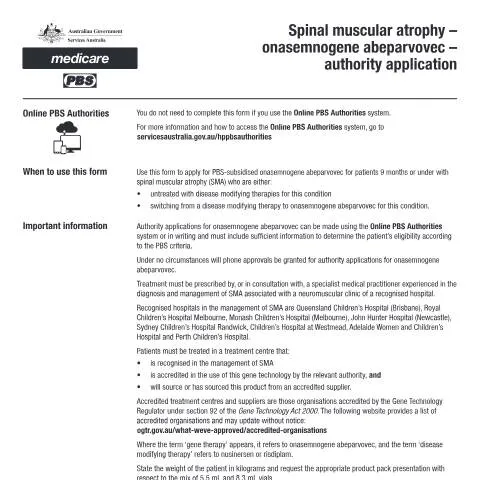
Understanding the Spinal Muscular Atrophy Authority Application Form (PB330)
When navigating the complex landscape of healthcare and treatment options in Australia, families dealing with Spinal Muscular Atrophy (SMA) often encounter the PB330 form, officially known as the Spinal muscular atrophy - onasemnogene abeparvovec - authority application form. This document is essential for those seeking access to the innovative gene therapy treatment that has shown promise in changing the lives of individuals affected by SMA. Understanding the nuances of this form is crucial for healthcare professionals and families alike.
The Role of the PB330 in Treatment Access
The PB330 form plays a pivotal role in enabling access to onasemnogene abeparvovec, a gene therapy designed for treating specific types of SMA. This treatment is not universally available; patients must meet specific criteria. Understanding how PB330 fits into the broader healthcare framework is vital for applicants.
- Target Group: This therapy is generally aimed at infants and children with a diagnosis of SMA, particularly types 1 and 2, who present certain clinical indicators.
- Approval Process: The submission of the PB330 form initiates an administrative process that can significantly impact treatment timelines.
Who Needs to Submit the PB330 Form?
This form must be submitted by a registered healthcare professional on behalf of a patient. Typically, this includes paediatricians or neurologists familiar with SMA. The submission process is designed to ensure that the application for treatment is both clinically justified and properly documented.
Only patients who meet the specific medical criteria set forth by the Therapeutic Goods Administration (TGA) are eligible for treatment via this application. Understanding eligibility criteria can expedite the process and improve the likelihood of approval.
Preparation and Submission: A Detailed Breakdown
Completing the PB330 form is a comprehensive task that requires meticulous attention to detail. Each subsection of the form demands accurate and concise information, and having the right documentation ready can facilitate a smoother submission process.
Gathering Essential Documentation
Prior to filling out the PB330 form, it’s crucial to gather the necessary supporting documents, which may include:
- Clinical Reports: Detailed medical assessments that outline the patient’s condition.
- Genetic Testing Results: Specific tests confirming the diagnosis of SMA.
- Previous Treatment Records: Any treatments or interventions that have been tried and their outcomes should be documented.
Completing the Form
The PB330 form is segmented into various sections, each requiring specific information. Here’s a brief overview:
| Section | Description |
|---|---|
| Patient Information | Demographic details and medical history pertinent to SMA. |
| Clinical Justification | Detailed explanation from the healthcare professional on why the treatment is necessary. |
| Supporting Evidence | Supplementary data that endorses the application, such as genetic tests. |
| Consent | Required permissions from the patient’s family to proceed with the application. |
Submission Channels: Navigating the Options
Once the PB330 form is duly completed and the necessary documents are collected, applicants must choose their preferred submission channel. Services Australia offers multiple methods to submit applications:
Online Submission via myGov
The most straightforward way to submit the PB330 form is through myGov, Australia’s digital platform for accessing government services. To use this service:
- Create or log in to your myGov account.
- Select Services Australia from the list of linked services.
- Follow the prompts to submit your PB330 application.
The online method is preferred for its efficiency and immediate confirmation of receipt. However, ensure that all documents are in the appropriate format, as required by the platform.
Paper Submission
Alternatively, applicants can submit the form via traditional mail. This method is less common and can lead to delays; however, it remains an option for those who prefer paper-based processes. When choosing this option:
- Print the completed form and include all supporting documents.
- Mail the application to the specified address indicated on the form.
- Consider using a tracked postal service for verification of delivery.
What Happens After Submission?
After the PB330 form has been submitted, both healthcare professionals and families should be aware of the following key points:
Processing Timeline and Updates
Services Australia typically processes applications within a specified timeframe, although this can vary based on the completeness of documentation and the complexity of the case. It is advisable for applicants to:
- Regularly check the status of the application through myGov.
- Be prepared to provide additional information if requested by Services Australia, which can include further clinical evidence or clarification on submitted data.
Decision Notification
Once a decision has been made, applicants will receive a formal notification. This will include:
- The outcome of the application, detailing whether the treatment has been approved or denied.
- If denied, reasons for the decision and potential next steps for appeal or re-application.
Navigating Potential Challenges
In some cases, applications may face challenges or require additional justifications. Understanding how to navigate these situations is crucial for applicants.
Common Reasons for Delays or Denials
Some common issues that may arise include:
- Insufficient Clinical Evidence: Ensure that all medical reports are detailed and justifiable.
- Lack of Patient Consent: Missing signatures or permissions can halt the process.
- Ineligibility: Confirm that the patient meets all necessary criteria before submission.
Appealing a Denied Application
If an application for the PB330 is denied, the healthcare professional can assist the family in understanding the reasons and may suggest reapplying or appealing the decision. The appeal process typically involves:
- Reviewing the denial letter for specifics on the reasons for rejection.
- Gathering additional supporting documentations.
- Submitting the appeal within the timeframe specified in the denial letter.
The Bigger Picture: Integrating PB330 into Broader Healthcare Initiatives
The PB330 form is not an isolated document; it exists within a wider context of healthcare initiatives aimed at supporting individuals with SMA. This includes:
- Ongoing Research: Programs aimed at exploring long-term outcomes of gene therapy.
- Support Networks: Community and advocacy groups that provide resources and support for families affected by SMA.
- Policy Development: The continuous evolution of healthcare policies regarding rare diseases and innovative treatments.
Final Considerations for Applicants
As families embark on the journey to access treatment through the PB330 form, it is essential to remember that this process, while detailed, is designed to ensure that only those patients who truly need the treatment have access to it. Thorough preparation and understanding of the requirements can significantly impact the success of the application.
Engaging with healthcare professionals for guidance throughout this process can help streamline efforts and enhance the likelihood of securing the required treatment, ultimately leading to better health outcomes for those affected by Spinal Muscular Atrophy.
Understanding Spinal Muscular Atrophy (SMA) and Onasemnogene Abeparvovec
Spinal Muscular Atrophy (SMA) is a genetic disorder characterized by the progressive degeneration of motor neurons in the spinal cord, leading to muscle weakness and atrophy. The condition is primarily caused by a deficiency of the SMN1 gene, which is critical for the survival of motor neurons. SMA can vary significantly in presentation, with types ranging from severe infantile forms to milder adult-onset cases.
Onasemnogene abeparvovec, marketed under the brand name Zolgensma, is a gene therapy that has shown promise in treating SMA by delivering a copy of the SMN1 gene to motor neurons. This therapy is particularly beneficial when administered early in the disease course, ideally before the onset of symptoms, to maximize efficacy and preserve motor function. In Australia, the application for onasemnogene abeparvovec through the Pharmaceutical Benefits Scheme (PBS) necessitates a comprehensive understanding of the eligibility criteria and application process.
Eligibility Criteria for the Authority Application Form (PB330)
The authority application form PB330 is essential for securing access to onasemnogene abeparvovec under the PBS. To navigate this process effectively, it is crucial to understand the specific eligibility criteria that must be met. The application is generally considered for patients diagnosed with SMA who are:
- Aged 2 years and younger.
- Confirmatory genetic testing demonstrating the presence of two copies of the SMN2 gene, in addition to the absence of the SMN1 gene.
- Exhibiting symptoms consistent with SMA, which may include muscle weakness, reduced muscle tone, or difficulty in achieving developmental milestones, such as sitting or crawling.
Additionally, the treating physician must provide clinical evidence and comprehensive documentation detailing the patient’s medical history, treatment plan, and the expected benefits of onasemnogene abeparvovec. This documentation is imperative in justifying the need for the proposed treatment to the relevant authorities, which in Australia usually includes engaging with Services Australia.
It is also important to note that the therapeutic decision should ideally involve a multidisciplinary approach, incorporating insights from neurologists, geneticists, and physiotherapists to create an optimal management plan tailored to the patient's unique needs.
Submission Process and Key Considerations for Form PB330
Submitting the authority application form PB330 requires attention to detail and understanding of the necessary procedures. Here’s a step-by-step guide to streamline the submission:
- Gather Required Information: Before filling out the PB330 form, ensure you have all necessary documentation, including medical reports, genetic testing results, and previous treatment history if applicable. This information will bolster your application.
- Complete the Form Accurately: The PB330 form typically includes sections for patient information, medical history, and specific details about the treatment plan. Accuracy is crucial; double-check that all information matches the supporting documents.
- Utilize myGov for Electronic Submission: For eligible applicants, submitting the form via myGov can expedite the process. Ensure your myGov account is linked to Services Australia for seamless processing.
- Follow-Up on Application Status: After submission, it is advisable to monitor the application status. You can do this through your myGov account or by contacting Services Australia directly. This step is essential to address any issues promptly.
- Prepare for Potential Review: Be aware that in some cases, applications may be subject to further review or require additional information. Understanding the Appeals and Review process via the Administrative Appeals Tribunal (AAT) can be beneficial in the event of a denial.
Overall, submitting the PB330 authority application is a critical step in accessing onasemnogene abeparvovec, and careful preparation can significantly enhance the likelihood of approval.