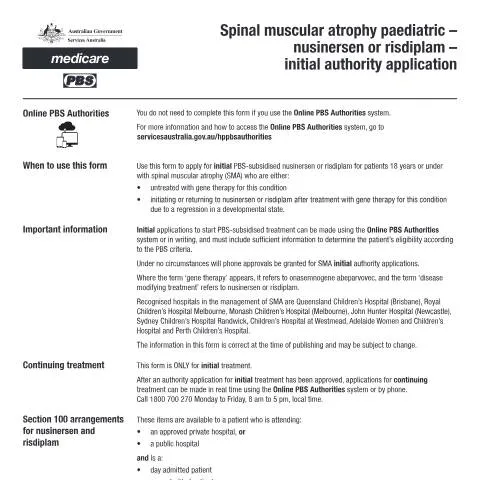
Understanding the PB233 Form in the Context of Spinal Muscular Atrophy Treatment
Spinal muscular atrophy (SMA) is a severe genetic disorder that necessitates prompt intervention to maximize outcomes. With therapies like nusinersen and risdiplam available, healthcare professionals play a crucial role in ensuring that eligible children receive these treatments. The PB233 - Spinal muscular atrophy paediatric - nusinersen or risdiplam - initial authority application form serves as a pivotal document in this process, creating a streamlined pathway for accessing essential medications.
The Importance of Timely Application
Initiating treatment for SMA at an early stage can significantly influence the effectiveness of the intervention. This makes understanding the PB233 form essential for healthcare providers, parents, and guardians. The PB233 form is required to apply for authority to prescribe nusinersen or risdiplam under the Pharmaceutical Benefits Scheme (PBS). The timely completion and submission of this form is crucial, as any delays could impact the child’s health and developmental progress.
Who Submits the PB233 Form?
The PB233 form is specifically designed to be submitted by healthcare professionals, typically paediatricians, neurologists, or other specialists involved in the management of SMA. These professionals need to assess the child's condition thoroughly and fill out the application accurately to ensure all necessary information is included. The process is typically initiated once a diagnosis of SMA is confirmed and treatment options are being discussed.
Filling Out the PB233 Form: Essential Elements
Accurate completion of the PB233 form is critical. Here are the main sections that healthcare professionals need to focus on:
- Patient Information: This section requires detailed information about the child, including their full name, date of birth, and Medicare number. Ensure that this information is correct to avoid delays.
- Clinical Information: Detailed clinical data needs to be provided, including the type of SMA (Type 1, Type 2, or Type 3), as well as any previous treatments the child has received.
- Reason for Treatment Request: This part must clearly outline the medical necessity for the prescribed treatment and should include clinical justifications supported by current guidelines and research.
- Signatures and Authorisation: The form must be signed by the prescribing healthcare professional, confirming that all information provided is accurate and complete.
Tips for Completing the PB233 Form
Careful attention to detail can enhance the chances of a successful application. Here are some practical tips:
- Cross-Verify Information: Double-check all entries against the child’s medical records to ensure accuracy.
- Use Clear Language: Avoid medical jargon unless necessary. Clarity increases the chances of approval.
- Attach Supporting Documentation: Relevant clinical reports or letters that justify the treatment request should be included.
Submitting the PB233 Form: Procedures and Best Practices
Once the form is completed, the next step involves submission. The submission process can be straightforward if the following guidelines are followed:
Where and How to Submit
The PB233 form can typically be submitted electronically through the myGov platform linked with Services Australia, or via traditional mail to the appropriate address provided in the guidelines. It’s important to choose the method that best suits the urgency of the situation.
Tracking Your Submission
After submission, healthcare professionals can track the status of the application through myGov. This allows for transparency and enables timely follow-ups in case further information is required.
What Happens After Submission? The Review Process
Once the PB233 form is submitted, it undergoes a review process by Services Australia and relevant health authorities. Understanding this phase is crucial for stakeholders involved.
Timeline for Review
The review of the application typically takes several weeks, depending on various factors such as the volume of applications being processed. During this time, it is advisable for healthcare professionals to keep communication lines open with Services Australia to ensure any queries are addressed promptly.
Potential Outcomes of the Application
There are mainly three possible outcomes:
- Approval: If granted, the authority will specify the duration and details of the PBS coverage for the prescribed medications.
- Request for Additional Information: In some cases, the reviewing body may require further documentation or clarification.
- Denial: If the application is denied, it will typically include reasons for the decision.
Navigating Refusals and Corrections
In the unfortunate event that the application is not approved, it is essential to understand the steps to take next.
Addressing a Denial
Upon receiving a denial, healthcare professionals should carefully review the feedback provided to understand the reasons for the decision. It may be beneficial to gather additional evidence or further justifications that support the treatment request.
Resubmitting the PB233 Form
If resubmission is required, ensure that all new information and documentation address the prior concerns raised. This may involve collaborating closely with the child's specialist team.
Special Circumstances: Complex Cases and Urgent Needs
Every child’s situation is unique, and there may be instances where the standard process requires adjustments.
Handling Urgent Requests
In cases where immediate treatment is necessary, healthcare providers must clearly communicate this urgency in the PB233 form, providing supporting evidence to substantiate the need for immediate intervention.
Complex Cases Involving Comorbidities
Children with SMA may also have other health considerations that complicate their treatment. It is crucial to detail all coexisting conditions in the PB233 form, as this may influence the decision-making process for the authority review.
Understanding the Broader Context of the PB233 Form in Australian Healthcare
The PB233 form does not exist in isolation; it is part of a broader system designed to provide essential health services to Australians. This document's role extends into policy and healthcare delivery, impacting both the clinical and administrative landscapes.
The Role of Services Australia
Services Australia is responsible for administering the PBS and ensuring that essential medications are accessible to those in need. Their role includes reviewing applications, providing guidance, and facilitating communication between healthcare providers and patients.
The Impact of Successful Applications
When approved, the PB233 form directly affects the child's access to life-altering treatments. This not only benefits the individual but also contributes to broader public health outcomes by improving quality of life and reducing long-term healthcare costs.
Final Thoughts on the PB233 Form: Ensuring Effective Care for Children with SMA
Filling out and submitting the PB233 form is a vital step in securing treatment for children afflicted with spinal muscular atrophy. As healthcare professionals navigate this process, they must remain vigilant about accuracy, clarity, and timely submission.
By following the outlined procedures and understanding the nuances of the application process, healthcare providers can significantly enhance the likelihood of successful treatment outcomes for their young patients.
Understanding Spinal Muscular Atrophy (SMA) in Paediatrics
Spinal Muscular Atrophy (SMA) is a genetic disorder that affects the motor neurons in the spinal cord, resulting in muscle weakness and atrophy. It is caused by a deficiency in the survival motor neuron (SMN) protein, critical for the health and function of motor neurons. In Australia, SMA is classified into four types, with Type 1 being the most severe and typically presenting in infancy. Type 2 and Type 3 present later and have a more varied prognosis, while Type 4 is the least severe, developing in adulthood.
Currently, there are two primary therapies approved for the treatment of SMA in children: nusinersen (brand name Spinraza) and risdiplam (brand name Evrysdi). These treatments aim to improve muscle function and slow disease progression, which can significantly enhance the quality of life for patients and their families. Nusinersen is administered via intrathecal injection, while risdiplam is an oral medication, providing different administration routes that may influence the choice of therapy based on patient needs and preferences.
Given the complexities surrounding SMA, it's crucial for families and healthcare providers to work closely together to ensure timely diagnosis, access to therapies, and comprehensive care plans that include physical therapy, nutritional support, and occupational therapy. Early intervention can lead to better outcomes, making awareness and education about the disease essential for parents and caregivers.
Application Process for Initial Authority for Nusinersen and Risdiplam
The application process for accessing nusinersen and risdiplam under the Pharmaceutical Benefits Scheme (PBS) can be intricate. The Initial Authority Application Form (PB233) is required to gain access to these medications. This form needs to be submitted to Services Australia, primarily through myGov for efficiency and tracking. Before initiating the application, it is recommended for healthcare professionals to ensure that the patient meets the eligibility criteria set forth by the PBS.
Key prerequisites include a definitive diagnosis of SMA, specifically either Type 1 or Types 2 and 3, confirmed by genetic testing. The treating medical professional must also detail the patient’s clinical condition and expected treatment outcomes in the application. It’s essential to provide comprehensive medical history and any previous treatments that have been undertaken, as this information will aid in the assessment process.
Once submitted, the application typically undergoes a review process that may take up to several weeks. Healthcare providers should prepare their patients and families for this wait, emphasizing the importance of following up with the designated health providers to ensure the application is progressing. In some cases, further information may be requested by Services Australia, which could extend the processing time. Therefore, having detailed and accurate medical records readily available can facilitate a smoother review process.
Claiming and Coverage After Approval
Once the Initial Authority Application is approved, patients may access nusinersen or risdiplam at a significantly reduced cost. It is important to understand the claiming process associated with these therapies. Patients can obtain the medications through pharmacies listed under the PBS, and a prescription from a qualified healthcare provider is necessary.
The PBS covers a specific number of doses per year, and patients or their guardians should keep track of their treatment cycles. For nusinersen, which is typically administered every four months after the initial loading doses, the ongoing treatment must be carefully monitored by the healthcare team to ensure that the patient continues to benefit from the therapy.
In terms of financial coverage, while the PBS provides substantial support, families may still encounter out-of-pocket expenses related to administration (for example, hospital visits for nusinersen injections) and any required follow-up care. It is advisable for families to explore additional financial assistance programs or community support initiatives that might be available in their local area to alleviate the burden of these costs.
Finally, it’s crucial for patients and families to stay informed about the latest developments in SMA research and treatment options. Healthcare providers can act as valuable resources, helping families navigate the healthcare system, understand their rights, and ensure that they receive the most appropriate and timely care possible.