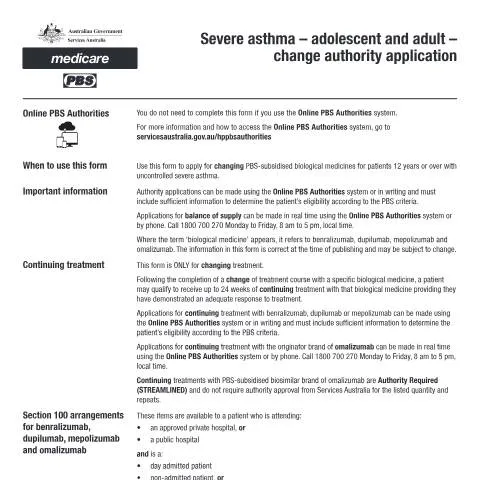
Navigating the Severe Asthma Change Authority: Insights into Form PB285
For many adolescents and adults struggling with severe asthma, the journey to obtaining effective treatment can often feel overwhelming. The process involves various administrative steps, one of the crucial elements being the completion and submission of the Severe asthma - adolescent and adult - change authority application form (PB285), managed by Services Australia. This document plays a pivotal role in enabling healthcare professionals to facilitate necessary changes in treatment plans for their patients. Understanding how to navigate this form is essential for ensuring that individuals receive the support they need.
Understanding the Context: Why PB285 Exists
The PB285 form is rooted in Australia's health framework, specifically designed to address the needs of individuals with severe asthma who require changes in their prescribed medications. This initiative aligns with ongoing efforts by Services Australia to streamline access to critical health services and medications, particularly through the Pharmaceutical Benefits Scheme (PBS).
The Legislative Framework
The existence of the PB285 form is underpinned by the overarching legislative framework that governs healthcare services in Australia. The Administrative Decisions (Judicial Review) Act 1977 (Cth) provides the legal basis for reviewing decisions related to access to health benefits, including those involving asthma treatment. This regulatory backdrop ensures that healthcare providers can advocate effectively for their patients while adhering to national standards and protocols.
Who Should Submit PB285: Target Audience and Unique Considerations
While many may assume that the PB285 form is universally applicable, it’s specifically tailored for certain demographics. Primarily, this application is relevant for healthcare professionals, particularly those treating adolescents and adults diagnosed with severe asthma.
Profile of the Typical User
- Healthcare Providers: General practitioners, specialists in respiratory medicine, and asthma clinics are the primary entities that will submit this form on behalf of their patients.
- Patients: Individuals aged 12 and older experiencing severe asthma symptoms may qualify for changes in their medication, thus necessitating the completion of this form.
- Caregivers: Responsible parties who may advocate for patients struggling to fill out the form themselves.
Other Relevant Scenarios
It’s important to note that some patients may not fit neatly into this category. For instance, those transitioning from paediatric to adult asthma care may face unique challenges. Furthermore, patients who have recently relocated or changed their healthcare provider may need to provide additional documentation to establish their eligibility, making the role of the healthcare provider even more crucial.
Decoding the Application: Insights into the Form’s Sections
The PB285 form consists of multiple sections, each designed to gather specific information essential for assessing a patient's condition and treatment needs. Completing this form accurately is vital for a smooth review process. Here’s a breakdown of the main sections along with potential pitfalls.
Personal Information
This section requests the patient's name, date of birth, and contact details. Accuracy is paramount here; an incorrect date of birth could delay processing. Ensure all information matches what is on the patient’s identification documents.
Medical History and Current Treatment
Healthcare providers must provide a detailed account of the patient's medical history concerning asthma. This includes:
- Previous asthma medications
- Frequency and severity of asthma episodes
- Any hospital admissions related to asthma
One common mistake is underreporting previous treatments, which can lead to inappropriate recommendations or further treatment delays.
Reason for Change Request
In this section, the healthcare provider must justify why a change in treatment is necessary. This could involve discussing:
- Inadequate control of asthma symptoms with the current treatment
- Side effects experienced by the patient
- New clinical guidelines or evidence supporting alternative treatments
Providers should be careful to clearly articulate the rationale, as this will be critical in the decision-making process.
Submission Channels: Navigating Your Options
Understanding where and how to submit the PB285 form can save time and prevent frustration. Services Australia offers multiple submission channels, each with its unique advantages.
Online Submissions through myGov
For many healthcare professionals, the online submission route via myGov is the most efficient method. This allows for immediate receipt confirmation and may expedite processing times. To submit online:
- Log into your myGov account.
- Select 'Services Australia'.
- Navigate to the relevant section for health professionals.
- Upload the completed PB285 form along with any necessary attachments.
Paper Submissions
For those who prefer traditional methods or do not have access to the online system, submitting a paper form is also an option. This involves:
- Printing and filling out the PB285 form.
- Ensuring all necessary signatures are included.
- Mailing the form to the designated Services Australia address.
While this method may seem straightforward, it does come with potential delays inherent in postal services.
Tracking Your Application: Staying Informed
Once the PB285 form has been submitted, it’s crucial for healthcare providers and patients alike to stay informed about the status of the application. Services Australia provides several ways for applicants to track their submissions.
Online Tracking Options
For those who have submitted their application via myGov, tracking can be done through the same platform. Users can check the status of their application directly online, where updates are often posted in real time.
Follow-Up Protocols
In cases where no updates have been provided, it’s advisable to follow up directly with Services Australia. Contact methods may include:
- Phone inquiries to customer service.
- Email follow-ups for detailed queries.
- In-person visits at local Services Australia offices.
Healthcare providers should maintain a record of all communication regarding the application for future reference.
Common Misconceptions and Clarifications
Despite its importance, there are several misconceptions surrounding the PB285 form that need addressing. Understanding these can help prevent delays and improve the overall application experience.
Distinguishing PB285 from Other Forms
Many individuals confuse the PB285 with other health-related forms, such as the authority application forms for other medications or treatments. The PB285 is specific to severe asthma treatments and must not be confused with forms designed for chronic obstructive pulmonary disease (COPD) or other respiratory conditions. Ensuring the correct form is submitted is critical for timely processing.
What Happens After Submission?
After a form is submitted, many applicants are uncertain about the follow-up process. Services Australia typically reviews applications based on the information provided, with outcomes communicated through the chosen submission channel. It's essential to understand that:
- The review period may vary based on the complexity of the case.
- Additional information or documentation may be requested, which can delay the process.
- Patients and providers will be informed of the decisions regarding medication changes through formal notifications.
Resource Links and Additional Support
Access to accurate and timely information is crucial for navigating the complexities of health forms like PB285. While specific links cannot be provided here, Services Australia maintains a wealth of resources, including:
- Guidelines for healthcare professionals on completing authority application forms.
- Patient support services for queries related to asthma management.
- Contact information for direct assistance with PB285-related inquiries.
Educational Materials
Healthcare providers are encouraged to stay updated with the latest guidelines and educational opportunities related to asthma management. Participating in workshops or online courses can further enhance their ability to navigate these processes effectively.
Conclusion: Your Role in Asthma Management
Completing the Severe asthma - adolescent and adult - change authority application form (PB285) is not just about paperwork; it represents a vital step in advocating for better health outcomes for patients living with severe asthma. By understanding the specifics of the form, the submission process, and the importance of accurate information, healthcare providers can significantly enhance their patients' experiences and outcomes. It's about making informed choices and ensuring that every individual has access to the treatment they require.
Understanding the Application Process for Severe Asthma Change Authority (PB285)
When applying for the Severe Asthma Change Authority (PB285) in Australia, it is crucial for applicants to grasp the detailed process involved. This application is designed to enable individuals with severe asthma to access specific subsidized medications, thereby enhancing their quality of life. The application process can initially appear daunting; however, by breaking it down into manageable steps, potential applicants can navigate it more effectively.
The application is submitted through the Pharmaceutical Benefits Scheme (PBS), which is managed by Services Australia. To commence the application process, individuals must first determine their eligibility, which typically involves providing comprehensive medical evidence from a healthcare professional that supports the diagnosis of severe asthma. This includes information regarding the patient's past treatments, responses, and any exacerbations experienced.
Once eligibility is established, applicants must complete the PB285 form accurately. It is critical to follow the guidelines provided with the form, as inaccuracies or omissions can lead to delays or even rejection of the application. Additionally, it’s advisable to gather all necessary documentation, such as test results, specialist letters, and previous medication history, to substantiate the claim.
After submitting the application, applicants can track the progress through their myGov account linked to Services Australia. It is essential to be aware that the assessment process may take several weeks, and applicants may receive requests for further information during this time. Proactively responding to any queries from Services Australia can expedite the review process.
Eligibility Criteria and Supporting Documentation Needed
Eligibility for the Severe Asthma Change Authority (PB285) hinges on several critical criteria, which applicants must meticulously adhere to. Primarily, the applicant must have a confirmed diagnosis of severe asthma as defined by the National Asthma Council Australia. This includes individuals who experience frequent exacerbations, have significant limitations in their daily activities due to asthma, and require high-intensity therapy to control their symptoms.
For adolescents and adults, the documentation required can vary somewhat based on the individual's medical history and existing treatments. Generally, the following supporting documents are advisable:
- Medical letter: A letter from a specialist (such as a respiratory physician) outlining the severity of the asthma, the treatments previously attempted, and the necessity for the requested PBS medication.
- Clinical evidence: Any relevant test results (like spirometry results or asthma action plans) that can corroborate the diagnosis of severe asthma.
- Medication history: A list of past and current medications, including how they have been effective or ineffective over time.
It’s also important to include any additional information that may assist the reviewing body in understanding the severity of the condition. Failing to provide comprehensive documentation can lead to a denial of the application.
Furthermore, applicants should be prepared for the possibility of a review if the initial application is denied. In that case, a detailed appeal citing additional supportive documentation or clarification on the severity of the asthma may be necessary, along with an understanding of the procedures laid out in the Administrative Decisions (Judicial Review) Act 1977 (Cth).
Implications of the Change Authority Decision on Treatment Options
The decision regarding the Severe Asthma Change Authority (PB285) application can significantly impact both treatment options and overall health outcomes for individuals suffering from severe asthma. If approved, the individual gains access to subsidized medications that are often high-cost, which can alleviate financial pressure and improve adherence to treatment plans.
Conversely, if the application is denied, the implications can be substantial. Not only does it limit access to potentially life-saving medications, but it can also lead to worsening asthma control, increased hospital visits, and a reduced quality of life. In such cases, patients may need to explore alternative funding options or rely on less effective treatments, which could exacerbate their condition, leading to more severe health complications.
Moreover, understanding the full implications of the Change Authority decision is vital for healthcare professionals involved in the patient's care. If a patient's PBS application is successful, it empowers clinicians to prescribe optimally dosed medications knowing they are financially accessible for the patient. On the other hand, if denied, healthcare professionals may need to revisit treatment plans and focus on alternative therapies, potentially leading to a less favorable outcome.
In summary, the decision surrounding the Severe Asthma Change Authority application not only affects immediate medication access but can have a profound impact on long-term health outcomes and the overall management of asthma in adolescents and adults.