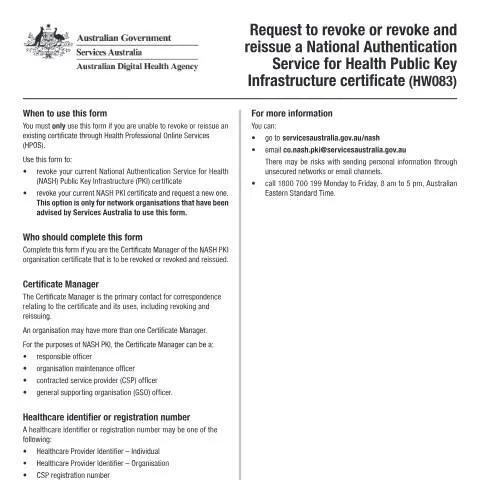
Navigating the NASH PKI Certificate: A Comprehensive Guide
For health professionals in Australia, the necessity of a NASH Public Key Infrastructure (PKI) certificate cannot be overstated. As healthcare increasingly integrates digital solutions, the importance of secure communication channels has grown significantly. The Request to revoke or reissue a NASH PKI certificate form (HW083) is a pivotal document in ensuring that practitioners maintain secure access to essential health services. Let's explore the intricacies of this document in detail.
The Significance of the NASH PKI Certificate
Understanding the role of the NASH PKI certificate is crucial for healthcare providers. This certificate facilitates secure electronic communication between health professionals and various health systems, including Medicare and the Australian Digital Health Agency. It ensures that sensitive patient information remains protected under the National Privacy Principles.
What Does the NASH PKI Certificate Entail?
- Identity Verification: The certificate validates the identity of health professionals accessing electronic health systems.
- Data Encryption: It enables encrypted communications, thereby ensuring confidentiality.
- Access to Services: Required for accessing services such as eHealth records and the Pharmaceutical Benefits Scheme (PBS).
Eligibility Criteria and Application Process
Acquiring a NASH PKI certificate is not a one-size-fits-all process. Specific eligibility criteria must be met, which depend on the nature of the healthcare services provided. Below is an outline of who can apply and the steps required:
Who Can Apply?
- Registered medical practitioners.
- Nurses and midwives with the relevant qualifications.
- Allied health professionals like physiotherapists and occupational therapists.
- Organizations providing health services, including hospitals and clinics.
Application Steps
- Verify eligibility based on your professional registration.
- Gather necessary identification documents, such as your Health Professional Registration.
- Complete the HW083 form accurately, ensuring all requested information is provided.
- Submit your application electronically through the myGov portal, or via the method indicated by Services Australia.
Understanding the Revocation and Reissue Process
There are circumstances where a NASH PKI certificate may need to be revoked or reissued. Understanding these circumstances is vital for maintaining uninterrupted access to health services.
Reasons for Revocation
- Loss or Theft: If the certificate is compromised, immediate action is required to revoke it.
- Change of Employment: Transitioning to a new role may necessitate a new certificate.
- Change of Registration: If a health professional’s registration status changes, the certificate must be updated.
Steps to Revoke or Reissue
- Complete the HW083 form, indicating whether you're requesting revocation or reissue.
- Provide any pertinent details about the previous certificate.
- Submit the completed form to Services Australia through the designated channels.
Legal and Professional Implications
The NASH PKI certificate holds significant legal weight within the healthcare sector. It is not merely a bureaucratic requirement; rather, it is integral to the framework of patient data protection and professional accountability.
Legal Validity
| Aspect | Details |
|---|---|
| Compliance with Privacy Laws | Ensures adherence to the National Privacy Principles for safeguarding patient information. |
| Record Keeping | Facilitates proper documentation of patient interactions, crucial for legal accountability. |
| Professional Liability | Failure to maintain a valid certificate can expose professionals to liability risks. |
Usage Scenarios: Where and When is it Required?
Understanding the contexts in which a NASH PKI certificate is required enhances its practical value. Here are various scenarios where this certificate comes into play:
Access to Health Information Systems
- Utilizing the Australian Immunisation Register for patient vaccination data.
- Accessing My Health Record to coordinate patient care seamlessly.
- Engaging with the Prescription Shopping Information Service (PSIS) for monitoring patient prescriptions.
Telehealth Consultations
As telehealth becomes more prevalent, maintaining secure communication channels is critical. The NASH PKI certificate ensures that consultations conducted online remain confidential and secure, protecting both patient and practitioner.
Validity Period and Renewal Guidelines
Another critical aspect of the NASH PKI certificate is its validity period. Health professionals must be aware of when their certificate expires and the steps required for renewal.
Validity Duration
The NASH PKI certificate typically remains valid for a specified period, after which it must be renewed. Regular monitoring of expiration dates ensures continuous access to necessary services.
Renewal Process
- Monitor your certificate's expiration date through your myGov account.
- Complete the renewal application ahead of the expiration date, preferably within the recommended timeframe.
- Submit any required supporting documentation as specified in the renewal instructions.
Strategies for Maintaining Compliance
To ensure ongoing compliance and secure operations, healthcare professionals should adopt effective strategies regarding their NASH PKI certificates. Here are some practical tips:
- Regular Updates: Stay informed on the latest updates from Services Australia regarding the certificate.
- Document Safekeeping: Keep all related documents in a secure and accessible format.
- Training and Awareness: Participate in training sessions regarding digital health security to understand best practices.
Future Considerations: The Evolving Role of Digital Health Certificates
The landscape of healthcare is continually evolving, and with it, the role of digital health certificates like the NASH PKI certificate. As technological advancements occur, health professionals must remain adaptable and informed about changes that may affect their practice.
Emerging Technologies
- Increased integration of artificial intelligence in healthcare may necessitate new security measures.
- Blockchain technology for health records may revolutionize patient data management.
Staying ahead of these trends ensures that health professionals can leverage technology while maintaining compliance and protecting patient information.
Conclusion: Empowering Health Professionals
In summary, the NASH PKI certificate is not merely a technical tool, but a cornerstone in the safeguarding of patient data within the Australian healthcare system. The process of obtaining, revoking, and renewing this certificate is designed to support healthcare professionals in their vital work. By understanding its implications, professionals can ensure they uphold the highest standards of patient care and data security.
Understanding the Importance of NASH PKI Certificates
NASH PKI certificates play a critical role in the delivery of secure electronic communication within Australia’s healthcare system. The National Authentication Service for Health (NASH) is designed to support secure messaging and interoperability among various healthcare providers. These certificates enable healthcare professionals to confidently exchange sensitive patient information while complying with privacy laws and regulations.
Having a valid NASH PKI certificate is not just a matter of convenience; it is essential for ensuring that healthcare services can maintain the integrity and confidentiality of patient data. With the increasing shift towards digital health solutions, the importance of these certificates has grown significantly, making it vital for healthcare entities to understand their functionality and the procedures surrounding requests for revocation or reissuance.
When a healthcare provider’s NASH PKI certificate is compromised or becomes invalid, it can lead to disruptions in services, exposure of sensitive information, or non-compliance with regulatory requirements. As such, understanding the process for handling NASH PKI certificates—including situations that lead to the need for revocation or reissuance—is crucial for any health service professional.
Eligibility Criteria for NASH PKI Certificate Revocation or Reissue
Before initiating the process of revoking or requesting the reissue of a NASH PKI certificate, it’s essential for applicants to understand the eligibility criteria established by the Department of Health and Aged Care. Certain conditions must be met to ensure that the request is valid and justifiable.
Generally, requests for revocation can be made under circumstances, such as:
- Compromise of the private key associated with the NASH PKI certificate.
- Change in the status of the healthcare provider, such as closure or change in service delivery.
- Death or incapacity of the individual associated with the certificate.
- Failure to comply with required standards or regulations, necessitating a new certificate.
On the other hand, a reissue might be necessary if:
- The original certificate is nearing its expiration date.
- The certificate has been lost, stolen, or damaged.
- There have been significant changes to the healthcare provider’s details, such as a change in address or business name.
- Upgrades to security protocols require a new certificate with enhanced features.
It is also important to note that any reissue requests will be subject to verification processes to ensure that the applicant remains eligible to use the NASH PKI system. This may include providing updated documentation, proof of identity, and a clear statement detailing the reason for the reissue.
Step-by-Step Guide to Submitting Your Request
Submitting a request to revoke or reissue a NASH PKI certificate can seem daunting, but understanding the step-by-step process can streamline the experience and ensure compliance with the necessary requirements. Below is a comprehensive breakdown of the procedure.
Step 1: Gather Required Documentation
Before submitting your request, ensure that you have all the necessary documentation. This may include:
- A completed HW083 form (Request to Revoke or Reissue a NASH PKI Certificate).
- Proof of identity, such as a driver's license or passport.
- Documentation supporting your claim for revocation or reissue, such as a police report if the certificate was stolen or a letter from your employer confirming changes in your employment status.
Step 2: Access MyGov
Log in to your MyGov account, as all submissions are managed through this secure portal. If you do not already have a MyGov account, you will need to set one up and link it to your healthcare service provider profile.
Step 3: Complete the HW083 Form
Carefully fill out the HW083 form, ensuring that all fields are completed accurately. Pay particular attention to provide clear and concise answers regarding the reason for your request, as well as any relevant details about your current circumstances.
Step 4: Submission
Once your HW083 form is completed and all required documentation is gathered, you can submit your request through MyGov. Follow the prompts carefully to ensure that your submission is successful.
Step 5: Await Confirmation
After submission, you should receive a confirmation email indicating that your request has been received. The review process typically takes a few business days, during which the Department of Health and Aged Care will assess your request and documentation. Be prepared to respond promptly to any queries or requests for further information to avoid delays in processing.
Step 6: Notification of Outcome
You will be notified of the outcome of your request via email. If approved, the new or reissued NASH PKI certificate will be issued, and you will receive instructions on how to download and install it properly. If your request is denied, you have the right to inquire about the reasons for the decision and, if applicable, pursue further avenues for appeal.