Navigating the HW065 Form: Understanding Its Role in Remote Healthcare
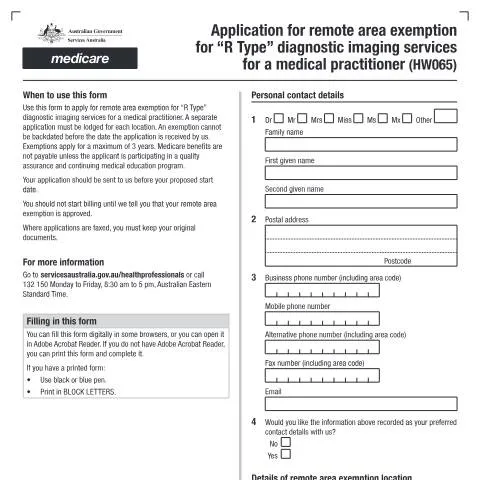
In Australia, access to healthcare services can be especially challenging for those residing in remote areas. The HW065 form, officially titled Application for remote area exemption for R-type diagnostic imaging services for a medical practitioner form, plays a crucial role in addressing these challenges. This document is designed for medical practitioners seeking exemptions for specific diagnostic imaging services provided in remote locations. Understanding the nuances of this form is essential for healthcare providers and administrators working in these contexts.
Who Should Engage with the HW065 Form?
The HW065 form is specifically intended for medical practitioners who operate in designated remote areas of Australia. These practitioners may be general practitioners, specialists, or allied health professionals who provide diagnostic imaging services. The exemption allows them to offer these services without the same restrictions that apply in urban centres, thus broadening the scope of healthcare accessibility.
Identifying Your Eligibility
Eligibility for filling out the HW065 form hinges on various factors, particularly the location of the practice and the services being provided. Practitioners should consider the following:
- Location: The practice must be located in a remote area as defined by Services Australia.
- Type of Service: Ensure that the imaging services offered fall under the R-type category.
- Compliance: Practitioners must adhere to the legal and professional guidelines outlined by the relevant authorities.
Unpacking the Form: Step-by-Step Guidance
Completing the HW065 form effectively requires a detailed understanding of its sections. Each part of the form is designed to capture essential information that will determine the exemption decision.
Section Breakdown
| Form Section | Description | Common Pitfalls |
|---|---|---|
| Practitioner Details | Includes name, professional registration, and contact information. | Incorrect registration number can lead to delays. |
| Location of Practice | Details about the practice's address and its classification as remote. | Failing to provide comprehensive location details. |
| Services to be Provided | List of diagnostic imaging services intended for exemption. | Omitting specific services may invalidate the application. |
| Justification for Exemption | Rationale for needing an exemption and potential benefits for patients. | Lack of clarity in justification can hinder approval. |
Supporting Documentation: Essential Justifications and Evidence
Alongside the HW065 form, practitioners must submit supporting documentation to substantiate their claims for exemption. The exact requirements can vary, but typically include:
Key Supporting Documents
- Proof of Location: This could be utility bills, lease agreements, or other official documents supporting the practice's remote classification.
- Professional Registration: A current copy of the practitioner’s registration with relevant medical boards.
- Service Descriptions: Detailed descriptions of diagnostic imaging services offered, demonstrating their necessity in the remote area.
- Patient Impact Statements: Testimonials or data supporting the need for these services in the local community.
Submission Channels: Choosing Your Path
Once the HW065 form and its supporting documents are completed, practitioners must choose their submission method. Services Australia offers several options, each with its own advantages and considerations.
Comparative Submission Methods
| Method | Advantages | Considerations |
|---|---|---|
| Online Submission via myGov | Quick processing times and immediate confirmation of receipt. | Requires a myGov account, which some practitioners may find challenging to set up. |
| Postal Submission | Allows for careful review and physical signatures. | Longer processing times and potential postal delays. |
| In-Person Submission | Opportunity for immediate clarification and assistance from staff. | Limited to certain locations and may require additional travel. |
What to Expect After Submission
Once the HW065 form is submitted, practitioners may wonder about the timeline and process of review. Here’s a general outline of what happens:
Review Process Overview
- The submission is received and logged by Services Australia.
- A preliminary review is conducted to ensure all necessary information and documentation are included.
- Additional information may be requested if needed, which could delay the process.
- Once the review is complete, the practitioner will be notified of the outcome, including any conditions attached to the exemption.
Your Rights and Responsibilities as a Practitioner
Filling out the HW065 form not only opens doors to exemptions but also comes with a set of rights and responsibilities for practitioners.
Key Rights
- The right to a fair and timely review of the application.
- The right to appeal decisions if the exemption is denied.
- Access to assistance and guidance from Services Australia throughout the process.
Essential Responsibilities
- Submitting accurate and complete information to avoid unnecessary delays.
- Staying informed about changes in policies or requirements that may affect the exemption status.
- Maintaining compliance with all ongoing conditions related to the exemption.
Special Cases: Navigating Complex Situations
Not every application will fit neatly into the standard process outlined. Various complexities can arise that practitioners should be prepared to address.
Common Complex Scenarios
- International Practitioners: Those from overseas may have additional requirements, including proof of qualifications and registration.
- Minors or Vulnerable Populations: Special considerations may apply when services are intended for these groups, requiring more comprehensive justification.
- Emergency Situations: Practitioners should be aware of expedited processes available in crises or urgent care scenarios.
The Bigger Picture: Integration into Broader Health Initiatives
The HW065 form is not just a standalone document; it integrates into a larger framework of services and initiatives aimed at enhancing healthcare delivery in remote areas. Understanding this context can be beneficial for practitioners.
Contextual Importance
This form plays a pivotal role in enabling access to essential imaging services, thereby supporting broader health outcomes and equity for populations living in remote areas. It reflects Australia’s commitment to ensuring that distance does not compromise the quality of healthcare available.
Further Considerations: Engaging with Services Australia
As practitioners embark on the journey of submitting the HW065 form, engaging with Services Australia is key. They provide resources, guidance, and updates that can aid in successfully navigating the application process.
Staying Connected
- Regularly check the Services Australia website for updates regarding policies, procedures, or forms.
- Consider attending information sessions or workshops offered by Services Australia for practical insights.
- Utilize available helplines or contact services for direct assistance should questions arise during the process.
Understanding R-Type Diagnostic Imaging and Its Relevance to Remote Area Services
The R-Type diagnostic imaging services encompass a range of imaging techniques critical for patient diagnosis and treatment. In Australia, medical practitioners providing these services, particularly in remote areas, play a pivotal role in ensuring that patients receive essential healthcare without the need for extensive travel. These services can include X-rays, ultrasounds, and other forms of imaging that support timely medical interventions.
In remote areas, the lack of accessible medical facilities often necessitates regulatory measures, such as the remote area exemption, that allows healthcare providers to maintain service delivery standards without the constraints typically faced in urban environments. This exemption enables practitioners to offer R-Type services under the Medicare system, thereby allowing patients to receive necessary diagnostic tests in their localities. It is important for medical practitioners to familiarize themselves with the specific eligibility criteria and procedural guidelines involved in applying for this exemption.
Eligibility Criteria and Application Procedures
To successfully apply for the remote area exemption associated with R-type diagnostic imaging services, medical practitioners must adhere to specific eligibility criteria. These criteria typically include operating within designated remote areas as defined by the Department of Health, meeting the qualifications necessary for providing diagnostic imaging, and demonstrating a commitment to serving the local population's healthcare needs.
The application process itself requires practitioners to complete the HW065 form, which collects pertinent information about the applicant’s practice location, qualifications, and the services offered. Additionally, practitioners must provide supporting documentation to validate their claims of remote area service provision. This can include maps showing the service area, patient demographic information, and case studies illustrating the types of diagnostic imaging services provided.
It is crucial for applicants to ensure that all provided information is accurate and comprehensive, as any discrepancies can lead to delays or rejections of the application. Practitioners should also consider consulting with their local Medicare office or industry associations to gain insights into the nuances of the application process and to stay updated on any changes in regulations or requirements.
Impact of the Remote Area Exemption on Healthcare Delivery
The remote area exemption significantly impacts healthcare delivery by promoting equitable access to essential diagnostic services for patients residing in less accessible regions. By enabling local medical practitioners to offer R-type diagnostic imaging, this policy reduces the need for long-distance travel to urban centers for patients, thus minimizing healthcare disparities that often affect rural populations.
Moreover, improved access to diagnostic services through the exemption fosters better health outcomes. Timely imaging can lead to quicker diagnoses and treatments, which is particularly important in acute medical situations where conditions may worsen without prompt intervention. Additionally, the exemption can enhance the professional landscape for medical practitioners in remote areas, encouraging more healthcare professionals to set up practices where they are most needed.
Long-term, this initiative may contribute to a more resilient healthcare system, as practitioners in remote areas become better equipped to handle various medical conditions through enhanced diagnostic capabilities. By promoting local care options, the Australian healthcare system can effectively address the unique challenges faced by rural communities, reaffirming the commitment to providing high-quality health services for all Australians.