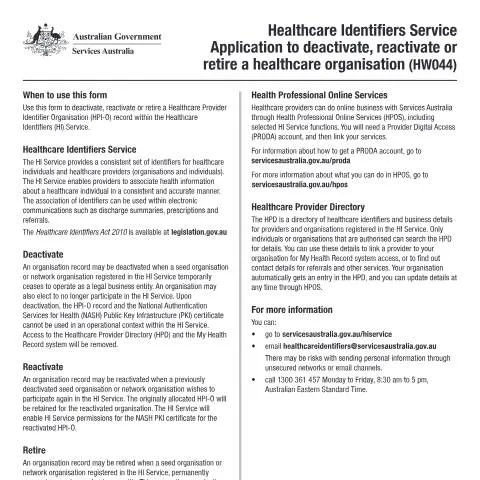
Navigating the HI Service - Application to Deactivate, Reactivate or Retire a Healthcare Organisation Form (HW044)
Healthcare organisations in Australia must adapt to the evolving landscape of health services. When a healthcare organisation decides to deactivate, reactivate, or retire, the HI Service - Application to Deactivate, Reactivate or Retire a Healthcare Organisation Form (HW044) is a critical document that facilitates these changes. This form, administered by Services Australia, plays a pivotal role in ensuring that healthcare organisations remain compliant with Australian health regulations.
Who's at the Helm? Understanding the Stakeholders
The completion of the HW044 form primarily involves healthcare professionals and administrative staff within healthcare organisations. Stakeholders typically include:
- Healthcare Organisation Administrators: Individuals responsible for managing the day-to-day operations and compliance of the healthcare entity.
- Healthcare Providers: Medical professionals who might be impacted by operational changes within the organisation.
- Patients: Beneficiaries of services who may experience disruptions depending on the status of the healthcare organisation.
- Regulatory Bodies: Entities such as Services Australia that ensure compliance and oversee the healthcare landscape in Australia.
It is essential for these stakeholders to understand the implications of activating or deactivating a healthcare entity, as it affects not only their operations but also the services provided to the community.
From Initiation to Submission: The Step-by-Step Process
Understanding the lifecycle of the HW044 form—from the initial decision to submit through to the eventual outcome—can streamline the process significantly. This journey can be broken down into several key milestones:
- Assessment of Need: Determine whether your organisation needs to deactivate, reactivate, or retire. This phase requires careful consideration of operational factors and compliance requirements.
- Gather Required Information: Before completing the HW044 form, collect all necessary documentation, including your organisation's registration details, previous healthcare reports, and any relevant financial statements.
- Completion of the HW044 Form: Carefully fill out each section of the form, ensuring accuracy to avoid delays.
- Submission: Choose your preferred submission method (online, paper, or in-person) and send the form to Services Australia.
- Await Confirmation: After submission, Services Australia will review your application and send a confirmation of the outcome.
This structured approach not only clarifies the process but also minimizes potential setbacks that could arise from incomplete submissions or misunderstandings regarding requirements.
Diving Deeper: Unpacking the HW044 Form Sections
The HW044 form consists of several key sections, each designed to capture specific information. Understanding what is required in each section can help prevent errors that could lead to processing delays. Below is a breakdown of the form’s main components:
| Section | Description | Common Pitfalls |
|---|---|---|
| Organisation Details | Includes the name and type of the healthcare organisation. | Ensure that the organisation name matches official registration documents. |
| Purpose for Deactivation/Reactivate | State the reasons for the application. | Be clear and concise; vague reasons may raise questions. |
| Contact Information | Provide accurate contact details for follow-up communications. | Double-check phone numbers and email addresses for accuracy. |
| Supporting Documentation | List any attached documents that support your application. | Failure to include required documentation can lead to immediate rejection. |
It is crucial to pay close attention to each section to ensure a smooth application process. Inaccuracies or omissions can lead to requests for additional information, significantly delaying the outcome.
Choosing Your Submission Method Wisely
When it comes to submitting the HW044 form, healthcare organisations have several avenues to consider. Each method has its own set of pros and cons:
- Online Submission: Utilising myGov for online submissions is often the quickest option, allowing for immediate confirmation of receipt. However, it requires an existing account setup.
- Paper Submission: Sending a physical copy via post can be slower and runs the risk of delays, particularly if there are issues with the postal service. It's crucial to ensure that the form is sent to the correct address.
- In-Person Submissions: For some, delivering the form to a local Services Australia office allows for direct interaction. This can be beneficial if there are questions or if clarification is needed on the spot.
Choosing the right submission method depends heavily on your organisation’s preferences, urgency, and resources available for managing the submission process.
What Happens Next: The Timeline and Decision Process
After submission of the HW044 form, the waiting period begins. Typically, the decision-making process involves several steps:
- Initial Review: Services Australia will conduct a preliminary assessment of your application for completeness.
- Detailed Evaluation: If the application is complete, it will enter a detailed review phase, where the reasons for deactivation, reactivation, or retirement will be examined.
- Communication: Services Australia will inform the organisation of the decision, typically via the contact information provided in the form.
The timeline for this process can vary based on numerous factors, including the volume of applications being processed at the time and the complexity of your application. It's advisable to stay in touch with Services Australia during this time to ensure any issues are promptly resolved.
Unique Circumstances: Tailored Considerations for Specific Scenarios
Healthcare organisations come in various shapes and sizes, and their reasons for submitting the HW044 form can differ widely. Here are some unique situations that may affect the application process:
- International Healthcare Organisations: If you are an overseas entity looking to establish or deactivate a presence in Australia, additional regulatory requirements may apply.
- Minors and Healthcare: If the application involves a healthcare service for minors or vulnerable populations, additional scrutiny may be applied to ensure compliance with safeguarding policies.
- Organisations in Distress: If your organisation is facing financial difficulties or is under investigation, this may influence the decision process and necessitate additional documentation or justification.
Each of these scenarios highlights the importance of understanding the specific context your organisation operates within, as this can significantly impact both the submission process and the outcome.
Responding to Challenges: What to Do if Your Application is Delayed or Declined
In the event of unexpected delays or a decline of your HW044 application, it’s crucial to take swift and informed action. The following steps can guide you through the process:
- Request Clarification: Immediately reach out to Services Australia for specific reasons behind the delay or decline.
- Prepare Additional Documentation: If requested, gather any necessary documents that may provide further support to your application.
- Consider an Appeal: If you believe your application was unjustly denied, you have the right to appeal the decision. This will involve submitting a formal request for a review under the Administrative Decisions (Judicial Review) Act 1977 (Cth).
Having a proactive approach not only helps in addressing issues but can also significantly enhance your chances of a successful resolution.
Staying Updated: Resources and Support for Healthcare Organisations
As the healthcare landscape in Australia continues to evolve, staying informed about current regulations and support mechanisms is essential. Here are some resources to assist healthcare organisations in navigating the complexities of the HW044 form and overall compliance:
- Services Australia Website: A wealth of information is available on the official Services Australia website, including updates on policies and procedure changes.
- Health Industry Associations: Membership in relevant health associations can provide access to tailored advice and support for navigating regulatory changes.
- Professional Development: Engaging in continuous learning opportunities can keep organisational leaders and staff informed about best practices in compliance and administration.
By leveraging these resources, healthcare organisations can better position themselves for success in their operations and regulatory compliance efforts.
Understanding the Health Organisation Activation and Deactivation Process
The application process for deactivating, reactivating, or retiring a healthcare organisation in Australia is specifically outlined in the HW044 form. It is crucial for healthcare providers to understand the implications of these actions, as they can significantly affect their operational status and compliance with the regulatory framework set by the Department of Health. Each healthcare organisation must align its operations with the Australian Health Practitioner Regulation Agency (AHPRA) guidelines and state-specific legislation, which can vary across territories.
When considering the deactivation of a healthcare organisation, it’s essential to evaluate the reasons behind such a decision. Common circumstances for deactivation include the temporary closure of services, changes in management, or restructuring within the healthcare facility. Reactivation, on the other hand, often follows significant operational changes or the resolution of issues that previously warranted deactivation. All healthcare organisations must ensure that they maintain proper documentation throughout this process, including previous correspondence with relevant authorities and records of compliance with health and safety regulations.
The retirement of a healthcare organisation is a more complex procedure and typically involves the cessation of all services, which can have far-reaching implications for patients, employees, and the local community. Healthcare providers need to conduct a comprehensive analysis before initiating this process, ensuring that patient care is not compromised during the transition. Additionally, financial considerations and obligations to employees, such as redundancy payments, must be taken into account.
Navigating the Form HW044: Key Sections and Requirements
The HW044 form contains several critical sections that healthcare organisations must carefully complete to ensure proper processing of their request. First and foremost, applicants must provide accurate organisational details, including the name, registered address, and the Australian Business Number (ABN). This identification is crucial for the Department of Health to accurately assess the organisation's compliance status and make informed decisions regarding the application.
In Section 3 of the HW044 form, applicants are required to specify the type of change being requested—be it deactivation, reactivation, or retirement, along with the effective dates. Providing precise dates is important, as these will guide the operational timelines and any obligations related to patient care and staff notifications.
Furthermore, Section 4 requests a detailed explanation of the reasons for the application. This section should be approached with diligence, as it offers an opportunity to communicate the rationale behind the changes. Providing comprehensive and transparent information can facilitate a smoother review process by the Department of Health.
Another critical aspect of the HW044 form involves the need for supporting documentation. Section 5 lists the requisite documentation that must accompany the application. This may include, but is not limited to, proof of notification to patients, employee agreements regarding changes in employment status, and any relevant correspondence with regulatory bodies. Failing to include these documents may result in delays or complications in the processing of the application.
Post-Application Considerations and Next Steps
After submission of the HW044 form, healthcare organisations must remain proactive in their communication with the Department of Health. It is advisable to keep detailed records of all interactions, including dates, names of representatives spoken to, and summaries of discussions. This practice not only assists in tracking the status of the application but also helps in resolving any potential disputes or misunderstandings that may arise.
Once the application is processed, the Department will issue a decision regarding the status change. If approved, the organisation must ensure compliance with any conditions laid out in the decision letter. This may involve adhering to specific timelines for patient notifications or transitioning staff roles. In cases where an application is denied, the organisation has the right to request a review under the Administrative Decisions (Judicial Review) Act 1977 (Cth), making it imperative to understand the nuances of the review process and the grounds for appeal.
Additionally, organisations considering reactivation or retirement should develop a comprehensive communication plan to address the impact on patients and staff. This plan should include information on how patients will be managed during the transition, any referrals to alternative services, and support for staff affected by the changes. Maintaining transparency throughout this process helps to build trust within the community and mitigates potential backlash from stakeholders.