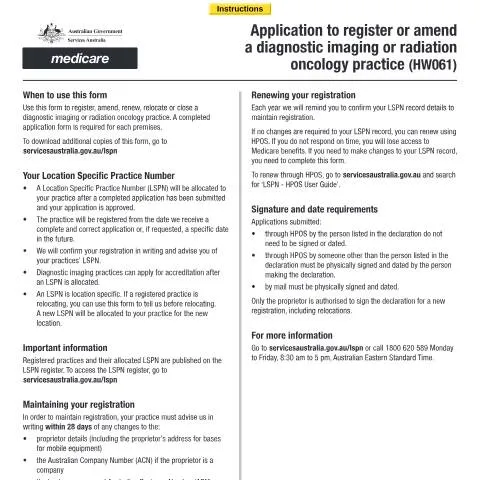
Navigating the HW061: Your Key to Diagnostic Imaging and Radiation Oncology Practice Registration
In the realm of healthcare, ensuring that diagnostic imaging and radiation oncology practices comply with regulatory standards is imperative. For health professionals looking to register or amend their practice, the Application to register or amend a diagnostic imaging or radiation oncology practice form (HW061) serves as a vital gateway. Understanding how to effectively navigate this process can mean the difference between a smooth registration experience and unnecessary delays.
Understanding the Context of the HW061 Form
The HW061 form fits into a larger administrative framework provided by Services Australia. It specifically targets practitioners who provide diagnostic imaging or radiation oncology services. The form not only facilitates the initial registration of practices but also allows for amendments to existing registrations, accommodating changes in operations, ownership, or service offerings.
When embarking on this journey, health professionals must first recognize the significance of correctly filling out the HW061 form. Any discrepancies or omissions can lead to complications, affecting their ability to deliver essential health services.
A Step-by-Step Guide to Completing the HW061 Form
Successfully filling out the HW061 form involves a clear, methodical approach. Here’s a detailed walkthrough of the process:
- Gather Necessary Documentation: Before you start, compile all required documents that substantiate your practice’s details. This may include proof of qualifications, practice ownership details, and operational specifics.
- Access the Form: The HW061 form is primarily available online through myGov. Ensure you have a registered account to access the form. Alternatively, you can also request a physical copy through Services Australia if necessary.
- Fill in the Details: As you complete the form, pay careful attention to each section. Here’s a breakdown of key components:
- Practice Information: Include the name, address, and contact details of your practice.
- Ownership Structure: Clearly outline who owns the practice and their qualifications.
- Service Details: Specify the types of diagnostic imaging or radiation oncology services provided.
- Review Before Submission: Double-check all entries for accuracy. Common pitfalls include typos in contact information and incomplete sections.
- Submit the Form: You can submit your completed application online through your myGov account or by mailing it to Services Australia.
Key Differences: HW061 Versus Similar Forms
It's easy to mix up different forms when navigating the administrative landscape. The HW061 is unique compared to forms relating to other healthcare services, such as those used for general practice registrations or applications for Medicare provider numbers. Understanding these distinctions is crucial for ensuring your application is directed correctly.
For instance, while the HW061 focuses specifically on diagnostic imaging and radiation oncology, other forms might address broader medical practice registration or specialty-specific requirements. This targeted approach is essential to meet the specific regulations governing these specialized fields.
Submission Channels: Online Versus Paper Applications
When it comes to submitting the HW061 form, health professionals have multiple options. Each method has its own set of considerations:
| Submission Method | Advantages | Considerations |
|---|---|---|
| Online (via myGov) | Quick processing, immediate confirmation | Requires a myGov account, internet access needed |
| Paper (by mail) | Accessible for those without internet, physical documents can be attached | Longer processing time, no immediate confirmation of receipt |
Timeline: When to Apply and What Happens Next
Timing is key when submitting the HW061 form. Here’s a general timeline to keep in mind:
- Application Period: It is advisable to submit your application at least several months before you intend to commence practice or make significant changes to your existing practice.
- Processing Time: After submission, your application will undergo a review period. While specific timelines can vary, expect a few weeks to a couple of months for processing.
- Outcome Notification: Once a decision has been made, you will be notified through your myGov account or via postal mail, depending on your submission method.
Preparing Supporting Documents: What You Need and Why
To enhance the chances of a successful application, it's crucial to prepare comprehensive supporting documents. These documents substantiate the information provided in the HW061 form and help streamline the review process. Here’s a breakdown based on typical situations:
New Practice Registration
- Proof of relevant qualifications (e.g., medical, educational credentials)
- Evidence of practice premises compliance with health regulations
- Insurance documentation
Amendment of Existing Practice
- Documentation of change in ownership or management
- Updated service offerings or equipment details
- Compliance certificates for any new services
Insights into the Form’s Sections: Avoiding Common Pitfalls
Each section of the HW061 form serves a distinct purpose, and understanding them is vital for successful completion.
Practice Information
Start with the basic information about your practice. Ensure that all names and addresses are accurate. Mislabeling can lead to significant delays in processing.
Owner Details
When detailing ownership, provide full names and qualifications. Use full legal names as they appear on official documents to avoid inconsistencies. Missing qualifications may delay your application.
Service Types
Clearly outline the services your practice offers. Be specific – generic descriptions can lead to misinterpretation and potentially hinder approval.
Contingencies: What to Do If Issues Arise
Even with careful preparation, there may be instances where applications face challenges. Here are steps to take if your application encounters difficulties:
In Case of Refusal
If your application is denied, you have the right to request a review. This process typically involves:
- Understanding the reasons for rejection as outlined in the notification
- Gathering additional documentation or clarifications to address concerns
- Submitting a request for review to the appropriate administrative body
Dealing with Missing Documentation or Errors
If you realize that you’ve submitted incomplete information or discover an error post-submission, contact Services Australia immediately. Prompt communication can often resolve issues before they escalate into larger problems.
Through careful attention to detail and an understanding of the HW061 form’s significance, health professionals can streamline their registration process, ensuring compliance and the ability to deliver essential services within the Australian healthcare system.
Understanding the Implications of Diagnostic Imaging Practice Registration
Registering a diagnostic imaging or radiation oncology practice in Australia is not merely a procedural step; it has significant implications for healthcare delivery within the medical landscape. The registration process ensures that practices meet the standards set forth by the Department of Health, which directly impacts the quality of care patients receive. By adhering to these standards, practices not only enhance patient safety but also bolster their credibility in the medical community.
Practices must understand that registration is tied to compliance with the National Safety and Quality Health Service (NSQHS) Standards. These standards encompass a broad range of criteria, including governance, clinical performance, and consumer engagement. Before applying, practices should conduct a thorough internal audit against these standards to identify any potential gaps in compliance.
Additionally, the implications of registration extend to funding and reimbursement processes. Practices that are not registered may find it challenging to receive referrals from general practitioners or specialists who require assurance that the imaging facility operates under the highest standards. This can lead to a decrease in patient volume, impacting the financial viability of the practice.
Furthermore, practices must be aware of the ongoing responsibilities post-registration. There are obligations to maintain compliance and submit annual reports to the Department of Health, which can include data on service delivery, patient safety incidents, and quality improvement initiatives. Failing to meet these ongoing obligations can lead to penalties or suspension of practice registration.
Navigating the Amendments Process: When and How to Update Registration
Amending a diagnostic imaging or radiation oncology practice registration can arise from various circumstances, such as changes in operational scope, physical relocation, or modifications in ownership structure. Understanding when and how to navigate the amendments process is crucial for ensuring continued compliance and operational integrity.
The first step in the amendments process is to determine whether the change is substantive enough to warrant a formal amendment. For instance, if a practice intends to expand its service offerings to include new imaging modalities, this typically necessitates an amendment to the registration. Conversely, minor changes in personnel or equipment might not require a formal amendment but should still be documented internally.
Once it is determined that an amendment is required, the practice must submit a new application detailing the changes. This application should be reflective of the current operational capabilities and any modifications to compliance with the NSQHS Standards. It is advisable to include supporting documentation, such as updated policies and procedures, which demonstrate that the practice will continue to meet the required standards post-amendment.
Practices should keep in mind that the amendments process can take time and may involve additional inspections or assessments by the Department of Health. Therefore, planning ahead and submitting amendment requests well in advance of any anticipated operational changes is a recommended strategy.
Common Pitfalls to Avoid During the Application Process
While applying to register or amend a diagnostic imaging or radiation oncology practice, there are common pitfalls that applicants should be aware of to avoid delays or rejections. Understanding these obstacles can streamline the process and ensure a smoother experience.
One of the most frequent issues encountered is incomplete or inaccurate documentation. The application requires a comprehensive set of details, including operational specifics, staff qualifications, and compliance with safety standards. It is critical that all sections of the application are thoroughly completed, and any supporting documents should be current and accurately reflect the practice’s current operations.
Another common pitfall arises from misalignment with the NSQHS Standards. Applicants often underestimate the depth of information required to demonstrate compliance. Before submission, it is advisable to conduct a detailed review of the standards and ensure that the application adequately addresses each criterion. Failure to address these adequately can lead to significant delays in the approval process and may necessitate retraction and resubmission of the application.
Furthermore, practices should be cautious of the timelines involved in the application and amendment process. Many applicants underestimate the time it takes to gather necessary documentation or obtain additional assessments that may be required by the Department of Health. To mitigate this, practices should establish internal timelines that align with the application process to ensure that all required information is submitted in a timely manner.
Finally, it is crucial to maintain open communication with the Department of Health throughout the application process. Should any questions or concerns arise, promptly reaching out to the appropriate contacts can help clarify requirements and prevent misunderstandings that could delay the application.