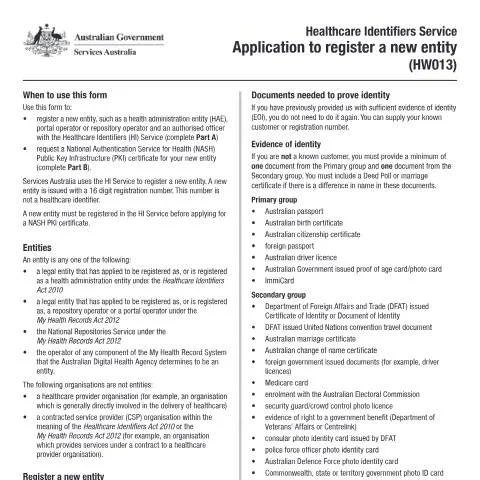
Navigating the Healthcare Identifiers Service Application: HW013
For health professionals in Australia, the ability to register with the Healthcare Identifiers Service is crucial. This registration not only allows healthcare providers to streamline their interactions with government services but also ensures that they can access necessary patient information securely. The Application to Register a New Entity Form (HW013) is instrumental in this process, as it lays the groundwork for a smoother operational experience in the healthcare system.
Who Needs to Engage with the HW013 Form?
The HW013 form is designed for various entities and individuals in the healthcare sector who require a unique identifier. This includes:
- Healthcare practitioners: These are individuals providing healthcare services, such as doctors, nurses, and allied health professionals.
- Healthcare organisations: Hospitals, clinics, and medical centres need identifiers to facilitate billing and patient data management.
- Government-funded entities: These include organisations that provide health services under Commonwealth, state, or territory laws.
Each type of applicant may have unique considerations when filling out this form, and understanding these nuances is pivotal for a successful application.
Understanding the Application Process: Step by Step
Submitting the HW013 form involves several key stages. Understanding each stage can demystify the process and help prevent potential issues.
- Preparation: Gather all necessary documentation relevant to your entity type. This may include proof of identity, registration details, and any previous identifiers.
- Completion: Carefully fill out the HW013 form, ensuring that all sections relevant to your application type are accurately completed.
- Submission: Submit the form through the specified channels, whether online via myGov or by physical mail to Services Australia.
- Monitoring: After submission, keep track of your application status and respond to any requests for additional information promptly.
Each stage is crucial in ensuring that your application proceeds without unnecessary delays.
Decoding the Form: Key Sections and Potential Pitfalls
Structuring the HW013The HW013 form consists of several sections, each aiming to collect specific information. Understanding each section can help avoid common mistakes:
- Part A - Applicant Details: Ensure that all personal and entity details are accurate. Errors in your name or address can lead to delays.
- Part B - Type of Entity: Clearly specify what type of entity is applying—this determines what identifiers you will receive.
- Part C - Authorised Representatives: If you are applying on behalf of an organization, list all authorized representatives and their roles.
- Part D - Declaration: This is a legally binding statement. Ensure that all provided information is truthful and complete to avoid penalties.
Taking time to double-check each section can save applicants significant headaches in the long run.
Failure to Register: Consequences and Rectifications
Neglecting to register can have several repercussions for healthcare practitioners and entities. For example, without proper identification, healthcare providers may struggle to claim Medicare or other health-related reimbursements. Failure to submit accurate or complete applications may lead to:
- Delayed Payments: Without an identifier, claims to Medicare may be held up.
- Lost Access: Providers may not be able to access crucial patient data that is necessary for delivering care.
In the event of a refusal or request for further information, applicants are encouraged to:
- Review the feedback provided in detail.
- Contact Services Australia for clarification and guidance on how to amend the application.
What Happens Post-Submission?
Once the HW013 form is submitted, applicants enter a waiting period during which Services Australia processes their application. During this time, it is essential to:
- Monitor your application status via myGov or through communication from Services Australia.
- Be responsive to any follow-up requests for additional documentation or clarification.
The outcome of the application will typically be communicated via the preferred communication method specified during submission. If successful, you will receive your healthcare identifier, allowing you to engage fully with the healthcare system.
Understanding the Broader Implications of Registration
The HW013 form is just one component of a larger administrative landscape for healthcare providers in Australia. Registration with the Healthcare Identifiers Service can influence various aspects of service delivery and access to information. Here’s how:
- Enhanced Data Sharing: With a registered identifier, healthcare providers can securely share patient information among themselves, improving continuity of care.
- Streamlined Billing Processes: Identifiers facilitate the processing of Medicare claims, allowing for quicker reimbursement and fewer administrative burdens.
- Compliance and Reporting: Having a registered identifier helps practitioners comply with legal and reporting requirements, essential for maintaining their practice.
Profiles of Potential Applicants: Unique Situations and Considerations
Different healthcare professionals may face distinct circumstances when filling out the HW013 form. Understanding these profiles can help tailor the application process to individual needs:
- Established Practitioners: Existing professionals who may be switching employers or expanding services might find they need to update their details rather than register anew.
- New Graduates: Recent entrants to the workforce will need to ensure that they gather all necessary supporting documents, including proof of qualifications.
- International Practitioners: Those relocating from overseas should pay attention to additional verification steps that may be required to establish their credentials.
Each of these profiles has its nuances, and applicants should ensure they are aware of what is specifically required for their situation.
Practical Tips for Completing the HW013
For a successful application, follow these practical tips:
- Use Plain Language: When filling out the form, avoid jargon and ensure your responses are clear and concise.
- Double-Check Details: Verify that all information matches your official documents to prevent mismatches that could delay processing.
- Keep Copies: Always retain a copy of your completed form and any submitted documents for your records.
- Follow Up: Don’t hesitate to reach out to Services Australia if you have questions at any stage of your application.
Conclusion: Empowering Your Practice Through Registration
The journey through the HW013 application process can seem daunting, but with adequate preparation and understanding of the requirements, healthcare providers can navigate it effectively. Successfully obtaining a healthcare identifier not only facilitates better service delivery and care coordination but also positions practitioners favorably within the Australian healthcare framework. Engaging with the application process proactively is the first step towards unlocking the potential that comes with proper registration.
Understanding Healthcare Identifiers: A Deep Dive into Their Importance
In Australia, Healthcare Identifiers (HIs) play a crucial role in streamlining the process of patient identification and the delivery of healthcare services. These identifiers facilitate secure access to health records, ensuring that healthcare providers can effectively communicate and share critical patient information. With the increasing digitization of healthcare services, the significance of HIs has surged, allowing for improved coordination between various health entities.
The HIs are managed by the Healthcare Identifiers Service, which is a part of Services Australia. The system encompasses several types of HIs including the Individual Healthcare Identifier (IHI) for patients, and Organisation Healthcare Identifiers (OHI) for entities such as hospitals and clinics. This hierarchical structure not only enhances the accuracy of patient data but also bolsters privacy and confidentiality standards by minimizing the risk of errors in patient identification.
Healthcare providers must be aware of how HIs function within the broader healthcare ecosystem. For example, when a patient presents to a healthcare provider, the provider can use the IHI to access the patient’s health information securely. This access is vital for making informed decisions about treatment plans and ensuring continuity of care, especially for patients with complex health needs or those transitioning between different care providers.
Moreover, the integration of HIs into electronic health records (EHRs) simplifies the patient experience. Patients can feel more confident that their health information will be managed consistently, as HIs reduce the likelihood of mistakes that can arise from manual data entry or miscommunication among providers. Consequently, HIs contribute to improved healthcare outcomes and foster a more cohesive health system.
The Application Process for Healthcare Identifiers: Step-by-Step Guidance
Applying to register a new entity for Healthcare Identifiers (HW013) requires careful attention to detail and adherence to the prescribed guidelines. While the initial understanding of the process may seem straightforward, several nuanced steps can enhance your application’s success rate.
Firstly, it’s essential to gather all required documentation. This includes proof of the entity's legal status (such as incorporation certificates for companies), details of the entity's operations, and any relevant tax identification numbers. Missing or inaccurate documentation can lead to delays or rejection of the application. It is advisable to create a checklist of all required documents beforehand to avoid any last-minute issues.
Secondly, familiarizing yourself with the specific requirements related to your type of entity is imperative. For example, healthcare service providers may have different expectations compared to administrative offices or other types of organizations. Each category may require unique supporting documentation that reflects its operations and compliance with healthcare regulations.
Using myGov to access the application form HW013 is a crucial step. Ensure that you have your Tax File Number (TFN) handy, as this will be needed during the login process. The myGov platform is designed to be user-friendly, but if you encounter difficulties, you can access support resources through the Services Australia website or contact them directly for assistance.
Once your application is submitted, maintaining communication with the Healthcare Identifiers Service is advisable. By doing so, you can quickly address any queries or provide additional information if requested, thereby expediting the overall processing time. Keep a record of all correspondence for future reference. If your application is denied, you have the right to request a review of the decision under the Administrative Decisions (Judicial Review) Act 1977 (Cth), which provides a formal pathway to address grievances.
Potential Challenges and Solutions in the Registration Process
The registration process for Healthcare Identifiers is not without its challenges. Understanding common pitfalls can help you navigate the system more effectively. One of the most significant issues that applicants face is a lack of clarity surrounding eligibility criteria. Organizations often assume that their status as a healthcare provider is sufficient for registration, but there are specific definitions and qualifications that must be met. Therefore, it's essential to thoroughly review the eligibility requirements outlined in the guidelines available on the Services Australia website.
Another common challenge is the processing time for applications. Depending on the volume of requests being handled by the Healthcare Identifiers Service, applicants can experience delays. To mitigate frustration, applicants should set realistic timelines for when they wish to receive their HIs and plan accordingly, especially if they require these identifiers for upcoming operational needs or regulatory compliance.
Furthermore, errors in provided information can lead to significant setbacks. Double-checking all entries prior to submission is critical to avoid typos or misstatements that could complicate the review process. The use of digital documentation can help ensure accuracy, as it allows for easier editing and verification compared to handwritten forms.
If you encounter a rejection, it is crucial to carefully review the feedback provided in the rejection notice. Understanding the specific reasons for denial will not only aid in addressing those issues for a future application but may also reveal additional resources or support offered by Services Australia to assist with the registration process.
Lastly, networking with other healthcare entities that have successfully navigated the registration process can provide invaluable insights. Local health networks or professional associations often have resources and peer support opportunities that can enhance your understanding and approach to obtaining Healthcare Identifiers.