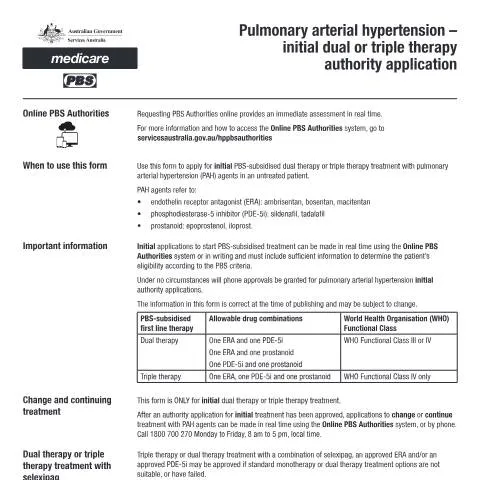
Navigating the Initial Dual or Triple Therapy Authority: Understanding PB303
Imagine living with pulmonary arterial hypertension (PAH), a condition that can severely impact your quality of life. For patients requiring initial dual or triple therapy, the journey begins with the completion of the PB303 form provided by Services Australia. This document is not merely a bureaucratic formality; it plays a crucial role in accessing necessary treatments. Understanding how to properly fill out, submit, and follow up on this application can make a significant difference in managing one's health effectively.
Who Should File the PB303 Form?
The PB303 form is intended for health professionals, specifically those who are treating patients diagnosed with pulmonary arterial hypertension and require a specific treatment regimen that includes dual or triple therapy. The application serves as a request for authority to prescribe these medications under the Pharmaceutical Benefits Scheme (PBS).
While the primary responsibility for submitting this application falls to healthcare providers, it is essential for patients and their families to understand the context in which this form operates. Patients from various backgrounds, including:
- Newly diagnosed individuals seeking treatment
- Patients transitioning between different therapies
- Those with specific medical complexities (e.g., other comorbidities or previous treatment failures)
Each case may present unique circumstances, influencing how the PB303 form should be filled out and the kinds of supporting documentation required.
Decoding the Sections of the PB303 Form
Completing the PB303 form involves navigating multiple sections, each requiring careful attention to detail. While the form is available online through myGov, it’s advisable to thoroughly review its structure prior to filling it out. Key sections typically include:
- Patient's Details: Basic information including name, address, and Medicare number.
- Medical History: A comprehensive overview of the patient's health status, past treatments, and current medications.
- Therapy Details: Clear specification of the requested dual or triple therapy, including dosage and duration.
- Supporting Documentation: Detailed notes from prior treatments, assessments, or specialist evaluations.
It’s crucial that all fields are completed accurately to prevent delays in processing. Incomplete or unclear forms may result in requests for additional information, further prolonging the treatment timeline.
Submitting the Application: Pathways and Protocols
Understanding how and where to submit the PB303 form can greatly influence the speed at which a decision is made. The submission process can vary based on the nature of the application:
- Online Submission: For those with access to myGov, the fastest route is via the online portal. This method allows for immediate confirmation of submission.
- Paper Submission: If online access is unavailable, the form can be printed and mailed directly to Services Australia. However, this method may take longer for processing.
- In-Person Submission: For urgent cases or those requiring assistance, visiting a local Services Australia office could expedite the process and provide immediate feedback from staff.
Regardless of the submission method chosen, keeping a copy of the completed form for personal records is recommended. This ensures that patients or their representatives can reference it during follow-ups.
Timelines: From Submission to Decision
The timing of the application process can significantly impact patient care. Once submitted, the PB303 form is typically reviewed within a specific period set by Services Australia. Key milestones in this timeline include:
- Initial Review: Typically occurs within a few weeks of submission, provided all necessary documentation is included.
- Decision Notification: Patients and health professionals will receive notification once a decision is made. Notifications generally clarify whether the application was approved or if further information is required.
- Implementation of Treatment: Upon approval, the prescribing authority is granted, allowing the healthcare provider to initiate the therapy.
It’s advisable for patients to maintain open lines of communication with their healthcare providers to stay informed about the status of their application.
Key Differences: PB303 vs. Other Healthcare Forms
Patients and health professionals may encounter various forms related to treatment requests, which can sometimes lead to confusion. The PB303 form is distinct in several ways:
| Form | Purpose | Unique Features |
|---|---|---|
| PB303 | Authority application for dual/triple therapy in PAH | Specific to PAH therapies under PBS |
| PB222 (Hypothetical) | Authority for alternative medications | Broader scope of medications, not limited to specific condition |
Recognizing these differences can streamline the application process and empower patients when discussing treatment options with their healthcare providers.
Follow-Up: Keeping Track of Your Application
Once the PB303 form is submitted, it’s essential to have a strategy for follow-up. The decision-making process can vary in duration, and proactive outreach can provide reassurance. Recommended steps include:
- Document Everything: Maintain detailed records of submission dates, any correspondence, and confirmation numbers.
- Regular Check-Ins: Contact Services Australia to inquire about the status of the application. Ideally, this should be done at intervals of a few weeks if no notification has been received.
- Consult Your Healthcare Provider: Keep your healthcare team updated on the status and seek their advice if delays occur.
Effective communication during this phase can alleviate anxiety and ensure that patients receive timely access to necessary treatments.
Challenges and Special Cases in Submitting PB303
Several challenges may arise when filling out and submitting the PB303 form, particularly for patients with unique circumstances:
- Non-Residents: International patients or those on temporary visas may need to navigate additional hurdles regarding treatment eligibility and funding.
- Minors: Applications for patients under 18 require additional parental consent and medical documentation, which can complicate submissions.
- Urgent Requests: In situations where immediate treatment is necessary, understanding how to expedite the process can be critical. This might involve using an expedited submission pathway or liaising directly with a healthcare provider.
Identifying and addressing these challenges early in the process can help prevent delays and ensure that patients receive the care they need without unnecessary obstacles.
The Broader Impact of the PB303 Form in Patient Care
While the PB303 form is a critical component in facilitating access to dual or triple therapy for PAH, it also highlights a broader narrative about patient care in Australia. Recognizing the role of such administrative processes in healthcare provision can foster a more informed and engaged patient population.
As patients become more aware of the mechanisms behind their treatment access, they can advocate more effectively for their needs and contribute to ongoing discussions about healthcare policy and reform. Ultimately, the PB303 form is not just a document; it represents a pathway to improved health outcomes for individuals living with pulmonary arterial hypertension.
Understanding the Pulmonary Arterial Hypertension Authority Application Process
The application process for the Pulmonary Arterial Hypertension (PAH) dual or triple therapy in Australia is an essential step for patients seeking subsidized medications. The authority application form (PB303) is specifically designed for healthcare providers to apply on behalf of patients diagnosed with PAH. This process ensures that patients receive the appropriate treatment while also adhering to the regulatory framework established by the Pharmaceutical Benefits Scheme (PBS).
To initiate the application, healthcare providers must first confirm that the patient meets the clinical criteria set out by the PBS. This includes a confirmed diagnosis of PAH, typically through echocardiography or right heart catheterization, and a specific WHO functional classification. It is crucial to document all necessary clinical evidence in the application to support the request for treatment.
Once the supporting documents are gathered, it is critical to complete the PB303 form accurately. The form requires detailed patient information, including the patient's Tax File Number (TFN) to verify Australian residency, as well as clinical details about the PAH diagnosis and the proposed treatment regimen. Any missing information or inaccuracies can lead to delays or denials, emphasizing the importance of a thorough review before submission.
Eligibility Criteria and Documentation Requirements
Eligibility for dual or triple therapy under the PB303 application hinges on specific clinical guidelines which can vary based on the treatment type being requested. Patients must typically demonstrate an inadequate response to monotherapy or exhibit progressive symptoms despite treatment.
Documentation is a vital component of the application process. As such, healthcare providers should accumulate comprehensive medical histories and treatment records. This includes previous medications tried, dosages, duration of therapy, and any adverse effects experienced. The inclusion of reports from specialists, like cardiologists or pulmonologists, can significantly bolster the application. Moreover, it may be beneficial to integrate the patient’s functional status assessments, as these contribute to establishing the severity of the condition.
It is also advisable to include any relevant laboratory or imaging results that align with the evidence-based requirements for PB303. For instance, the inclusion of pulmonary function tests or oxygen saturation levels can provide a more complete picture of the patient's health status. Ensuring that all information is both current and comprehensive will facilitate a smoother assessment process by the PBS.
Common Challenges and How to Overcome Them
Submitting the PB303 application can be fraught with challenges that both patients and healthcare providers should be prepared for. Common issues include incomplete documentation, inaccuracies in patient data, and lack of clarity in medical justification for the requested therapy. Each of these pitfalls can lead to significant delays in treatment access, which can exacerbate patient conditions.
To mitigate these challenges, providers should implement a thorough review process prior to submission. This may include a checklist approach to ensure all required sections of the form are filled out and that all necessary supporting documents are attached. Additionally, it is advantageous to stay informed about the latest PBS guidelines and recommendations regarding PAH treatments. Regular training sessions for healthcare staff on the nuances of the application process can enhance understanding and compliance.
Another challenge faced by applicants is the waiting period for approvals. Patients may experience anxiety during this time, and it can be beneficial for healthcare providers to communicate openly about the timeline and what to expect. Additionally, maintaining a record of communications with the PBS can be helpful should any follow-up be necessary.
Lastly, in the event of a denial, patients and their healthcare providers have the right to seek a review under the Administrative Decisions (Judicial Review) Act 1977 (Cth). Understanding this process empowers patients to advocate for their needs effectively.