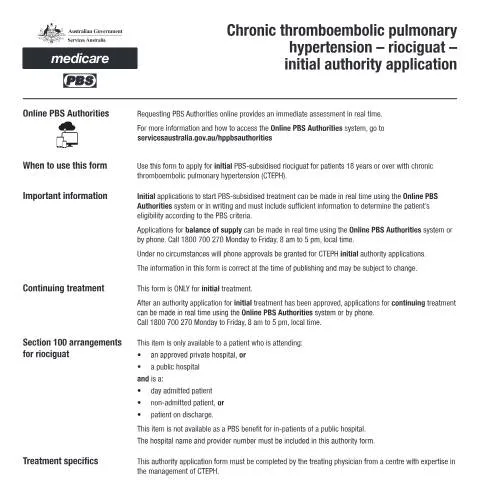
Navigating the PB192 Form: A Key Player in Chronic Thromboembolic Pulmonary Hypertension Treatment
Chronic thromboembolic pulmonary hypertension (CTEPH) can significantly affect a patient's quality of life and overall health. The initial authority application form, known as PB192, becomes a crucial instrument in accessing riociguat, a medication integral to managing this condition. Understanding how to effectively navigate this form is essential for healthcare professionals seeking to provide the best care for their patients.
Understanding the Role of PB192 in CTEPH Management
The PB192 form serves as a gateway for patients suffering from CTEPH to receive approval for riociguat. This medication, a soluble guanylate cyclase stimulator, is specifically indicated for patients whose pulmonary hypertension is due to chronic thromboembolic obstruction. The successful submission of the PB192 form not only facilitates access to this critical treatment but also ensures that patients meet the necessary eligibility criteria set forth by Services Australia.
Key Objectives of the PB192 Submission
- To assess the medical necessity of riociguat for the patient.
- To document supporting evidence of the diagnosis and prior treatments.
- To facilitate a streamlined review process by Services Australia.
Distinguishing PB192 from Other Forms in the Health Sector
On the surface, the PB192 form might seem similar to other health-related application forms; however, it possesses unique elements tailored specifically for CTEPH treatment applications. Understanding these distinctions is vital for healthcare providers.
Comparison with Other Applications
| Form | Purpose | Key Requirements |
|---|---|---|
| PB192 | Authority application for riociguat in CTEPH | Diagnosis of CTEPH, previous treatments, medical assessments |
| PB100 | Standard application for medication | General medication request without specific condition context |
| PB201 | Application for a different pulmonary hypertension medication | Specific criteria for other treatment options |
As illustrated, the PB192 form is uniquely tailored to address the specific clinical needs associated with CTEPH, making it distinct and vital for successful patient management.
Preparing Supporting Documentation: What You Need
Completing the PB192 form effectively requires a comprehensive set of supporting documents. Healthcare professionals must prepare this documentation meticulously to ensure that it meets the expectations of Services Australia.
Essential Documents to Include
- Medical History: A detailed report of the patient's medical history, specifically focusing on their diagnosis of CTEPH.
- Diagnostic Tests: Results from imaging studies or other diagnostics that confirm the presence of CTEPH.
- Treatment History: Documentation of any prior treatments the patient has undergone, including medications and their outcomes.
Ensuring that these documents are comprehensive and clear can significantly influence the decision-making process at Services Australia.
Understanding the Submission Process: Steps to Follow
Once the PB192 form and supporting documents are ready, the next step involves the submission process itself. Adhering to this process ensures timely review and response from the relevant authorities.
Step-by-Step Submission Guide
- Review: Double-check the PB192 form for accuracy and completeness.
- Compile Supporting Documents: Ensure that all necessary documents are included and organized.
- Submission: Submit via the myGov platform if you're connected with Services Australia, ensuring you keep copies of everything submitted.
- Follow Up: After submitting, it’s advisable to follow up on the status of the application to address any additional queries from Services Australia.
These steps, when taken diligently, can help expedite the application process and lead to timely access to riociguat for the patient.
Potential Outcomes: What Happens After Submission
Upon submission of the PB192 form, healthcare providers and patients both await a response from Services Australia. Understanding the potential outcomes is crucial for proper patient management and expectations.
Possible Scenarios
- Approval: The application is approved, and the patient can begin treatment with riociguat.
- Conditional Approval: The application may be approved with conditions, requiring additional documentation or follow-up.
- Rejection: If the application is denied, the healthcare provider may need to appeal the decision or explore alternative treatment options.
Each of these outcomes requires a different approach from healthcare providers, whether it's proceeding with treatment, gathering more information, or considering further appeals.
Profile of Patients: Who Benefits from the PB192 Form?
The PB192 form is designed for a specific patient demographic, namely those diagnosed with CTEPH. However, within this group, there are varied profiles that may influence the application process and treatment pathways.
Identifying Patient Subgroups
- New Diagnoses: Patients recently diagnosed with CTEPH requiring initial treatment considerations.
- Recurrent Cases: Patients who have experienced a return of symptoms or complications after previous treatments.
- Comorbid Conditions: Patients with other health issues that may affect treatment eligibility or outcomes.
Each subgroup may face unique challenges in the application process, requiring tailored approaches to meet their specific needs.
Responsibilities and Rights of Patients and Healthcare Providers
Submitting the PB192 form involves a shared responsibility between patients and their healthcare providers. Understanding these responsibilities ensures that both parties are fully engaged in the process.
Obligations and Rights
- Patient Rights: Patients have the right to receive timely information regarding their treatment options and the approval status of their application.
- Healthcare Provider Responsibilities: Providers must ensure that all documentation is complete and accurately represents the patient's health status.
- Communication: Ongoing communication between the patient and provider is essential, particularly if further documentation is requested.
Recognizing these aspects can foster a collaborative experience, ultimately leading to better healthcare outcomes.
The Long-Term Impact of PB192 on Patient Care
Beyond the initial access to riociguat, the implications of successfully completing the PB192 form resonate throughout the patient's ongoing treatment journey. The subsequent phases of care are critical for achieving optimal health outcomes.
Continuity of Care
- Access to ongoing monitoring of CTEPH symptoms and treatment effectiveness.
- Facilitating timely adjustments to treatment as needed based on patient response.
- Providing a framework for integrating additional healthcare services if complications arise.
Through the careful management of the PB192 process, healthcare providers can establish a robust support system for their patients, ultimately enhancing their quality of life.
Understanding Chronic Thromboembolic Pulmonary Hypertension (CTEPH) in Australia
Chronic thromboembolic pulmonary hypertension (CTEPH) is a rare but serious condition that arises from persistent obstruction of the pulmonary arteries due to blood clots. This can lead to increased pressure in the pulmonary circulation, resulting in significant morbidity and mortality if not appropriately managed. In Australia, awareness and prompt diagnosis are critical, as early intervention can significantly improve patients’ quality of life and survival rates.
CTEPH is typically diagnosed after a patient has experienced pulmonary embolism (PE). However, unlike other forms of pulmonary hypertension, CTEPH can occur even in patients who may not have had overt symptoms of PE. Clinicians often rely on a combination of clinical history, imaging modalities such as echocardiography and pulmonary angiography, and right heart catheterization to confirm the diagnosis.
Given the rare incidence of CTEPH, many healthcare providers may not be fully aware of the disorder, which underscores the importance of advocacy and education for both patients and general practitioners. Patients presenting with unexplained exertional dyspnea or fatigue, especially with a history of venous thromboembolism, should be promptly evaluated for this condition.
Application Process for Riociguat: Initial Authority Application Form (PB192)
The Initial Authority Application Form (PB192) is a crucial step for patients in Australia seeking access to Riociguat, a drug specifically indicated for the treatment of CTEPH when surgery is not an option or for patients who are not candidates for pulmonary endarterectomy. Completing this form can seem daunting; however, understanding the process is essential for timely access to treatment.
The first step in the application process involves the prescribing physician completing the PB192 form, ensuring all required sections are filled correctly. This includes patient demographics, clinical details, and justifications for the use of Riociguat. It is vital to provide comprehensive clinical information and relevant test results to substantiate the application. Note that all supporting documentation must be recent, ideally within the last six months.
Once the form is completed, it should be submitted to the relevant authority for approval. This may vary depending on the state or territory but typically involves the Pharmaceutical Benefits Scheme (PBS) through Services Australia. The processing time can vary, but it is essential to follow up with the relevant body if there is a delay beyond the standard processing timeframe.
Furthermore, it is important to keep in mind that the approval is not guaranteed. If a request is denied, the prescribing physician can appeal the decision, which may involve an additional review of the submitted evidence. It is critical for patients and healthcare providers to understand their rights and the appeals process, as it can greatly impact treatment pathways.
Financial Assistance and Support Services for CTEPH Patients
Managing a rare condition such as CTEPH can impose significant financial burdens due to the costs of medications, ongoing medical consultations, and necessary lifestyle adjustments. In Australia, patients may be eligible for various forms of financial assistance to help alleviate these burdens.
One primary avenue for financial support is the Pharmaceutical Benefits Scheme (PBS), which subsidizes the cost of approved medications for eligible patients. Once the Initial Authority Application Form (PB192) is approved, patients can access Riociguat at a reduced cost. It is crucial to keep the PBS guidelines in mind, as certain conditions must be met for eligibility, including ongoing monitoring and clinical reviews.
Additionally, patients may explore options for private health insurance coverage, which can help offset some expenses related to hospitalization and specialist consultations. It is advisable to consult with a financial advisor or a social worker who specializes in chronic illness to navigate these options effectively.
Many support groups and organizations exist within Australia that provide resources, advocacy, and emotional support for patients with CTEPH. These groups can serve as valuable platforms for patients to share experiences, access information about the latest treatments, and connect with healthcare professionals. Engaging with such networks can provide not only emotional relief but also practical tips on managing the day-to-day challenges associated with CTEPH.