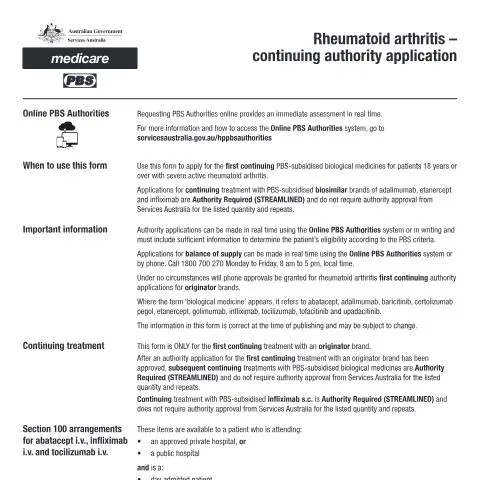
Navigating the Rheumatoid Arthritis Continuing Authority Application Form (PB111)
For individuals living with rheumatoid arthritis, managing their health conditions often requires a collaborative approach involving healthcare providers and government services. The Rheumatoid Arthritis - Continuing Authority Application Form (PB111) plays an essential role in this context, ensuring that eligible individuals can receive necessary ongoing treatments. This document is not just a formality; it is a crucial step in securing the right support for managing their condition.
Understanding the Role of PB111 in Health Management
The PB111 form functions as a bridge between patients and Services Australia, particularly when it comes to the ongoing authority for certain medications or treatments. By completing this form, applicants communicate their ongoing need for specific medical support due to their rheumatoid arthritis.
A successful application can lead to the approval of repeated prescriptions without the need for constant re-evaluation, which can alleviate pressure on both patients and healthcare providers. This application also highlights the patient's condition, facilitating an understanding of their long-term healthcare requirements.
Why Ongoing Authority is Critical
Ongoing authority is particularly significant for patients with chronic conditions like rheumatoid arthritis, as it allows for:
- Streamlined access to medications: Patients can receive their necessary prescriptions without delays.
- Regular health monitoring: It encourages patients to stay in touch with their healthcare providers, ensuring that their treatment plans are followed effectively.
- Financial relief: Patients may experience reduced out-of-pocket costs related to their treatment if their authority is granted.
Who Needs to Fill Out the PB111 Form?
This application is specifically designed for individuals diagnosed with rheumatoid arthritis who are seeking ongoing authority for their medications. However, it is important to note that not all patients may qualify for this application. The following profiles typically align with those who should consider submitting the PB111:
- Patients currently prescribed medications requiring ongoing authority.
- Individuals previously granted authority who are nearing the expiration of their current approval.
- New patients diagnosed with rheumatoid arthritis who have yet to establish an ongoing authority.
It is advisable for applicants to consult with their healthcare providers to determine their eligibility for this form.
Exceptions and Variations
While PB111 serves a specific purpose, there are circumstances where variations may occur:
- Patients who have transitioned to a new healthcare provider may need to restart the application process.
- Changes in medication or additional diagnoses may require a different authority process.
Completing the PB111 Form: A Step-by-Step Guide
Filling out the PB111 form is an essential part of the process, requiring attention to detail. Here’s how applicants should proceed:
- Gather Necessary Information: Before starting, ensure you have all relevant medical information, including your diagnosis, current medications, and treatment history.
- Consult Healthcare Providers: Discuss with your doctor about the necessity of ongoing treatment, as their signature is often required.
- Complete the Form: Fill out all sections carefully, ensuring accuracy in your personal and medical information.
- Review and Sign: Check your application for errors, then sign and date it.
Taking these steps will help prevent unnecessary delays or complications in processing the application.
Submission Channels: Options for Applicants
Once the PB111 form is completed, applicants need to submit it to Services Australia. Various submission methods are available:
- Online Submission: Utilize the myGov platform to submit your application electronically. This method is often faster and provides immediate confirmation of receipt.
- Mail Submission: Print the completed form and send it through the postal service. Be aware that this method may take longer for processing.
- In-Person Submission: Depending on your location, you may visit a local Services Australia office to submit your form directly. This can provide an opportunity to ask questions if needed.
Each of these channels has its advantages, so choose the one that best suits your situation and preference.
Processing Times and Expectations
Upon submission, applicants can expect a response from Services Australia regarding their application. While processing times can vary, it is essential to keep in mind:
- Online submissions may be processed faster than paper applications.
- Delays might occur due to incomplete information or high volumes of applications.
Applicants are encouraged to check the status of their application through myGov or contact Services Australia if they have not received any updates within a reasonable timeframe.
Supporting Documents: Preparing for the Application
Completing the PB111 form may require additional documentation to support the application. Here are the key documents you should consider preparing:
- Medical Reports: A comprehensive report from your healthcare provider detailing your diagnosis and treatment history can be crucial.
- Prescription History: Documenting previous prescriptions can help establish the need for ongoing medications.
- Personal Identification: Ensure you have valid ID that matches the details provided in the application.
Having these documents ready can prevent delays and support your case for obtaining the ongoing authority.
Why Documentation Matters
Thorough documentation is vital for several reasons:
- It provides a clear picture of your medical history and ongoing treatment needs.
- It helps healthcare providers advocate for your ongoing authority effectively.
Understanding the Distinctions: PB111 and Related Forms
The PB111 form can sometimes be confused with other similar forms used in health applications. Understanding these distinctions can aid applicants in ensuring they are using the correct document:
| Form | Purpose | When to Use |
|---|---|---|
| PB111 | Ongoing authority for rheumatoid arthritis medications | When a patient requires continuous access to prescribed treatments |
| PB102 | Initial authority for medications | For first-time requests for medication approvals |
| PB204 | Authority for alternative treatments | When switching medications necessitates a new authority |
Clarifying Misunderstandings
Being informed about these differences can save time and ensure that applicants submit the proper documentation for their specific needs.
Next Steps After Submission: What to Anticipate
Once the PB111 application is submitted, the anticipation of a response can lead to questions about the next steps:
- Await communication from Services Australia regarding the approval or any additional information required.
- If approved, follow the guidelines provided to continue receiving your medications efficiently.
- In the case of a denial, review the reasons provided and consider whether to appeal or reapply with additional documentation.
Understanding these steps can help mitigate anxiety during the waiting period and prepare applicants for any outcomes.
Staying Informed: Resources and Support for Applicants
Throughout the application process, staying informed is crucial. Here are some resources and support systems that can help applicants:
- Services Australia Contact Centre: Reach out for assistance with any questions regarding the PB111 form or the application process.
- Healthcare Providers: Regular check-ins with medical professionals can provide support and necessary documentation.
- Support Groups: Connect with others who may be undergoing similar processes to share experiences and tips.
Being proactive and utilizing available resources can significantly improve the experience of navigating the application process.
Understanding the Continuation of Authority Application Process for Rheumatoid Arthritis (Form PB111)
When living with rheumatoid arthritis in Australia, the continuing authority application process (specifically through Form PB111) plays a crucial role in managing treatment and securing necessary medications. Understanding this process can significantly alleviate the administrative burden patients face. This section delves into the specifics of the application process, its requirements, and the relevant considerations for patients.
The Form PB111 is designed for individuals who are already receiving a Pharmaceutical Benefits Scheme (PBS) subsidised medication for rheumatoid arthritis and seeks to renew their authority to continue accessing these medicines. The initial application typically requires a comprehensive report from a treating doctor, and while the continuing authority application also requires medical documentation, the focus shifts more to the ongoing management of the condition rather than establishing a diagnosis.
Patients need to ensure that their application includes all relevant details regarding their ongoing treatment, including any changes in medication or dosage, as well as the rationale behind these adjustments. A well-documented application can streamline the approval process, minimizing delays in receiving necessary medications. It is advisable to directly communicate with healthcare providers to obtain accurate and up-to-date information that reflects the current treatment plan.
Additionally, patients should be aware of the timeframes associated with submitting the continuing authority application. Ideally, applications should be submitted well before the current authority expires to prevent any interruptions in medication access. This proactive approach can help in managing the condition without unnecessary stress or complications.
Conducting a Review of Your Ongoing Treatment Plan
The management of rheumatoid arthritis often necessitates a dynamic approach, which can include regular assessments of treatment efficacy, side effects, and overall health. Periodic reviews of your treatment plan, especially when preparing for a Form PB111 application, are essential. This section highlights the importance of these reviews and how they contribute to a successful application process.
During a treatment review, patients and their healthcare providers should evaluate the effectiveness of prescribed medications, potential side effects, and any new symptoms that may have emerged. Any adjustments in the treatment regimen must be clearly documented, as this information is crucial for the continuing authority application. It is also beneficial for patients to keep a record of their symptoms and how their condition has responded to current treatments, as this can provide valuable insights during consultations.
Patients may consider discussing alternative treatment options if their current medications are proving ineffective or are causing intolerable side effects. This conversation is not only pertinent to optimizing health outcomes but also aligns with the criteria that assess the necessity for continuing authority for PBS subsidised medications. Moreover, involving a rheumatologist or a specialist in the review process ensures that treatment strategies are up-to-date and in line with the latest medical guidelines.
Furthermore, patients should inquire about any supplementary therapies or supportive care options that can aid in managing symptoms and improving quality of life. These discussions can uncover integrative approaches that complement conventional treatments and may be beneficial in the context of a continuing authority application, reinforcing the necessity for ongoing PBS support.
Administrative Support: Navigating the Application with Centrelink and Medicare
Navigating the administrative landscape related to rheumatoid arthritis treatment requires not only an understanding of the PBS and the Form PB111 but also how it intersects with other services provided by Centrelink and Medicare. This section outlines strategies for leveraging these resources effectively.
Patients should familiarize themselves with the benefits offered by Centrelink, as certain payments may be available to those managing chronic health conditions like rheumatoid arthritis. For instance, individuals may be eligible for mobility allowances, disability support pensions, or other forms of financial assistance. Having a clear understanding of these entitlements can provide much-needed support while undergoing treatment.
When applying for continuing authority using Form PB111, patients might also need to present evidence of financial hardship if seeking additional support from Centrelink. Therefore, it is prudent to maintain comprehensive records of all interactions with Centrelink and any relevant documentation that demonstrates how rheumatoid arthritis impacts one’s ability to work or manage daily activities.
Regarding Medicare, patients are encouraged to utilize the range of services covered for managing rheumatoid arthritis, such as specialist consultations and allied health services. It is advisable to keep track of all appointments and treatments, as these records can strengthen applications for ongoing authority and support claims with Centrelink. Patients should also be aware of the importance of registering for a myGov account, as this may streamline communication and document submission processes with both Medicare and Centrelink.
In conclusion, understanding the interaction between the Form PB111 application process and the support available through these agencies can empower patients with rheumatoid arthritis to access the necessary treatments and financial assistance more efficiently.