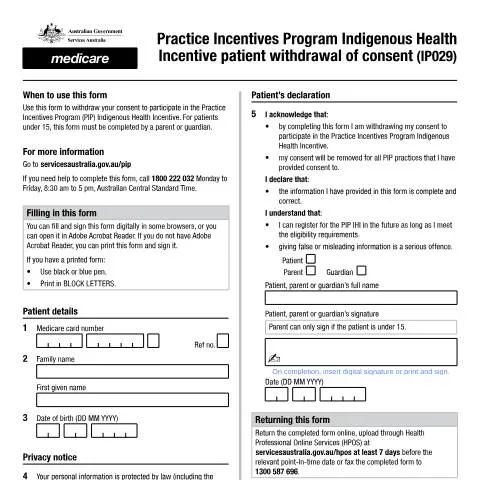
Navigating the IP029 Form: The Practice Incentives Program Indigenous Health Incentive Patient Withdrawal of Consent
The IP029 form, officially titled the Practice Incentives Program Indigenous Health Incentive Patient Withdrawal of Consent Form, plays a pivotal role in the healthcare landscape of Australia, particularly concerning Indigenous health. Understanding its intricacies is essential for healthcare professionals who engage with Indigenous patients under this specific program. This article will delve deep into this critical form, examining its function, the stakeholders involved, and the procedural steps required to successfully withdraw consent.
Contextual Background: The Importance of Indigenous Health Incentives
Before exploring the details of the IP029 form, it's imperative to understand the broader context of Indigenous health in Australia. Indigenous Australians often face significant health disparities when compared to non-Indigenous populations, leading to the establishment of targeted initiatives aimed at improving health outcomes.
The Practice Incentives Program (PIP) is a key initiative designed to enhance the quality of healthcare delivered to Aboriginal and Torres Strait Islander peoples. The Indigenous Health Incentive specifically aims to encourage healthcare providers to focus on the unique health needs of these communities. However, patients have the right to withdraw consent for their participation in this program at any time, which brings us to the importance of the IP029 form.
Who Needs the IP029 Form? Understanding the Stakeholders
The stakeholders involved with the IP029 form include healthcare professionals and Indigenous patients who are part of the PIP Indigenous Health Incentive. The following profiles outline the individuals who may need to interact with this form:
- Health Practitioners: General practitioners, specialists, and healthcare providers who offer services under the PIP. They must be aware of the withdrawal process to comply with the patient's wishes.
- Indigenous Patients: Aboriginal and Torres Strait Islander individuals who initially consented to participate in the incentive program but may wish to withdraw their consent for personal or health reasons.
- Administrative Staff: Personnel within healthcare facilities who assist practitioners and patients in completing and processing the IP029 form.
Special Circumstances and Exceptions
While the primary focus is on the withdrawal of consent, it is worth noting that there are certain circumstances under which patients may reconsider their participation in the PIP. These may include:
- Changes in health status or circumstances that may impact the patient’s decision.
- Concerns regarding the confidentiality of their medical information.
- Experiences with healthcare providers that may lead to discomfort or mistrust.
Form Essentials: What to Prepare Before Filling Out the IP029
Completing the IP029 form requires careful attention to detail, as it ensures the proper withdrawal of consent. Here are key items to prepare:
Necessary Information
A comprehensive understanding of the necessary information will make filling out the form smoother:
- Patient Details: Full name, date of birth, and contact information.
- Practitioner Details: Name and contact information of the healthcare provider overseeing the patient.
- Reason for Withdrawal: While not mandatory, providing a reason can enhance the understanding of patient needs and improve future healthcare delivery.
Step-by-Step Process: From Initiation to Submission
Understanding the process to withdraw consent using the IP029 form is crucial for both patients and healthcare providers. Below is a detailed chronological breakdown:
- Consultation: The patient discusses their desire to withdraw consent with their healthcare provider during a consultation.
- Form Retrieval: The provider or administrative staff retrieves the IP029 form, which is available through Services Australia or the relevant healthcare facility.
- Form Completion: The patient, with assistance if necessary, fills out the form, ensuring all pertinent information is accurately provided.
- Submission: The completed form is submitted to the relevant healthcare facility, either in person or through designated online channels.
- Confirmation: Upon receipt, the healthcare provider will confirm the withdrawal of consent to the patient, ensuring all future services under the incentive program are ceased.
Timing is Key: Understanding Deadlines and Subsequent Actions
Timing can significantly impact the effectiveness and efficiency of your consent withdrawal. Here’s what you need to know:
When to Submit the IP029 Form
The form should ideally be submitted as soon as the decision to withdraw consent has been made. This ensures that:
- Any ongoing processes under the PIP stop immediately.
- The healthcare provider can update their records accordingly, minimizing potential billing issues.
What Happens After Submission?
Once the IP029 form is submitted, the following procedural steps occur:
- The healthcare provider updates the patient’s status in their records.
- Any ongoing incentives related to the patient are discontinued.
- Patients may receive a confirmation notice detailing the withdrawal for their records.
Regulatory Framework: Understanding the Legal Context
The IP029 form operates within a structured regulatory framework aimed at protecting patient rights while enhancing healthcare delivery. A few essential components include:
- Privacy Protections: Under the Australian Privacy Principles, patients have the right to withdraw consent without fear of compromising their personal health information.
- Administrative Decisions (Judicial Review) Act 1977 (Cth): This act provides patients with avenues for review if they believe their consent withdrawal has not been handled appropriately.
How Legislation Supports Patient Rights
Understanding the legal backdrop is vital for both patients and healthcare providers. Here’s how legislation supports patient autonomy:
- Patients can withdraw consent at any time without repercussions.
- Healthcare providers are mandated to respect patient decisions regarding participation in programs like the PIP.
Decoding the IP029 Form: A Detailed Review of Each Section
Completing the IP029 form requires a thorough understanding of its components. Let’s break down the form section by section:
Section 1: Patient Information
This section requires basic identification details:
- Ensure that the name matches exactly as recorded in official documentation.
- Provide accurate contact details to facilitate future communications.
Section 2: Health Provider Information
Details of the healthcare provider overseeing the patient’s care must be accurately documented:
- Double-check the spelling of the provider's name and contact details.
- Confirm that the provider is registered under the PIP to prevent processing delays.
Section 3: Reason for Withdrawal
This is optional but helpful for improving service delivery:
- Provide a clear and concise reason for withdrawal if comfortable.
- Be honest, as this feedback can help health programs address issues effectively.
Submission Pathways: Choosing the Right Method
Once completed, the IP029 form needs to be submitted correctly. Here are the channels available:
| Submission Method | Description | Considerations |
|---|---|---|
| In-Person | Hand-deliver the form to the healthcare facility. | Immediate confirmation of receipt; ideal for urgent withdrawals. |
| Online | Submit through myGov or the relevant online portal. | Convenient, but ensure a reliable internet connection and platform accessibility. |
| Send the completed form via post. | Allow time for postal delays; consider tracking for confirmation. |
By understanding the various submission pathways, patients can choose the most convenient option that best suits their needs.
Final Thoughts: Ensuring Smooth Navigation Through the Withdrawal Process
Successfully withdrawing consent via the IP029 form is a critical right for Indigenous patients participating in the PIP. By grasping the nuances of the form, the related processes, and the legal context, healthcare providers can better facilitate this decision for their patients. The IP029 form is not just a piece of paper; it represents patient autonomy and respect within the healthcare system. As healthcare continues to evolve, understanding these processes will ensure that patient rights remain at the forefront of care delivery.
Understanding the Practice Incentives Program (PIP) Indigenous Health Incentive
The Practice Incentives Program (PIP) is a vital initiative aimed at enhancing the quality of primary health care services delivered to Indigenous Australians. Within this framework, the Indigenous Health Incentive specifically targets practices that provide care to Indigenous patients, incentivizing them to enhance their health outcomes through culturally appropriate services. This program recognizes the unique health challenges faced by Indigenous Australians, including a higher prevalence of chronic diseases and barriers to accessing health care. By encouraging general practices to focus on Indigenous health, the PIP plays a crucial role in closing the gap between Indigenous and non-Indigenous health outcomes.
Practices involved in this program can receive funding based on the number of eligible Indigenous patients they treat. The PIP Indigenous Health Incentive not only motivates health care providers to deliver better services but also empowers Indigenous patients to seek care and engage in health management actively. For practices, demonstrating commitment to Indigenous health can improve their overall performance and reputation within the community.
Importantly, the funding provided through this incentive is not just a one-off payment; it requires ongoing engagement with the patients and the demonstration of improved health outcomes. This aspect of the program emphasizes the importance of building long-term relationships between health providers and Indigenous communities, which is crucial for effective health care delivery.
The Process of Withdrawing Consent: Implications for Patients and Practitioners
Withdrawing consent from the Practice Incentives Program Indigenous Health Incentive (IP029) involves several considerations for both patients and health practitioners. Consent withdrawal can occur for various reasons, including changes in personal circumstances, dissatisfaction with care, or a desire for privacy regarding health information. Understanding the implications of withdrawal is essential for both parties to ensure that the process is handled respectfully and in compliance with established protocols.
For patients, withdrawing consent means that their health practitioners may no longer receive incentives tied to their care. This could potentially affect the level of resources available for their health care, as practices may need to adjust their service offerings based on funding changes. Patients should be made aware of these potential outcomes and be provided with clear information on how their withdrawal will impact their care.
For practitioners, managing the withdrawal of consent involves adhering to specific legal and ethical guidelines. It is essential to document the withdrawal properly in the patient’s records and to communicate transparently with the patient about the implications of their decision. Additionally, practitioners should provide opportunities for patients to discuss their concerns and reconsider their decision if appropriate. Maintaining trust and rapport with Indigenous patients is critical; thus, practitioners must handle these situations with sensitivity and care.
Key Resources and Support for Patients and Providers
Both patients and health providers can access a range of resources to better understand the implications of the Practice Incentives Program Indigenous Health Incentive and the consent withdrawal process. For health practitioners, the Department of Health provides comprehensive guidelines and resources through its official website. These resources outline the requirements of the PIP, including how to manage patient consent effectively, best practices for engaging with Indigenous communities, and the protocols for submitting forms like the IP029.
Patients, on the other hand, can find support through local Indigenous health organizations, community health services, and advocacy groups that focus on Indigenous health rights. These organizations often offer educational materials that explain the PIP and its benefits, as well as the process for withdrawing consent. Additionally, they can assist patients in navigating the health care system, ensuring they receive the care they need even after withdrawing consent. Building awareness and understanding of these resources can empower both parties to make informed decisions regarding health care and consent.
As the landscape of health care continues to evolve, ongoing education and access to information are vital for both Indigenous patients and health providers. By fostering a collaborative environment where both parties understand their rights and responsibilities, the Practice Incentives Program can continue to effectively serve the needs of Indigenous Australians.