Navigating the Practice Incentives Program: An Essential Tool for Indigenous Health Incentives
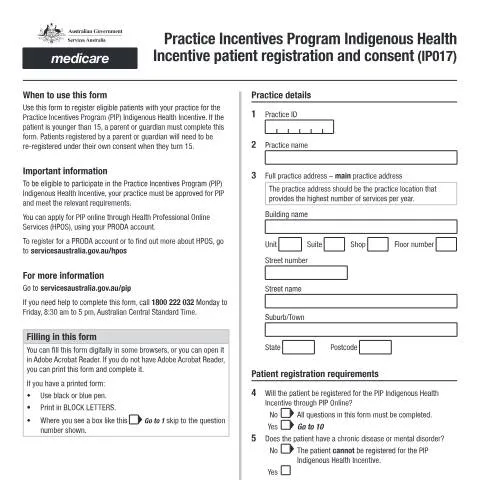
In the landscape of Australian healthcare, the Practice Incentives Program (PIP) plays a pivotal role, particularly regarding Indigenous health. The Indigenous Health Incentive patient registration and consent form (IP017) stands out as a crucial document that supports health professionals in registering eligible patients for financial incentives aimed at improving health outcomes within Indigenous communities. For practitioners, understanding the intricacies of IP017 can significantly enhance their ability to deliver effective health services to these communities.
Understanding the Purpose and Impact of IP017
At its core, the IP017 form is designed to facilitate the registration of Indigenous patients in relation to the PIP. This incentive program offers funding to healthcare practices that provide services to Indigenous Australians, thereby improving access to quality healthcare. By completing the IP017 form, healthcare professionals can ensure that their patients are recognised within this program, ultimately driving more resources toward necessary health services.
The completion of this form may significantly impact both the healthcare provider and the patient:
- For Healthcare Providers: Completing the IP017 form ensures that practices receive the financial support needed to provide high-quality care.
- For Indigenous Patients: Being registered means access to comprehensive health services that are sensitive to cultural needs.
Steps for Accurate Completion of the IP017 Form
Filling out the IP017 form correctly is fundamental to ensure that no delays or issues arise during the submission process. Here are the key areas to focus on:
Gather Required Information
Before diving into the form, healthcare providers should prepare by gathering essential patient information, including:
- Patient’s full name
- Date of birth
- Contact details
- Indigenous status declaration
- Consent for registration
Detailed Instructions for Each Section
Each section of the IP017 is designed to capture vital information. Take note of the following:
- Section 1 - Patient Details: Ensure that all details are accurate and current.
- Section 2 - Indigenous Status: Patients must declare their Indigenous status; this is crucial for eligibility.
- Section 3 - Consent: Secure the patient's consent for registration and ensure they understand the implications.
It’s imperative that healthcare providers take their time to review each section carefully before submission.
Understanding Submission Channels for IP017
Healthcare professionals have multiple avenues to submit the IP017 form, each with its own set of advantages. Knowing these options can help streamline the process:
Online Submission Through myGov
Submitting the form online via myGov is often the most efficient method. This channel allows practitioners to:
- Receive instant confirmation of submission
- Track the progress of the application
- Access related documents and services seamlessly
Paper Submission
For those who prefer traditional methods, the IP017 can also be submitted in paper format. However, be mindful of the following:
- Ensure proper postage and address it to Services Australia.
- Be aware that processing times may be longer compared to online submissions.
Submitting in Person
Some practitioners may opt to submit the form in person at a Services Australia office. This method is beneficial for:
- Getting immediate assistance with any queries related to the form.
- Catching potential mistakes before final submission.
The choice of submission method can significantly affect processing times and the overall experience. Therefore, practitioners should choose the method that best suits their operational workflow.
Anticipating Outcomes: What Happens After Submission
Once the IP017 form has been successfully submitted, practitioners should understand the subsequent steps in the process:
Processing Times and Notifications
Generally, healthcare providers can expect to receive notifications about the application status within a specified timeframe. The following can occur:
- Approval Notification: If the application is successful, practitioners will receive confirmation and details regarding the incentive.
- Request for Additional Information: In some cases, Services Australia may require further documentation or clarification.
- Denial Notification: If the application is denied, it’s crucial to understand the reasons provided.
Handling Denials or Issues
In cases where an application is denied, or there are discrepancies, practitioners have the right to appeal the decision. The appeal process is governed by the Administrative Decisions (Judicial Review) Act 1977. Steps involved typically include:
- Contacting Services Australia for clarification on the denial.
- Gathering supporting documents to strengthen the appeal.
- Submitting an appeal within the designated timeframe.
Practitioners should not hesitate to seek assistance from professional bodies if they encounter challenges during this process.
Document Preparation: Ensuring Completeness and Accuracy
Proper preparation of the IP017 form is essential to mitigate any potential issues during submission. Here are practical tips for ensuring that all documents are in order:
Checklist of Supporting Documents
While the IP017 form itself is central to the registration process, additional documents may be necessary depending on individual circumstances. Consider compiling:
- Proof of identity for the patient (e.g., Medicare card, driver's licence).
- Additional consent forms if applicable.
- Any correspondence or previous records related to the patient's health services.
Tips for Quality Control
To avoid common pitfalls, practitioners should consider the following:
- Double-check all entries for spelling and numerical accuracy.
- Ensure that the patient understands all the information provided.
- Keep a copy of the completed form for reference.
Taking these precautions not only aids in a smooth submission process but also enhances the level of care provided to Indigenous patients.
Impact of Timelines on Health Incentive Registration
Understanding the timing of the IP017 form submission is crucial for both healthcare providers and patients. Key dates and timelines play a significant role in the registration process.
Critical Timeframes to Note
While specific dates may vary, practitioners should be aware of:
- Submission Periods: Knowing when to submit the IP017 form can impact eligibility for certain funding cycles.
- Processing Times: While most applications are processed within a few weeks, delays can occur, especially during peak periods.
Next Steps After Registration
Once the form is submitted and the patient registered, healthcare providers should:
- Monitor upcoming deadlines for service delivery requirements under the PIP.
- Maintain ongoing communication with patients to ensure they receive necessary care and support.
Proactivity in this stage helps foster trust and encourages patients to engage actively in their health management.
Conclusion: Empowering Indigenous Health through Effective Administration
The IP017 form is not just a piece of paperwork; it is a vital component in the broader effort to enhance healthcare access and quality for Indigenous Australians. By thoroughly understanding how to complete, submit, and follow up on this form, healthcare practitioners can significantly contribute to improved health outcomes in their communities. The process may seem intricate, but with the right knowledge and attention to detail, practitioners can navigate the system effectively, ultimately benefiting those they serve.
Understanding the Practice Incentives Program (PIP) Indigenous Health Incentive
The Practice Incentives Program (PIP) is an integral part of Australia's healthcare system, aiming to promote better health outcomes for Indigenous Australians. One of its key components is the Indigenous Health Incentive, designed to encourage general practices to deliver high-quality health services to Aboriginal and Torres Strait Islander patients. To fully benefit from this incentive, healthcare practitioners must understand not only the financial implications but also the necessary administrative procedures that come with registering patients under this program.
The Indigenous Health Incentive is particularly significant given the historical disparities in health outcomes between Indigenous and non-Indigenous Australians. It provides funding to general practices that can demonstrate their commitment to improving the health and well-being of Aboriginal and Torres Strait Islander patients through comprehensive care. Practices must meet specific criteria and reporting requirements to receive this financial support, ensuring accountability and encouraging continuous improvement in service delivery.
Practices enrolled in the PIP can receive an incentive payment for each eligible Indigenous patient they register, which underscores the importance of proper patient identification and consent processes. Understanding how to accurately complete the IP017 form is crucial for practices to secure these incentives and ensure compliance with the guidelines established by the Department of Health and Services Australia.
Detailed Steps for Completing the Patient Registration and Consent Form (IP017)
Completing the Patient Registration and Consent Form (IP017) is not just a procedural requirement; it is a foundational step in ensuring Indigenous patients receive tailored healthcare services. The form consists of several key sections, each requiring careful attention to detail. Below are important steps and considerations to keep in mind when completing the IP017 form.
1. Patient Identification: The first section of the form requires accurate patient details, including their name, date of birth, and address. It's crucial to ensure that the information matches with documentation provided by the patient, such as a Medicare card or proof of identity. Any discrepancies can lead to complications in the registration process.
2. Consent for Registration: Patients must provide informed consent for their registration under this program. This entails explaining to them the purpose of the registration, the benefits of being part of the PIP, and how the information will be used within the practice. It's essential to communicate these details clearly and ensure that patients feel comfortable and informed before signing the consent.
3. Cultural Sensitivity: Considering the cultural significance of healthcare within Indigenous communities, practices should engage with patients respectfully and sensitively. This may involve providing information in a manner that aligns with the patient's culture and using appropriate language. Including details about support person involvement can also enhance patient comfort during the registration process.
4. Submitting the Form: Once the form is completed and signed, it should be submitted through the appropriate channels. For many practices, this means utilizing the online services available through myGov or the specific portals established by Services Australia for PIP registration. Keeping track of submissions and confirmations can help in resolving any future queries regarding patient registration.
5. Ongoing Communication and Updates: After registration, practices should establish a system for ongoing communication with their Indigenous patients. This can include follow-up appointments, health checks, and ensuring that patients are aware of any changes in the services they can access as part of the PIP. Providing this continuity of care is vital for maintaining trust and improving health outcomes.
Addressing Challenges and Barriers in the Registration Process
While the PIP Indigenous Health Incentive aims to foster better healthcare access for Indigenous Australians, various challenges and barriers may hinder the effective registration of patients. Identifying and addressing these issues is key to optimizing the program's success.
1. Language Barriers: Many Indigenous Australians may face language barriers that can complicate the registration process. Practices should consider engaging interpreters or employing bilingual staff who can help navigate these challenges. Providing written materials in plain English and languages spoken by local Indigenous communities can also assist in conveying necessary information effectively.
2. Distrust of Healthcare Services: Historical injustices and negative experiences with healthcare providers may lead to distrust among Indigenous patients. Building rapport and demonstrating genuine commitment to patient well-being can help alleviate these concerns. Establishing a welcoming environment within the practice, along with culturally appropriate staff training, can foster more positive interactions.
3. Access to Technology: With many processes now requiring digital engagement, practices must be aware that some Indigenous patients may have limited access to technology or the internet. Offering alternative methods for completing the IP017 form, such as hard copies at the practice or community health outreach programs, can mitigate access issues and encourage registration.
4. Administrative Burdens on Practices: General practices often face administrative burdens related to compliance and reporting requirements. Streamlining the registration process through efficient practices and software can help reduce the time spent on paperwork, allowing healthcare providers to focus more on patient care. Staff training and clear internal guidelines can also aid in managing these responsibilities more effectively.
By understanding these challenges and proactively addressing them, healthcare practices can enhance patient registration and ultimately improve health outcomes for Indigenous Australians participating in the PIP Indigenous Health Incentive.