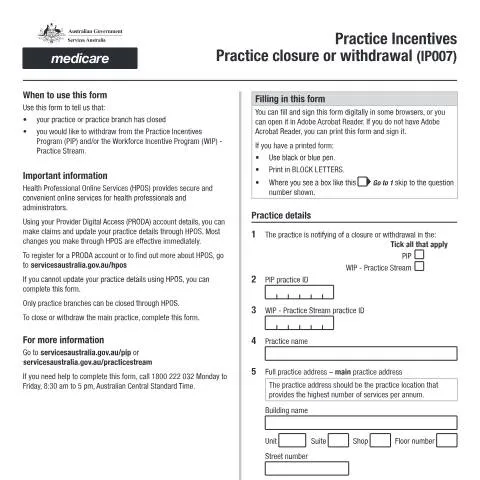
Understanding the Purpose of IP007: A Vital Document for Health Professionals
For health professionals operating in Australia, navigating the administrative landscape can be both essential and challenging. The Practice Incentives Practice Closure or Withdrawal Form (IP007) stands out as a crucial tool for practitioners who are either closing their practice or withdrawing from a practice incentive program. This document not only signals the end of a professional chapter but also ensures that health professionals meet compliance obligations set forth by Services Australia.
Key Dates: Timeline from Submission to Impact
When dealing with IP007, timing is critical. Health professionals need to be aware of specific timelines associated with the submission and processing of this form.
Submission Period
- The form should be submitted as soon as the decision to close or withdraw is made.
- Ensure that the submission is within the financial year, as failure to comply may lead to complications with incentive payments.
Processing Time
Typically, once submitted, the processing of the form by Services Australia can take several weeks. It’s essential for practitioners to keep this in mind and plan accordingly.
Post-Submission Steps
After submitting the IP007, health professionals will receive a confirmation from Services Australia. It is advisable to keep this confirmation for personal records and follow up if no communication is received within the expected timeframe.
The Implications: Rights, Responsibilities, and Consequences
Filling out the IP007 form correctly has significant implications for health professionals. Understanding what is at stake is crucial.
Rights Granted
Once the form is processed, practitioners can expect:
- A formal acknowledgment of the practice closure or withdrawal.
- Adjustments to any financial incentives or entitlements based on the closure of the practice.
Obligations to Fulfill
Health professionals must:
- Ensure all outstanding obligations to patients and staff are resolved before closing.
- Provide required documentation that may be requested during the closure process.
Consequences of Non-Compliance
Failing to submit the IP007 form appropriately or on time can lead to:
- Loss of eligibility for certain practice incentives.
- Potential legal ramifications should there be outstanding financial obligations related to the practice.
Historical Context: Why the IP007 Matters
The IP007 form is not just a bureaucratic hurdle; it is embedded within a regulatory framework designed to assure quality healthcare delivery in Australia. Its origins can be traced back to the establishment of various health incentive programs aimed at improving healthcare accessibility and quality.
As part of the administrative structure governed by Services Australia, the form aligns with overarching policies that prioritize patient welfare and provider accountability. Understanding this context enhances the importance of filling out the IP007 accurately.
Navigating the Administration: From Submission to Resolution
After the IP007 form is submitted, health professionals may wonder about the inner workings of the administrative process.
Processing Workflow
Upon receipt, Services Australia undertakes several steps:
- Verification of the submitted information against existing records.
- Assessment of any outstanding obligations or compliance issues.
- Issuance of a confirmation letter.
Tracking Your Submission
Practitioners are encouraged to:
- Keep a copy of the form and any correspondence.
- Utilize myGov to track the status of their submission if they experience delays.
Diving into the Details: Breakdown of the IP007 Form Sections
Understanding the structure of the IP007 form is fundamental for accurate completion. Each section is designed to collect specific information necessary for processing.
Section Overview
| Section | Details Required | Common Pitfalls |
|---|---|---|
| Personal Details | Name, address, and contact information. | Inaccurate contact information may lead to communication delays. |
| Practice Details | Practice name, location, and registration number. | Omitting practice registration numbers can result in processing errors. |
| Closure/Withdrawal Reason | Detailed explanation of closure or withdrawal. | Failure to explain adequately could lead to inquiries. |
| Final Submissions | Documentation required for closure. | Missing documentation can delay the process. |
Addressing Challenges: What to Do When Things Go Wrong
Even with careful planning, issues may arise when submitting the IP007 form. Knowing how to address these challenges is essential for health professionals.
Handling Rejections
If the form is rejected, practitioners are advised to:
- Review the feedback provided by Services Australia.
- Rectify any identified issues and resubmit promptly.
What to Do with Missing Information
In cases where documentation is missing:
- Reach out to any associated parties to gather necessary information.
- Keep a record of all correspondence regarding the missing documents.
Distinguishing IP007 from Other Forms: What Sets It Apart
The IP007 form is often confused with other administrative documents related to health professionals. Understanding its unique role is vital for compliance.
Comparison with Similar Forms
| Form | Purpose | Key Differences |
|---|---|---|
| IP007 | Closure or withdrawal notification | Specifically for practice closure or withdrawal from incentives. |
| Practice Incentive Payment Application | Application for ongoing incentive payments | Not related to closure; focused on maintaining incentives. |
| Medicare Provider Application | Application for Medicare participation | New applicants only; does not pertain to closures. |
Who is Affected? Profiles and Scenarios
The IP007 form impacts various categories of health professionals, each with specific nuances to consider.
Different Professional Profiles
- General Practitioners: Often closing private practices, they must ensure patient records are properly managed.
- Specialists: May withdraw from incentive programs while maintaining clinical practice elsewhere.
- Allied Health Professionals: Those transitioning to other roles must clarify their status needs.
Exceptional Cases
Some practitioners may face unique challenges, such as:
- Practitioners closing practice due to retirement or health issues.
- Those merging practices who must navigate both closure and new applications.
It's crucial for health professionals to approach the IP007 form with diligence, ensuring that all requirements are met to facilitate a smooth closure process. For any uncertainties or further guidance, consulting with Services Australia directly or seeking professional advice can be invaluable.
Understanding the Practice Incentives Program (PIP)
The Practice Incentives Program (PIP) is designed to improve the quality of care provided by general practices in Australia. It encourages practices to implement quality improvement activities, enhance patient care, and promote better health outcomes. Under the PIP, practices can receive financial incentives for engaging in various activities, such as participating in health initiatives, improving chronic disease management, and enhancing preventative health services.
For practices considering closure or withdrawal from this program, it’s essential to understand how these decisions impact financial incentives and patient care continuity. Practices must ensure they comply with the administrative requirements set by the Department of Health, including formal notifications and documentation, to avoid any penalties or disruptions to care delivery.
Steps for Completing the IP007 Form
Completing the Practice closure or withdrawal form (IP007) involves several critical steps. Firstly, ensure that your practice is prepared to meet all criteria for closure or withdrawal, whether it’s due to financial difficulties, changes in management, or a strategic decision to cease operations.
1. Gather Required Information: Collect all necessary details before starting the form. This includes the practice’s name, provider number, and relevant contact information. You will also need to detail the reasons for closure or withdrawal, which is crucial for administrative clarity.
2. Access the Form: The IP007 form can typically be accessed via the myGov portal. Make sure you have your Tax File Number (TFN) and are logged into your account to avoid any access issues.
3. Fill Out the Form Carefully: Provide accurate information in all required fields. Pay special attention to the reasons for closure, as this can affect your practice's standing with the Department of Health. A clear explanation can facilitate smoother processing of your application.
4. Review and Submit: Before submitting, double-check all entries for accuracy. It might be helpful to have another member of your administration team review the form. After ensuring everything is correct, submit the form electronically through myGov.
5. Follow Up: After submission, be proactive in following up with the relevant department to ensure your request is being processed. This can help resolve any issues that may arise during the review period.
Consequences of Practice Withdrawal on Patient Care
Withdrawing from the PIP can have significant implications for patient care and practice operations. One of the fundamental responsibilities of a practice is to ensure continuity of care for its patients. Therefore, practices must take careful consideration of their patient demographics and how a withdrawal might affect them.
1. Patient Notification: Communicate with patients about the closure or withdrawal well in advance. Transparency is vital, and providing patients with information about alternative healthcare options can help mitigate the impact of practice withdrawal. Consider sending letters or notice via your practice’s communication channels to ensure all patients are informed.
2. Transfer of Patient Records: As part of ethical practices, ensure that patient records are securely transferred to new healthcare providers when applicable. This includes obtaining consent from patients for the transfer of their medical records, which is essential under privacy regulations. Failing to manage patient records appropriately can lead to legal complications.
3. Referral to Other Services: A proactive approach in providing referrals to other practices or services can ease the transition for patients. Advise patients about local health services that can continue to provide care. A well-managed referral process can also enhance the trust and satisfaction of remaining patients, despite the operational changes.
4. Impact on Local Health Sector: The closure of a practice can also affect the broader health ecosystem. If a practice that serves a large number of patients closes, it could lead to increased pressure on nearby practices and healthcare facilities. Engaging with local health authorities to discuss the implications can lead to collaborative solutions that ensure continuity of care for the community.