Navigating the PASI Calculation and Body Diagram Form PB114: A Practical Guide
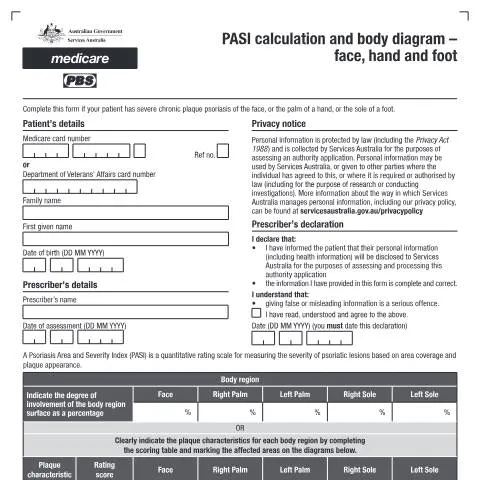
When dealing with healthcare claims or assessments in Australia, it's crucial to understand every aspect of the documentation involved. The PASI calculation and body diagram - face, hand and foot form (PB114) plays a significant role for health professionals and their patients. Understanding its nuances can mean the difference between a smooth process and a frustrating delay.
Understanding the Context: Why the PB114 Form Is Essential
The PB114 form is not just another piece of paperwork; it is a pivotal tool in evaluating patients for supplementary health services, particularly in relation to injuries or conditions affecting the face, hands, and feet. This form is often used in conjunction with other assessments to provide a comprehensive picture of the patient's needs and the impact of their condition.
The Historical Background and Regulatory Framework
This document finds its roots in the broader health and administrative framework established by Services Australia, which oversees various health professional interactions. The foundation for the PB114 form is steeped in the principles of the Administrative Decisions (Judicial Review) Act 1977 (Cth) that ensures proper review and accountability in administrative actions.
The PB114 has been formulated to streamline the evaluation process, ensuring that health professionals can accurately report their findings while maintaining compliance with national health standards. This structured approach allows for detailed assessments tailored to specific injuries, thus facilitating better health outcomes for patients.
Who Needs to Fill Out the PB114 Form?
The PB114 form is essential for health practitioners working with patients who have faced injuries or have medical conditions affecting the specified body parts. This form caters to a diverse range of profiles, including:
- General Practitioners (GPs): Often the first point of contact in the healthcare system.
- Specialists: Surgeons or therapists who focus on specific areas such as orthopaedics.
- Allied Health Professionals: Physiotherapists, occupational therapists, and more.
Each of these practitioners plays a vital role in documenting the necessary information through the PB114, ensuring their patients receive the support and services they require.
Exceptions and Unique Cases
While the PB114 is predominantly used by health professionals, certain cases may complicate its submission. These can include:
- Non-residents or temporary visa holders: Their eligibility may differ based on specific circumstances.
- Minors: Parental or guardian consent may be necessary for submissions.
- Patients with complex medical histories: Additional documentation may be required.
Understanding these exceptions is crucial for health professionals to ensure no step is overlooked in the submission process.
Decoding the PB114: A Detailed Walkthrough of the Sections
The PB114 form comprises several sections, each of which requires careful attention to detail. Incorrect filling could result in processing delays or even rejections. Below is a breakdown of the sections commonly found in the PB114:
| Section | Description | Common Pitfalls |
|---|---|---|
| Patient Information | Includes personal details such as name, date of birth, and contact information. | Ensure all names are spelled correctly and match official documents. |
| Medical History | Details of past injuries or relevant medical conditions. | Omitting crucial past incidents can affect assessment outcomes. |
| Body Diagram | A visual representation indicating areas of concern on the body. | Inaccurate markings can lead to misinterpretations of the injury. |
| PASI Calculation | Calculation of the Patient’s Adjusted Severity Index based on the reported conditions. | Miscalculations can lead to incorrect assessments. |
Submitting the PB114: Channels and Methods
Submitting the PB114 form can be done through various channels, each with its own pros and cons. Understanding these methods can aid in selecting the best option based on urgency and convenience.
Online Submissions via myGov
For those registered with myGov, submitting the PB114 form online is often the most efficient method. This channel allows for quick uploads and ensures that the documents are sent directly to Services Australia. The advantages include:
- Immediate confirmation of submission.
- The ability to track the status of the submission.
- Access to other related services through a single platform.
Paper Submissions
For those who prefer traditional methods or are unable to access digital services, paper submissions remain an option. However, note that this method can introduce delays due to postal times and processing backlogs. It's essential to:
- Use correct postage and mailing address.
- Maintain copies of all submitted documents for personal records.
In-Person Submissions
For urgent cases, submitting the PB114 form in person at a local Services Australia office can expedite the process. This method allows for immediate feedback on the submission. However, it’s crucial to:
- Schedule an appointment if necessary.
- Bring all necessary identification and documentation to avoid delays.
What Happens After Submission? Understanding the Follow-Up Process
Once the PB114 form is submitted, health professionals and patients alike should be aware of the follow-up process. Services Australia evaluates submissions and may reach out for further information or clarification if needed. Here’s what to expect:
Processing and Assessment Timeline
The processing time may vary based on several factors, including submission volume and the specific details of the case. Typically, one should anticipate a response within a designated timeframe. Keeping track of the submission through myGov can help manage expectations.
Possible Outcomes
Upon review, several outcomes can occur:
- Approval: The claim is accepted, and the necessary services are allocated.
- Request for More Information: Additional documentation may be needed to finalize the decision.
- Denial: The claim may be denied if it does not meet eligibility criteria. In such cases, understanding the reasons for denial is critical for taking further action.
What to Do in Case of Denial
If a submission is denied, it’s crucial to investigate the reasoning provided. The Administrative Appeals Tribunal (AAT) allows individuals to seek a review of the decision. This process involves:
- Requesting a review within the time frame specified in the denial notice.
- Gathering any additional evidence that may support the claim.
- Submitting the necessary documentation to the AAT for consideration.
Being proactive and informed can significantly enhance the likelihood of a favorable outcome in such cases.
High-Risk Situations: Special Considerations for Urgent Cases
Some injuries or conditions may require immediate attention, necessitating expedited processing of the PB114 form. In these instances, clear communication with Services Australia is vital.
Urgent Medical Conditions
For conditions that pose immediate risks to health, it may be beneficial to highlight these in the submission. Health professionals can include explicit notes within the PB114 form to indicate the urgency, which may influence processing times.
International Patients and Visitors
In cases involving non-residents or visitors, the process may vary. Clear guidelines from Services Australia regarding eligibility for medical services should be reviewed thoroughly. Health professionals should ensure that any necessary documentation is included to support the claim.
In complex situations, consulting with Services Australia directly can provide clarity on the available options and requirements.
Conclusion: Maximizing the Effectiveness of the PB114 Form
Completing and submitting the PASI calculation and body diagram - face, hand and foot form (PB114) is an integral step in ensuring that patients receive the necessary medical assessments and services they require. By understanding the nuances of the form, including its purpose, submission channels, and the follow-up process, health professionals can navigate the complexities with confidence and achieve better outcomes for their patients.
Staying informed about the procedural aspects and maintaining open communication with Services Australia can significantly enhance the efficiency of the healthcare system and ensure that all stakeholders are adequately supported.
Understanding the PASI Calculation in Detail
The Psoriasis Area Severity Index (PASI) is a widely used metric for assessing the severity and extent of psoriasis, a chronic skin condition. The PASI calculation is essential for determining the appropriate treatment options and monitoring the condition over time. This section offers insights into the individual components of the PASI calculation, focusing on how they relate to areas of the body and the severity levels attributed to each.
The PASI score is derived from an evaluation of three key elements: the area of the body affected, the severity of the lesions, and the specific body regions involved. The body is divided into four regions: the head, upper limbs, trunk, and lower limbs. Each region receives a score based on the percentage of affected area and the severity (measured in terms of redness, thickness, and scaling). For example:
- Head: Up to 10% of the total score, depending on the extent and severity of lesions.
- Upper limbs: 20% of the total score, with scores reflecting the severity of psoriasis lesions.
- Trunk: 30% of the total score, having a larger impact given its prominence and visibility.
- Lower limbs: 40% of the total score, often reflecting the most significant impact on mobility and quality of life.
This breakdown allows healthcare providers to tailor patient treatment plans based on the specific areas affected and how severely they are impacted. The PASI score can range from 0 (no psoriasis) to 72 (very severe psoriasis), and understanding the scoring mechanism ensures appropriate management and follow-up.
Utilizing the Body Diagram for Accurate Assessment
The Body Diagram included in the PASI assessment form (PB114) is not merely a visual aid; it plays a crucial role in accurately assessing the distribution of psoriasis lesions on a patient's body. This diagram allows both healthcare professionals and patients to clearly identify and record the specific areas affected by psoriasis. The clarity of the diagram is vital, as accurate documentation directly impacts the calculation of the PASI score.
When using the body diagram, patients or clinicians should follow these steps:
- Identify Affected Areas: Mark all areas of the body where psoriasis lesions are present. It's essential to include lesions of all severities, including mild patches that might otherwise be overlooked.
- Estimate the Percentage of Body Involvement: For each marked area, estimate the percentage of surface area affected. Each body region on the diagram corresponds to specific percentages that can be easier to calculate when considering the total body surface area (TBSA).
- Document Severity Levels: Use the PASI severity descriptors (erythema, induration, scaling) to score each marked area. This scoring system helps create a comprehensive overview of the disease's impact on the patient.
By accurately filling out the Body Diagram, patients ensure that their healthcare providers have a clear understanding of the psoriasis distribution, leading to better management strategies. This tool also serves as a reference point for monitoring changes in psoriasis over time, allowing for adjustments in treatment if necessary.
Clinical Implications of PASI Calculation in Treatment Decisions
The impact of the PASI score extends beyond mere assessment; it plays a significant role in clinical decision-making regarding treatment options for psoriasis. Many treatment guidelines and clinical trials utilize PASI scores to evaluate the efficacy of therapies.
For instance, a PASI score below 10 may indicate that a patient has mild psoriasis, often managed with topical treatments and lifestyle modifications. Conversely, a score above 20 typically suggests moderate to severe psoriasis, which may necessitate systemic treatments or biologics. The use of PASI scores helps standardise treatment approaches and can also aid in discussions about potential new therapies or clinical trials that may be available, based on the severity of the condition.
Furthermore, the importance of regular assessments cannot be overstated. Ongoing monitoring of PASI scores allows healthcare providers to:
- Evaluate the response to treatment: Changes in PASI scores can indicate how well a patient is responding to their current regimen, prompting necessary adjustments.
- Identify flares early: A sudden increase in PASI scores may signal a disease flare, allowing for prompt management.
- Facilitate shared decision-making: Understanding a patient's PASI score helps clinicians and patients work together to develop and adjust treatment plans tailored to individual needs and preferences.
In conclusion, the PASI calculation and its associated Body Diagram serve as integral components in the effective management of psoriasis. By ensuring accurate documentation and understanding the implications of PASI scores, patients and healthcare providers can work collaboratively towards achieving optimal treatment outcomes.