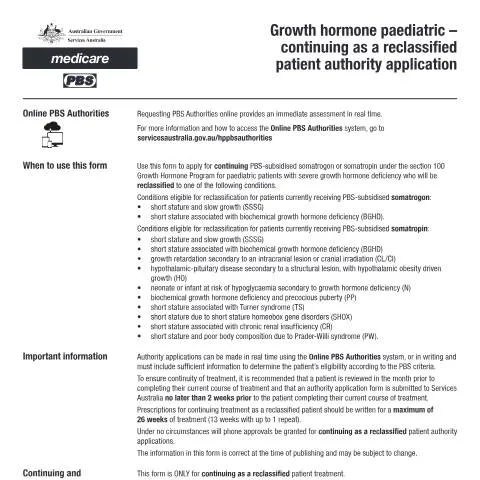
Understanding the PB164 Document: A Vital Component in Paediatric Growth Hormone Therapy
For families grappling with the complexities of paediatric growth hormone therapy, navigating the bureaucratic landscape can often feel overwhelming. The Growth hormone paediatric - continuing as a reclassified patient authority application form (PB164) serves as a critical tool in ensuring that children who require ongoing growth hormone treatment do not face unnecessary interruptions in their therapy. This document is an essential element in the framework established by Services Australia to facilitate the continued use of growth hormone therapy for children previously classified as patients.
Who Needs to Submit the PB164 Form?
The PB164 form is specifically designed for paediatric patients who are transitioning to reclassified patient status. This typically involves children who have previously received approval for growth hormone therapy and are now seeking to continue their treatment under new guidelines or classifications. To illustrate, consider the following scenarios:
- Children with Chronic Conditions: Those diagnosed with growth hormone deficiencies due to underlying health issues will need this form to ensure their treatment remains uninterrupted.
- Reclassification Due to Age: As children grow, their treatment plans and eligibility may need reassessment, requiring submission of the PB164.
- Change in Medical Circumstances: If a child's medical condition changes or their response to therapy needs reevaluation, the PB164 serves as a necessary tool for clinicians to document these changes.
The Application Process: Step-by-Step
Completing the PB164 involves several important steps that ensure compliance with administrative guidelines while providing necessary health information. Here’s a breakdown of what the process typically entails:
1. Gathering Required Information
Before filling out the form, gather all pertinent information regarding the child’s medical history, current treatment regimen, and previous approvals. This may include:
- Medical reports from the treating physician.
- Previous authority approvals for growth hormone therapy.
- Any supporting documents related to the child’s growth and health status.
2. Completing the Form
The PB164 form should be filled out with care to ensure that all sections are completed accurately. Key sections include:
- Patient Details: Name, age, and relevant identification numbers.
- Medical Information: Details pertaining to the growth hormone treatment and any observed side effects.
- Consent: Signature from a parent or guardian confirming the submission and accuracy of information.
3. Submitting the Form
After completing the PB164, the form can be submitted via several channels:
- Online through myGov: Families can lodge their applications through the myGov platform, which streamlines the submission process.
- By Mail: Alternatively, the form may be submitted via postal service. Make sure to check the postal address for Services Australia to avoid delays.
- In Person: Families may also choose to submit their applications directly at designated Services Australia centres.
After Submission: What Comes Next?
Once the PB164 form is submitted, families can expect a series of administrative processes that will determine the outcome of the application:
Processing Timeline
Typically, processing times can vary, but families should generally allow a timeframe for the application to be reviewed. During this period, Services Australia will evaluate the submitted information against their eligibility criteria. It's advisable to follow up after a reasonable period to confirm the status of the application.
Receiving the Decision
Families will receive a notification detailing whether the application has been approved or rejected. Key points to keep in mind include:
- Approval: If the application is approved, families will receive the necessary documentation to continue treatment.
- Rejection: In the case of a denial, a letter explaining the reasons for the decision will be provided.
Handling Potential Challenges: What If Things Go Wrong?
It’s not uncommon for applicants to encounter challenges during the application process. Here are some common issues and how to address them:
Missing Information
If the application is incomplete, Services Australia will typically reach out to request additional information. It’s vital to respond promptly to avoid delays in processing.
Appealing a Rejection
In the unfortunate event that an application is denied, families have the right to appeal the decision. This involves:
- Reviewing the Reasons: Understand the specific reasons for the denial as outlined in the notification.
- Gathering Additional Evidence: Collect any additional medical evidence or documentation that supports the case for approval.
- Submitting an Appeal: Follow the procedures outlined in the rejection letter to submit an appeal to the relevant administrative body.
The Role of Healthcare Professionals in the PB164 Process
Healthcare professionals play a vital role in the PB164 application process. Here’s how they contribute:
Patient Assessment and Documentation
Clinicians must accurately assess the patient’s health status, treatment response, and ongoing need for growth hormone therapy. This information is critical when completing the PB164 form:
- Clinical Reports: Doctors need to provide comprehensive clinical reports that detail the patient's growth trajectory and treatment history.
- Recommendations: Healthcare providers should articulate the need for continued therapy based on clinical assessments.
Advocacy for Patients
Healthcare professionals can also advocate on behalf of their patients, ensuring that any relevant information is communicated effectively to Services Australia:
- Follow-Up Communication: Clinicians may follow up with Services Australia if there are delays or issues with the application.
- Guidance to Families: Offering support and guidance throughout the application process helps families navigate the complexities more easily.
Understanding the Legal Framework: Why the PB164 Matters
The PB164 form is not just a bureaucratic hurdle; it is deeply embedded within a legal framework established to safeguard patient access to necessary medical treatments. The Administrative Decisions (Judicial Review) Act 1977 (Cth) provides a basis for reviewing decisions made by administrative bodies, ensuring that patients have recourse in case of decisions that adversely affect their treatment.
Merits Review through AAT
The Administrative Appeals Tribunal (AAT) provides a platform for appellants to contest decisions regarding health services. Understanding this avenue is crucial for families that may face challenges:
- Eligibility for Review: Not all decisions are subject to merit review, so it’s important to understand the specific criteria that apply.
- Process for Application: Families should be prepared to present their case, backed by appropriate documentation and medical evidence.
The Human Element: The Impact of PB164 on Families and Patients
Beyond the administrative processes, the PB164 form represents significant human experiences and impacts on families. It is not merely a document; it is a gateway to essential medical treatment that can profoundly affect a child's growth and development.
The Importance of Timely Submissions
For families, timely submission of the PB164 is crucial. Delays can lead to interruptions in treatment, which can have lasting effects on a child's development:
- Physical Growth: Missing doses of growth hormone therapy can hinder proper growth and overall health.
- Family Stress: Uncertainty regarding treatment can lead to significant emotional and financial stress for families.
Understanding Patient Rights and Responsibilities
Families must be aware of their rights and responsibilities throughout the PB164 process:
- Patient Rights: Families have the right to clear communication regarding their application status and to appeal unfavorable decisions.
- Responsibilities: Promptly provide all necessary documentation and respond to requests from Services Australia; this is crucial in maintaining the flow of treatment.
Resources for Families: Where to Get Help
Families navigating the PB164 application process may benefit from additional resources to help understand their rights and available support systems:
- Services Australia: The primary source for information and support regarding the PB164 form and related health services.
- Healthcare Providers: Doctors and specialists can provide valuable insight and support through the application process.
- Peer Support Groups: Connecting with other families experiencing similar challenges can offer emotional support and practical advice.
In conclusion, while the PB164 form may initially seem like a simple bureaucratic requirement, it holds profound implications for families and children requiring growth hormone therapy. Understanding its role, processes, and the broader context can empower families to navigate the system effectively, ensuring their children's health needs are met without unnecessary delays or complications.
Understanding the PB164 Form: Eligibility and Requirements
The PB164 form, also known as the 'Growth Hormone Paediatric - Continuing as a Reclassified Patient Authority Application', plays a crucial role for children diagnosed with growth hormone deficiency or other related conditions needing ongoing therapy. To be eligible for a reclassified authority, parents or guardians must demonstrate that their child meets specific requirements set by the Pharmaceutical Benefits Scheme (PBS).
Eligibility is generally based on the following criteria:
Diagnosis Confirmation: The child must have a confirmed diagnosis of a growth hormone deficiency, which requires documentation from a qualified medical professional. This documentation is paramount, as it should outline the medical rationale for continuing growth hormone therapy.
Previous Authorisation: The application typically necessitates that the applicant has previously received authority for the growth hormone treatment. If the child had been receiving PBS-subsidised treatment before, this can streamline the reclassification process.
Health Impact Assessment: A health report assessing the child's growth parameters and overall health status is essential. This report should illustrate the positive effects of the hormone therapy and how it has contributed to the child's development. Medical practitioners are encouraged to provide detailed assessments, which may include auxological data.
Ongoing Monitoring: Continuous health monitoring is mandatory under PBS guidelines. The application must indicate that the child will continue to be monitored by a healthcare professional specialising in endocrinology or paediatrics. Consistent follow-up appointments help in substantiating the necessity of ongoing treatment.
Filling out the PB164 form requires careful attention to detail. It includes sections for providing comprehensive clinical information, health assessments, and treatment histories. Missing or incomplete information can lead to delays or even rejections in processing, so ensure that all required fields are thoroughly completed.
The Submission Process: Navigating the Path to Approval
Submitting the PB164 form involves a systematic process that, if followed meticulously, can facilitate a smoother approval experience. Here’s a detailed step-by-step guide to help navigate the submission process:
Preparation of Necessary Documents: Gather all relevant documents, including previous authority approvals, medical reports, and the detailed health assessment that highlights the child's growth status. Ensuring that all documents are ready before starting the application can save time and reduce errors.
Online Submission via myGov: The PB164 form can often be submitted through myGov, which acts as a central hub for managing various Australian government services. If you do not have a myGov account, you will need to create one. Ensure you link your Medicare account to access the necessary forms.
Completing the Form: When filling out the PB164 form, be meticulous about entering the child's details accurately. This includes their Tax File Number (TFN), date of birth, and any other identifying information. The form may ask for specifics regarding the child’s health condition, previous treatments, and current status.
Submitting Supporting Evidence: To support the application, upload any additional evidence that corroborates the medical necessity for continued treatment, such as endocrinologist reports, growth charts, and letters from healthcare providers.
Tracking the Application: After submission, keep track of your application status through your myGov account. Notifications regarding the approval or any required additional information will typically be sent through this platform. Be proactive in checking back regularly and responding promptly to any queries from the relevant authorities.
Receiving the Decision: Following the review, a decision will be communicated regarding the approval or denial of the reclassification. If approved, you will receive a notification which you can then present to the pharmacy when obtaining the prescribed growth hormone therapy.
Navigating the complexities of the PB164 submission process can be daunting, but being organized and attentive to detail can significantly enhance your chances of a successful application.
Common Challenges and How to Overcome Them
Applying for the PB164 reclassification can present various challenges. Understanding these potential hurdles and knowing how to tackle them efficiently can make a significant difference in the outcome of your application.
Incomplete Medical Documentation: One of the leading causes of delays or rejections in applications is insufficient medical documentation. To overcome this challenge, consider enlisting the help of the child's healthcare team early in the process. Schedule a dedicated appointment where you can discuss the requirements and ensure that all necessary evidence is gathered.
Unclear Medical Justification: If the healthcare provider's rationale for continued growth hormone therapy is vague or lacks detail, this can lead to complications. Encourage the medical team to provide a detailed letter that explicitly states why ongoing treatment is essential, supported by data if possible. Clear and concise communication of the child's medical needs will strengthen the application.
Submitting Late: The timing of your application is critical. Ensure you are aware of renewal deadlines for the PBS authority. If your application is submitted late, the child may experience a gap in receiving their medication. It’s beneficial to set reminders for renewal submissions well in advance of the expiry date.
Changes in Healthcare Providers: If there is a change in the healthcare provider managing your child's treatment, it's important to inform the new provider about the ongoing therapy and the need for the PB164 application. New providers may take time to familiarize themselves with the child's medical history, so provide them with the previous medical records to expedite the process.
Navigating Complex Regulations: The PBS regulations can be complex and may seem overwhelming. Seeking assistance from health advocacy groups or support networks can provide valuable insights. These organizations often have resources or personnel who can guide parents through the process, ensuring that everything is in order.
Appealing Rejections: If your application is denied, don’t despair. There is a formal process for appealing decisions through the Administrative Appeals Tribunal (AAT). Be sure to understand the grounds for rejection provided in the notification and gather additional information that addresses these concerns. Engaging with the child's healthcare team can also bolster your appeal by providing further evidence of medical necessity.
Being proactive, organized, and informed will empower parents and guardians to navigate the complexities of the PB164 application process successfully, ensuring their child continues to receive the essential growth hormone therapy they need.