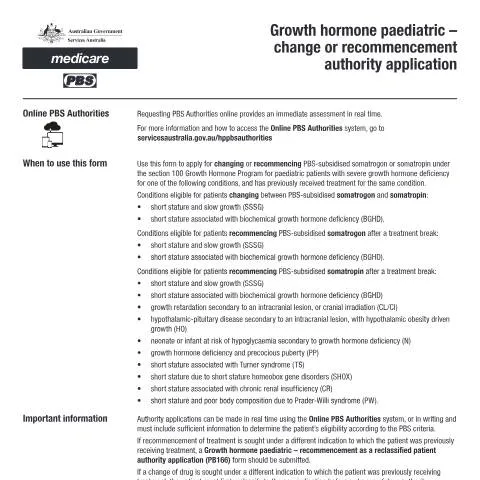
Navigating the PB165 Application: A Guide to Growth Hormone Authority Changes for Pediatric Patients
When addressing the health needs of children requiring growth hormone treatment, understanding the Growth Hormone Paediatric - Change or Recommencement Authority Application Form (PB165) is crucial. This form is specific to Services Australia and aims to facilitate the process for pediatric patients who may need modifications to their growth hormone therapy. But how do you ensure that your application is complete and correctly submitted? Here’s an in-depth exploration of the PB165, its purpose, and the procedures surrounding its use.
Understanding the Role of PB165 in Pediatric Growth Hormone Therapy
The PB165 form is integral to the authority process for growth hormone therapy for children. It serves as a formal request to change or recommence a previously approved treatment plan. This document is particularly important in cases where:
- A child's growth hormone therapy needs to be adjusted due to growth progress or health changes.
- There’s a need to resume treatment after a period of suspension.
- New evidence emerges suggesting an alternative therapeutic approach is necessary.
The information provided in PB165 directly influences the clinical decision-making process and helps healthcare providers ensure that children receive the appropriate level of care based on their evolving health needs.
Who Manages the Submission of PB165?
Typically, PB165 is submitted by a registered healthcare professional—often an endocrinologist or pediatrician—who oversees the treatment of the child. This healthcare provider will have the necessary expertise to assess the child’s condition and the appropriate adjustments needed in their therapy.
Roles of Different Stakeholders in Submitting the Form
In the context of PB165, several roles are involved:
- Healthcare Provider: Responsible for filling out the form accurately based on clinical assessments and recommendations.
- Patient's Guardian: In cases involving minors, parents or guardians must provide consent and support for the submission process, ensuring all relevant medical history is fully disclosed.
- Services Australia: Reviews the submitted forms and determines the eligibility for continued or adjusted assistance for medication costs.
Channels for Submitting PB165: Online vs. Paper Forms
One of the key considerations when dealing with the PB165 form is the method of submission. Understanding the available channels is vital for ensuring a smooth application process. Applications can typically be submitted through:
- Online Submission: This is often the preferred method as it allows for immediate processing and tracking through the myGov portal. Healthcare professionals can easily upload required documents and monitor the application status.
- Paper Submission: In specific cases, including those where internet access may be limited, the form can be printed and submitted via mail. However, this method may delay processing times.
Comparative Overview of Submission Channels
| Method | Advantages | Disadvantages |
|---|---|---|
| Online Submission | Fast processing, real-time updates, eco-friendly. | Requires internet access and myGov login. |
| Paper Submission | Accessible without internet, tangible record of submission. | Slower processing time, potential for lost mail. |
Completing the PB165 Form: Essential Components
Filling out the PB165 form correctly is crucial for its acceptance by Services Australia. Here are the key components that must be addressed:
Personal Details of the Patient
Begin by providing detailed information regarding the child, including:
- Full name
- Date of birth
- Medicare number
Clinical Background and Treatment History
Next, the healthcare provider needs to elaborate on:
- Previous growth hormone therapy details, including dosage and duration.
- Any significant changes in the child's health status that necessitate a change in the treatment approach.
Requested Changes or Recommencement
Clearly state the specific changes being requested, whether it’s an adjustment in dosage or a full recommencement of therapy. Supporting clinical rationale is essential.
Consent and Declaration
The form must be signed by the healthcare provider and, where appropriate, the parent or guardian, indicating agreement with the information supplied and granting consent for disclosure to Services Australia.
Navigating the Review Process After Submission
Once the PB165 form is submitted, the review process begins within Services Australia. Understanding what happens next can alleviate anxiety for parents and caregivers.
Review Timeline and Feedback Mechanism
The processing time can vary based on the complexity of the case, but generally, you can expect feedback within a few weeks. If there are any issues with the application, Services Australia will typically reach out for clarification.
How to Track Your Application
For those who submit online, tracking the status of your application is straightforward through the myGov portal. For paper submissions, it may be necessary to contact Services Australia directly to inquire about the status.
Special Considerations: Handling Complex Cases
Certain situations may complicate the application process when filling out PB165, such as:
- Children with concurrent health issues that may affect growth hormone therapy.
- International patients or those who have recently moved to Australia, which may affect their eligibility for certain services.
- Emergency situations requiring expedited changes to treatment protocols.
In such cases, it is advisable to communicate directly with the healthcare provider and Services Australia to ensure that all unique aspects of the child’s health status are taken into consideration during the review process.
Historical Context and Regulatory Framework Surrounding Growth Hormone Therapy
The PB165 form is not just a document; it is embedded within a broader legal and regulatory framework that governs growth hormone therapies in Australia. The Administrative Decisions (Judicial Review) Act 1977 (Cth) provides the legal foundation for evaluating decisions made by Services Australia, ensuring that patients have a pathway for reviewing administrative decisions. Understanding this context can help families navigate any disputes or questions regarding applications.
Furthermore, the guidelines set forth by Services Australia for growth hormone therapy are influenced by ongoing research and data on pediatric endocrinology, emphasizing the need for evidence-based approaches to treatment.
The Future of Growth Hormone Therapy Applications: A Look Ahead
As healthcare continues to evolve, so too will the processes surrounding applications like PB165. Ongoing advancements in telehealth and digital health records may streamline application processes, making it easier for families to access the necessary treatments.
Additionally, as more research emerges regarding pediatric growth disorders and treatment efficacy, the parameters set by Services Australia may adapt, requiring healthcare providers to remain vigilant about any changes that could affect their patients.
For families, staying informed and engaged with their child's healthcare team is paramount. Continuous dialogue can ensure that they are fully aware of any updates to the application process and treatment protocols, leading to the best outcomes for children requiring growth hormone therapy.
Understanding the Growth Hormone Treatment Process for Children
In Australia, the administration of growth hormone (GH) therapy for paediatric patients is a nuanced process governed by strict clinical guidelines and funding protocols. The eligibility for such treatment often hinges on a comprehensive assessment by healthcare professionals including paediatric endocrinologists. These specialists evaluate the child's growth patterns, identify underlying conditions such as Growth Hormone Deficiency (GHD), and determine the appropriateness of GH therapy. The initial phase usually involves rigorous testing, which may include blood tests and imaging studies, to gauge hormone levels and growth potential.
Once deemed eligible, the child's family must be informed about the treatment's potential benefits and side effects. This information becomes crucial when filing for a financial support request through the relevant authorities. Parents should prepare for a collaborative dialogue with their healthcare provider regarding the child's treatment plan, emphasizing the importance of ongoing monitoring and follow-up assessments to ensure that the child is responding positively to the therapy.
Financial Aspects and Support Services
Engaging with the financial implications of paediatric growth hormone therapy is essential for families. The costs associated with treatment can be substantial, including the price of medication, medical consultations, and regular monitoring. In Australia, the Medicare system can provide coverage for many of these expenses, but eligibility criteria must be met. The ongoing costs of treatment might necessitate families to explore additional support services.
Families should familiarize themselves with the available resources through Services Australia, which includes Child Support and Medicare. It is also beneficial to connect with patient advocacy groups that can offer guidance on navigating the financial landscape of paediatric care. They may assist in understanding how to apply for subsidies or grants specifically tailored for growth hormone treatment, thereby alleviating some of the financial burdens.
Transitioning Between Treatment Providers
Transitioning between treatment providers can present unique challenges, especially for paediatric patients receiving growth hormone therapy. This process can occur for various reasons, such as moving to a new geographical location or changing healthcare plans. When a child needs to switch endocrinologists or healthcare facilities, it is imperative to ensure continuity of care.
To facilitate a smooth transition, parents must gather comprehensive medical records from the previous provider, including treatment history, dosage, and any significant observations or side effects experienced during therapy. The new healthcare provider will rely on this information to assess the child's ongoing need for growth hormone therapy and to establish a tailored treatment plan. Moreover, it is crucial to engage directly with both the current and new providers during the transition period to discuss any adjustments in the treatment protocol and address concerns regarding the child's health and wellbeing.