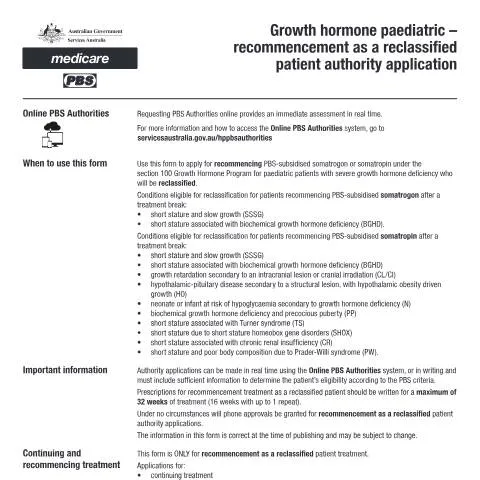
A Comprehensive Guide to the PB166 Application Form for Growth Hormone Therapy
In Australia, navigating the healthcare system can often feel overwhelming, especially when it comes to specialised treatments such as growth hormone therapy for paediatric patients. The PB166 form, officially titled "Growth hormone paediatric - recommencement as a reclassified patient authority application form," serves a critical role in this process. Designed specifically for children requiring this treatment, the PB166 enables parents and guardians to seek approval for a treatment plan that can significantly impact their child's health and development.
Understanding the Unique Nature of the PB166 Form
At first glance, the PB166 form might appear similar to other medical authority application forms; however, it has specific functions and requirements that set it apart. This form is tailored for individuals who are reclassified patients, meaning that they have previously received treatment but are now in need of a recommencement of therapy under new conditions or guidelines. This distinction is important as it addresses the unique circumstances these patients may face, particularly in terms of ongoing health needs and clinical justification.
Identifying Reclassified Patients
A reclassified patient in the context of the PB166 is typically someone who has undergone a previous treatment cycle but may now need to restart their growth hormone therapy due to changes in their health status or growth patterns. The application requires detailed medical history and justification, which can include:
- Previous treatment records
- Recent growth assessments
- Current health evaluations
- Insights from healthcare professionals
Preparing Necessary Documentation: A Step-by-Step Approach
Completing the PB166 form is not just about filling in your details; it requires comprehensive documentation to support the application. Here’s a guide to the necessary documentation:
Types of Supporting Documents
When preparing your application, ensure you have the following documents ready:
- Clinical Evidence: This includes reports from endocrinologists or pediatric specialists that detail the child's prior treatment and the rationale for recommencement.
- Growth Assessments: Recent assessments documenting growth patterns, including height, weight, and any relevant laboratory tests.
- Health History: A summary of the child's medical history, including any other conditions that may affect growth.
- Parent or Guardian Consent: Written consent from the legal guardian to submit the application on behalf of the patient.
Navigating Your Responsibilities and Rights in the Application Process
Submitting the PB166 form entails specific responsibilities for those involved. Understanding these can help parents and guardians make informed decisions regarding their child's treatment.
Rights of the Patient and Guardian
It is crucial for guardians to know their rights, including:
- Right to timely processing of the application
- Right to receive detailed feedback on any information required
- Right to appeal decisions made regarding treatment recommencement
Obligations of the Guardian
With these rights come responsibilities, including:
- Providing accurate and comprehensive information on the form
- Ensuring that all supporting documentation is current and relevant
- Submitting the application within the required timeframe as advised by the treating physician
The Role of the PB166 Form in the Broader Healthcare Procedure
The PB166 form does not exist in a vacuum; it is part of a larger system that includes healthcare providers, Services Australia, and the therapeutic goods approval process. Understanding its role within this framework can streamline the application process.
From Submission to Approval: The Journey of Your Application
Once the form is completed and submitted, various steps occur:
- Initial Review: Services Australia begins by reviewing the submitted form and accompanying documents.
- Assessment: Healthcare professionals assess the clinical need for recommencement based on the information provided.
- Decision Notification: Parents or guardians will receive a notification regarding the approval or denial of the application.
Decoding the PB166 Form: A Detailed Breakdown
The PB166 form consists of several sections, each requiring careful attention to detail. Here’s a look at the main sections:
| Section | Details Required | Common Mistakes |
|---|---|---|
| Patient Information | Name, Date of Birth, TFN (if applicable) | Incorrect TFN or missing birth date |
| Medical History | Details of previous treatments and outcomes | Inadequate details on prior therapies |
| Current Health Status | Recent health assessments and reports | Outdated or irrelevant medical records |
| Consent | Signature and contact details of the guardian | Missing signature or incorrect contact details |
Potential Pitfalls During Completion
Be mindful of common pitfalls that can lead to delays or rejection of the application. For instance, failing to provide the most recent medical assessments or simply overlooking details can hinder progress. It’s beneficial to double-check all entries and ensure clarity in each section.
Submission Channels: Opting for the Right Method
When it comes to submitting the PB166 form, you have several options. Choosing the appropriate channel can impact how quickly your application is processed.
Available Submission Methods
- Online Submission: Most efficient and recommended method through myGov, where you can track your application status.
- Papery Submission: You may also opt to send a physical copy of the form; however, this may lead to longer processing times.
- In-Person Submission: For those who prefer face-to-face interaction, visiting a Services Australia centre is an option; however, an appointment may be necessary.
Historical Context and Regulatory Framework
The PB166 form is grounded in a broader healthcare framework defined by policies and guidelines that ensure equitable access to necessary treatments. The legal and regulatory standards governing the use of growth hormone therapies have evolved over the years, reflecting ongoing research and changing societal needs.
The Legislative Background
The application process, including the use of PB166, adheres to the provisions set out in the Pharmaceutical Benefits Scheme (PBS), which governs the accessibility of medications and treatments deemed medically necessary. Understanding this ensures that families are aware of the significance of the PB166 form in securing their child’s health needs.
In summary, the PB166 form is more than just a bureaucratic requirement; it is a gateway to critical therapy for paediatric patients. By understanding its nuances, preparing adequately, and navigating the application process with clarity and diligence, families can significantly influence the health outcomes for their children requiring growth hormone therapy. Always refer back to Services Australia for the latest updates and requirements regarding this essential application process.
Understanding the PB166 Form: Key Components and Requirements
When dealing with a reclassified patient authority application for growth hormone treatment in children, it is vital to comprehend the specific components of the PB166 form. This form is integral in ensuring that children receive necessary treatments as per the standards set by the Australian health authorities.
The PB166 form includes several sections that require detailed information from the applicant, typically the child’s parent or guardian. This information includes:
- Patient Information: Accurate details such as the patient's name, residential address, date of birth, and Medicare number. This section helps in establishing the identity of the child needing the treatment.
- Clinical Information: This is a critical part of the application where healthcare providers must specify the medical rationale for growth hormone therapy, including previous treatments, current diagnoses, and any relevant medical history.
- Treatment History: An overview of past interventions and therapies that have been attempted or are ongoing is necessary. This includes any previous prescriptions and outcomes, which can significantly contribute to the assessment of the application.
- Supportive Documentation: Applicants need to attach relevant medical reports, growth charts, and letters from specialists that confirm the need for continued growth hormone therapy. These documents serve to substantiate the claims made in the application.
Gathering all this information beforehand can expedite the application process and improve the chances of approval by demonstrating a clear medical need for the growth hormone treatment.
Navigating the Appeals Process for PB166 Reclassifications
In cases where a PB166 application is denied, it is essential to know that there is an appeals process in place. Understanding how to navigate this procedure can be crucial for families seeking necessary medical treatments for their children.
The first step in the appeals process is to carefully review the decision letter received from the relevant authority, such as the Pharmaceutical Benefits Scheme (PBS). This letter usually outlines the reasons for the denial, which can range from insufficient clinical justification to missing documentation.
Once the reasons are understood, applicants have the option to submit a request for a review. This must be done within the stipulated timeframe, typically outlined in the decision letter. The review will be conducted by the relevant authority, which may require additional documentation or clarification regarding the child’s medical condition and treatment history. Key points to remember during the appeal process include:
- Gathering Additional Evidence: If the initial application lacked supporting documents, now is the time to obtain updated medical records, letters from specialists, and any relevant tests that reinforce the need for growth hormone therapy.
- Consulting with Healthcare Providers: Engaging with the child's healthcare team can provide valuable insights and assistance in preparing the appeal. They may also offer to write letters to support the application based on their clinical experience with the child.
- Timeliness: Submitting the appeal promptly is crucial. Delays can jeopardize the assessment of the child's needs and prolong access to the necessary treatment.
Understanding this process can significantly affect the outcome for families seeking essential growth hormone treatments under the reclassified PB166 framework.
Impact of Growth Hormone Treatment on Development and Quality of Life
Beyond the administrative aspect of the PB166 application, it's imperative to consider the broader implications of growth hormone treatment on a child's development and overall quality of life. Research indicates that appropriate growth hormone therapy can lead to significant improvements in several areas.
Firstly, physical development is the most apparent benefit. Children who receive timely growth hormone treatment often experience enhanced growth rates, leading to improved height-for-age ratios and overall physical health. This can have a profound impact on their self-esteem and social interactions, especially during formative school years.
Secondly, growth hormone therapy can also positively influence cognitive and emotional development. Studies suggest that optimal growth in children is linked to better psychosocial outcomes. When children feel confident about their physical appearance, they are more likely to engage socially and excel academically. Additionally, addressing growth deficiencies early can help mitigate the long-term psychological impacts associated with being significantly shorter than peers.
Furthermore, the long-term health benefits of recognizing and treating growth deficiencies early cannot be overlooked. Children who undergo appropriate growth hormone therapy tend to have improved metabolic profiles, including better body composition and lower risks of obesity-related complications later in life.
Parents and caregivers should be aware of these benefits when navigating the complexities of the PB166 application process. By understanding both the immediate and long-term impacts of growth hormone therapy, families can advocate more effectively for their child's needs and secure the necessary approvals for treatment.