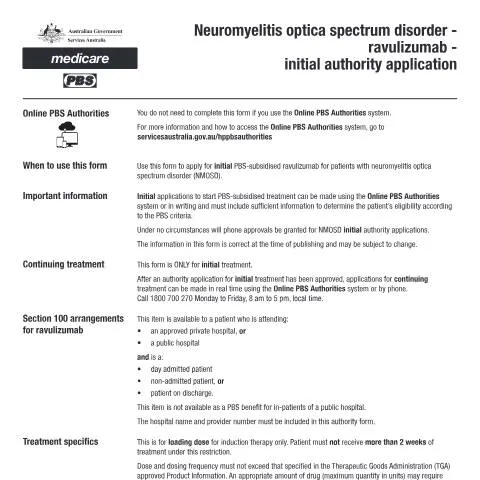
Navigating the PB382 Form for Neuromyelitis Optica Spectrum Disorder Treatment
When dealing with complex health conditions such as Neuromyelitis Optica Spectrum Disorder (NMOSD), the journey towards receiving appropriate treatment can be both challenging and crucial. For healthcare professionals involved in treating NMOSD patients, understanding the PB382 - Neuromyelitis optica spectrum disorder - ravulizumab - initial authority application form is essential. This document serves as a gateway for patients to access the necessary medication and support they require. In this article, we will delve into the nuances of this form, its role in the treatment pathway, and practical steps to ensure its successful submission.
The Significance of the PB382 Form in Treatment Protocols
The PB382 form is not merely a bureaucratic requirement; it is a pivotal element in the treatment process for patients diagnosed with NMOSD. By allowing healthcare providers to seek initial authority for the prescription of ravulizumab, this form plays a crucial role in the broader context of patient care.
Understanding its significance includes recognition of the following:
- Access to Essential Medication: Ravulizumab is a critical treatment option for NMOSD, and the PB382 form facilitates the necessary approvals.
- Insurance and Funding Implications: Proper completion can lead to funding approvals from Services Australia, ensuring that patients receive their prescribed medications without undue financial burden.
- Clinical Documentation: The completion of this form contributes to a patient's medical records, which can be essential for ongoing treatment and follow-up.
Understanding the Profile of Applicants and Patients
Identifying the appropriate applicants for the PB382 form is vital for its effective use. Typically, this form is completed by registered healthcare professionals, such as neurologists or specialist physicians who are overseeing the treatment of NMOSD patients. However, certain attributes and circumstances may influence who can apply and under what conditions. Here are some critical aspects:
- Type of Healthcare Professional: Only certain specialists are authorized to complete this application. It is primarily intended for neurologists with experience in treating NMOSD.
- Patient Eligibility: The form is intended for patients who have a confirmed diagnosis of NMOSD and are prescribed ravulizumab as part of their treatment plan.
- Age Considerations: Specific guidelines may apply regarding the age of patients, including considerations for minors or those transitioning between the pediatric and adult healthcare systems.
Decoding the Sections of the PB382 Form
Completing the PB382 form requires attention to detail across its various sections. Each part of the form is designed to gather specific information necessary for the initial authority application. Below, we break down the key components:
- Patient Information: Ensure all personal details are accurate, including name, date of birth, and address. Discrepancies can lead to delays or denials.
- Diagnosis Confirmation: This section requires a comprehensive overview of the patient's medical history and confirmation of NMOSD diagnosis. Be explicit and thorough here.
- Treatment Plan: Clearly outline the treatment plan, including dosage, frequency of administration, and rationale for choosing ravulizumab.
- Previous Treatments: Document any prior treatments for NMOSD, including the outcomes. This information is critical for assessing the necessity of the current request.
Submission Process: From Completion to Approval
Once the PB382 form has been completed, the next steps are crucial for ensuring that the application is submitted properly and promptly. Here is a streamlined guide to the submission process:
- Review the Completed Form: Before submission, review the form for completeness and accuracy. Missing or incorrect information can result in processing delays.
- Submit via myGov: As most applications are now processed through the myGov platform, ensure that you have access to the necessary accounts and follow the digital submission guidelines.
- Await Confirmation: Once submitted, you should receive a confirmation from Services Australia. It is essential to keep this confirmation for your records.
After submission, the next step involves waiting for the response from Services Australia. They may approve the request, deny it, or ask for additional information, which can delay the process.
What Happens After Submission: Understanding the Outcomes
After the PB382 form is submitted, there are several potential outcomes, each with its own implications for both the healthcare provider and the patient. Here’s what to expect:
- Approval: If approved, the patient will receive authorization for the use of ravulizumab. This is a significant step towards effective management of their condition.
- Request for Additional Information: Sometimes, Services Australia may require further documentation or clarification before making a decision. Prompt response to such requests is crucial.
- Denial: If the application is denied, an explanation will be provided. Understanding the reason for denial is crucial for making any necessary adjustments or reapplying.
Handling Denials and Ensuring a Successful Reapplication
Receiving a denial after submitting the PB382 form can be disheartening. However, it is important to approach this situation with a clear strategy. Here are steps to take to ensure a successful reapplication:
- Review the Denial Reason: Carefully review the feedback provided by Services Australia. Understanding why your application was denied is essential for future success.
- Gather Additional Evidence: If the denial was due to insufficient information or documentation, work to gather the necessary evidence to support the application.
- Consult with the Patient: Have a discussion with the patient regarding their treatment plan and any changes that might need to be adjusted in the resubmission.
In cases of persistent denial, consider seeking a second opinion or involving additional healthcare professionals who might bolster the case for the application.
Hello to Complex Situations: Special Cases to Consider
In navigating the PB382 form, there may be special circumstances that require additional considerations or adaptations. Some of these scenarios include:
- Minors: When the patient is under 18, parental consent is typically required, and certain legal guardianship aspects may come into play.
- Non-Citizen Residents: For non-citizens or those with temporary residency, additional documentation related to immigration status may be needed.
- Patients with Co-Morbidities: If the patient has other medical conditions, it is important to document these thoroughly, as they can affect treatment decisions and the application process.
Preparing Supporting Documents: What You Need
Accompanying the PB382 form with the correct supporting documentation is vital. Here’s a rundown of common documents that may be required:
| Document Type | Description |
|---|---|
| Medical Reports | Comprehensive reports from the diagnosing physician detailing the patient's condition. |
| Treatment History | Documentation of any previous treatments undertaken for NMOSD, including responses. |
| Consent Forms | Signed consent from the patient or guardian, especially in the case of minors. |
| Identification Documents | Proof of identity for the patient, which may include Medicare cards or driver's licenses. |
Ensuring that these documents are correctly prepared and included can greatly enhance the chances of a successful application.
Final Words for Healthcare Professionals Navigating the PB382
Completing the PB382 form is a significant step in the treatment pathway for patients with NMOSD. Understanding the intricacies of this process will not only enhance the quality of care you provide but also empower your patients in their treatment journeys. By meticulously preparing the application and accompanying documents, addressing any potential barriers, and being aware of the various outcomes, you can ensure that your patients receive the necessary treatment without unnecessary delays.
Understanding Neuromyelitis Optica Spectrum Disorder (NMOSD)
Neuromyelitis Optica Spectrum Disorder (NMOSD) is an autoimmune condition primarily affecting the optic nerves and spinal cord. Characterized by debilitating symptoms, NMOSD can lead to severe neurological disabilities if left untreated. The pathology of NMOSD often involves the body's immune system mistakenly attacking healthy cells, particularly those producing aquaporin-4 (AQP4) antibodies, which are crucial for maintaining the health of the optic nerve and myelin sheath. This disorder can manifest in various symptoms including, but not limited to, vision disturbances, paralysis, and sensory loss.
Due to its complex nature, NMOSD is often confused with multiple sclerosis (MS), although they are distinct conditions. Understanding the nuances and clinical presentations of NMOSD is crucial for healthcare providers to administer appropriate treatments. Early diagnosis through magnetic resonance imaging (MRI) and serological testing for AQP4 antibodies is essential for initiating effective therapeutic strategies.
Application Process for Ravulizumab under Initial Authority (PB382)
When applying for Ravulizumab—an innovative monoclonal antibody treatment for NMOSD—users must complete the Initial Authority Application Form (PB382) through Services Australia. This form ensures that the treatment aligns with the Australian Government's Pharmaceutical Benefits Scheme (PBS) eligibility criteria. The application process involves a few critical steps.
Firstly, it is essential to have a qualified healthcare professional assess the patient's eligibility for Ravulizumab. The application must include comprehensive medical documentation, including the patient's medical history, diagnosis confirmation, and previous treatments undertaken. Healthcare providers should pay close attention to the specific PBS criteria associated with NMOSD treatment, which includes confirmation of AQP4 antibody positivity.
Once completed, the PB382 form can be submitted through the myGov platform, where healthcare providers can securely upload all necessary documentation. It's crucial to ensure that all sections are filled out correctly and that supporting documents are attached; incomplete applications may lead to delays or even denial of treatment. The current turnaround time for approval can vary, so it's advisable to follow up with Services Australia to ensure the application is progressing.
Continuing Care and Ongoing Monitoring for NMOSD Patients
After the initial approval for Ravulizumab treatment, ongoing care and monitoring are critical for NMOSD patients to effectively manage their condition. Regular follow-ups with healthcare professionals are necessary to evaluate treatment efficacy and monitor for potential side effects.
During these follow-up appointments, healthcare providers will engage in a multidisciplinary approach to care, which may involve neurologists, ophthalmologists, and rehabilitation specialists. This collaborative framework aims to address the multifaceted needs of NMOSD patients, including medication management, physical rehabilitation, and psychological support.
Furthermore, patients should be educated on the signs of potential relapses or complications associated with NMOSD. Early recognition of these signs can significantly influence the outcome of treatment and can prevent further neurological damage. Patients may also be encouraged to maintain a healthy lifestyle, manage stress, and adhere to their treatment schedules to optimize their health and quality of life.
Patients receiving Ravulizumab will also need to be informed about the possible long-term implications of their therapy, including the importance of continued immunization and vigilance concerning infections, given the immunosuppressive nature of the treatment. Regular blood tests may be required to monitor the patient's immune function and ensure safe administration of the medication.