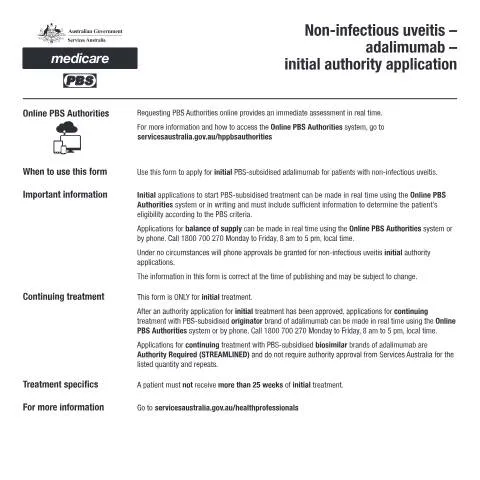
Navigating the Complexities of Non-Infectious Uveitis Treatment: The Role of the PB372 Form
When dealing with non-infectious uveitis, patients and healthcare providers face a unique set of challenges. This condition, characterized by inflammation of the uvea, can lead to serious complications if not managed properly. Given the intricate nature of treatment options, understanding the necessary administrative processes is paramount for achieving optimal health outcomes. Among these, the initial authority application form PB372 plays a critical role in the treatment journey, particularly when it comes to accessing adalimumab.
Who Needs to Engage with the PB372 Form?
Not every patient dealing with uveitis will require the PB372 form. It is essential to identify who precisely is compelled to navigate this process. The form is aimed primarily at healthcare professionals, such as ophthalmologists or rheumatologists, who are treating patients diagnosed with non-infectious uveitis and are considering the use of adalimumab.
Patient Profiles and Specific Scenarios
- Adult Patients: Most commonly, adult patients suffering from non-infectious uveitis will find their healthcare providers submitting the PB372 form to seek initial approval for adalimumab usage.
- Pediatric Considerations: There may be instances where minors require this treatment. The healthcare provider must offer comprehensive medical records and justification of the treatment necessity.
- Patients with Complications: For individuals with secondary complications arising from uveitis, the application may require additional documentation to demonstrate the urgency or necessity of using adalimumab.
The Stakes: Rights and Responsibilities Associated with PB372
Filling out the PB372 form does not merely serve a procedural purpose. It opens doors for patients and carries with it a range of rights and responsibilities.
Understanding the Implications of Submission
- Access to Treatment: The most significant benefit is the potential access to adalimumab, which can significantly reduce inflammation and improve quality of life.
- Documentation of Medical Necessity: By submitting this form, healthcare providers formally document the medical need for adalimumab, which might be crucial for future treatment discussions or disputes.
- Compliance and Approval: Patients must ensure that all required components of the application are accurately filled out. Incomplete forms can lead to delays or denials, impacting treatment timelines.
Detailed Steps for Completing the PB372 Form
Completing the PB372 form should be a careful and systematic process. Below are the recommended steps for ensuring accuracy and completeness.
Gathering Necessary Information
Before starting the application, the healthcare provider must collect all relevant clinical information:
- Patient's Medical History: A detailed account of the patient's previous treatments and responses is essential.
- Diagnosis Confirmation: Clear documentation verifying the diagnosis of non-infectious uveitis is critical.
- Previous Medications: Details of prior medications used, along with their effectiveness and reasons for discontinuation, should be included.
Filling Out the Form
The form itself is divided into various sections, each requiring specific information. It is crucial to follow these guidelines:
- Complete every section meticulously. Use clear and concise language.
- Provide detailed descriptions where necessary, especially in clinical justifications.
- Ensure all signatures and dates are included as required.
Key Differences from Other Forms
While navigating the healthcare landscape, it’s easy to confuse similar forms with the PB372. Understanding the unique aspects of this form can help streamline the process.
| Form | Purpose | Target Audience |
|---|---|---|
| PB372 | Initial authority application for adalimumab in non-infectious uveitis | Healthcare professionals treating uveitis |
| Other PB Forms | Various treatments and medications | General practitioners and specialists |
What Happens After Submission?
Upon submitting the PB372 form, healthcare providers and patients face a waiting period. Understanding what follows can help manage expectations and prepare for subsequent steps.
Approval Processes and Potential Outcomes
- Initial Review: After submission, the form will be reviewed by Services Australia to assess the validity of the request.
- Possible Requests for Additional Information: In certain cases, more documentation may be required to clarify treatment necessity.
- Notification of Outcome: Healthcare providers will receive a notification regarding the approval or denial of the application. Timely communication is key, as it can dictate further treatment plans.
Next Steps Post-Approval
If approved, patients and their healthcare providers can proceed with treatment plans involving adalimumab, which may include:
- Scheduling administration sessions and follow-up appointments.
- Monitoring for side effects and treatment efficacy.
Challenges and Special Circumstances
Although the PB372 form is designed to facilitate access to necessary treatments, various complexities could arise during its use. Understanding these scenarios can further aid in a smooth process.
International Patients and Special Cases
- Non-citizen Residents: For patients not holding Australian citizenship, navigating the application may require additional provisions or support from legal and health services.
- Emergency Cases: In urgent situations where immediate treatment is necessary, healthcare providers should communicate these circumstances clearly on the form.
Preparing for Unforeseen Circumstances
Patients and providers should be aware of potential challenges that could arise post-application submission. Preparation can mitigate risks associated with unexpected outcomes.
Identifying and Addressing Common Issues
- Incomplete Information: Review the application thoroughly before submission to avoid delays.
- Communication Gaps: Ensure that healthcare providers maintain open channels of communication with patients regarding the status of the application.
Conclusion: Empowering Patients Through Knowledge
Every step taken in completing and submitting the PB372 form contributes significantly to the broader goal of effective treatment for non-infectious uveitis. By understanding the intricacies involved, patients and healthcare professionals can navigate the administrative landscape more effectively, ensuring that essential treatments, like adalimumab, are accessible when needed. Through clear communication, diligent preparation, and a thorough understanding of rights and responsibilities, stakeholders can advocate for the best possible care outcomes.
Understanding Non-Infectious Uveitis and Its Treatment Options
Non-infectious uveitis is a form of inflammation affecting the uvea, the middle layer of the eye, which can cause severe vision loss if not promptly addressed. It can stem from a variety of underlying conditions, including autoimmune diseases, systemic illnesses, or even unknown etiologies. Understanding the different types of uveitis is crucial for effective treatment. For instance, anterior uveitis primarily impacts the front of the eye, while posterior uveitis affects the back, including the retina and choroid.
Treatment options typically include corticosteroids, immunosuppressive agents, and biologics like adalimumab. The choice of therapy depends on the severity of the condition, the patient's overall health, and any co-existing medical issues. Adalimumab, specifically, is a fully human monoclonal antibody that inhibits tumor necrosis factor-alpha (TNF-alpha), making it effective in reducing inflammation associated with non-infectious uveitis. Before considering adalimumab, it’s essential to evaluate the patient's medical history and other treatments they may have undergone.
Navigating the Initial Authority Application Process for Adalimumab
The initial authority application for adalimumab (form PB372) is a critical step for patients suffering from non-infectious uveitis seeking subsidized access to this medication under the Pharmaceutical Benefits Scheme (PBS). This process can be daunting, but understanding the requirements can streamline your experience.
Firstly, it’s important to gather all necessary documentation. This includes a comprehensive medical history, a clear diagnosis from a qualified ophthalmologist, and details of any previous treatments. The prescribing physician plays a pivotal role in this process, as they must complete and sign the application, ensuring all clinical details are accurately presented. It's worth noting that the application must demonstrate that the patient has not responded adequately to conventional therapies, such as corticosteroids or other immunosuppressants.
Once you have prepared your documentation, the next step is to submit the application through the appropriate channels. In many cases, this will be through the online portal provided by Services Australia. Make sure the information is complete and accurate to avoid delays in processing.
After submission, the application will undergo review, and a decision will be made regarding the authority to prescribe adalimumab. Remember that patients have the right to appeal if their application is rejected. The Administrative Appeals Tribunal (AAT) provides a pathway for individuals to challenge decisions relating to authority applications, ensuring fairness in the process.
Cost Implications and Financial Assistance for Patients
Understanding the financial aspects associated with non-infectious uveitis and the treatment with adalimumab is crucial for patients navigating the healthcare system. Adalimumab, classified as a PBS medication, significantly reduces the cost burden on patients in Australia. However, it’s essential to be aware of additional costs that may arise, such as doctor’s fees, ophthalmology consultations, and any necessary diagnostic tests.
For patients who may struggle with the out-of-pocket expenses, various financial assistance options are available. The first step is to confirm if you are eligible for a concession card, which can lower out-of-pocket costs for both prescriptions and medical appointments. Furthermore, Programs such as the Pharmaceutical Benefits Scheme Patient Assistance Program (PAP) can offer additional support, particularly for those who are facing financial hardship.
Patients may also explore private health insurance options that cover additional costs or provide benefits for alternative treatments not covered by PBS. This is particularly relevant for therapies or procedures that may be necessary in conjunction with adalimumab treatment, such as regular eye examinations or additional imaging studies.
Lastly, leveraging community resources, such as support groups for those with uveitis, may provide valuable information regarding financial assistance, coping strategies, and emotional support. Engaging with others facing similar challenges can help ease the burden of managing this chronic condition.