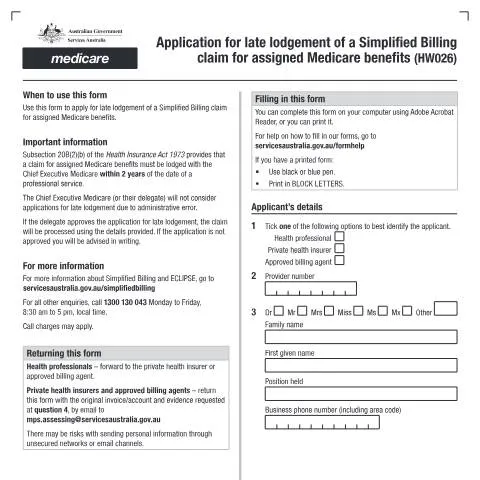
Understanding the HW026 Form: A Key Document for Health Professionals
Navigating the complexities of the Australian healthcare system can be challenging, especially for health professionals managing billing claims. The Application for late lodgement of a Simplified Billing claim for assigned Medicare benefits form (HW026) plays a crucial role in ensuring that eligible medical practitioners can still receive their due payments even after deadlines have passed. This article delves into the particulars of this form, offering insights on its purpose, the audience it serves, and essential tips for accurate completion and submission.
The Importance of Timely Lodgement and the HW026’s Role
In the realm of Medicare claims, timely lodgement is non-negotiable. However, circumstances often arise that prevent health professionals from submitting their claims within the designated timeframes. This is where the HW026 form becomes invaluable. It provides a structured pathway for health practitioners to appeal for the acceptance of late claims, potentially salvaging revenue that would otherwise be lost.
Who is Required to Use the HW026?
The HW026 is primarily targeted at registered health professionals who participate in the Medicare system. These may include, but are not limited to:
- General practitioners
- Specialists
- Allied health professionals
It is essential for practitioners to assess whether their situation qualifies for the considerations outlined in the HW026. Factors that could warrant a late submission include:
- Technical issues with billing systems
- Medical emergencies that affect submission capabilities
- Miscommunication regarding patient details or billing codes
Decoding the Sections of the HW026 Form
Completing the HW026 form can be a straightforward yet detail-oriented task. Each section is designed to collect specific information that justifies the request for late submission. Here’s a closer look at the key components:
Personal and Practice Information
In this section, practitioners need to provide their Tax File Number (TFN) alongside their practice details. Accuracy is paramount as discrepancies can lead to processing delays. Ensure that the following information is correct:
- Full name as registered with Medicare
- Practice address
- Contact information
Details of the Claim
Here, practitioners must specify the details of the claim they wish to lodge late. This includes:
- Claim dates
- Patient Medicare numbers
- Services provided
Each detail must be checked against patient records to ensure consistency and accuracy, as any errors in this section could invalidate the late claim.
Consequences of Non-Compliance and Missed Deadlines
Understanding the implications of failing to file on time is crucial. If a practitioner neglects to submit the HW026 in a timely manner, several outcomes are possible:
- Denial of the claim, leading to financial loss
- Recourse options that may involve lengthy appeals processes
- Potential impacts on patient relationships due to billing discrepancies
Exceptions and Special Circumstances
There are instances where practitioners may be exempt from strict adherence to deadlines. Key considerations include:
- Natural disasters or significant disruptions to practice operations
- Illness or incapacity that hinders the ability to lodge claims
In such cases, supporting documentation may be required to substantiate the request for late lodgement. This could include medical certificates or official correspondence that outlines the circumstances affecting the claim submission.
Procedures for Submitting the HW026 Form
Once the HW026 is accurately completed, practitioners should be aware of the submission procedures to avoid further complications. Here’s a streamlined guide:
- Double-check all entries for accuracy.
- Gather necessary supporting documents that demonstrate the reasons for late submission.
- Submit the form through the specified channel, which may vary depending on the practice’s location and circumstances.
Follow-Up Actions
After submission, it is imperative to follow up with Services Australia to confirm receipt and inquire about processing times. Maintaining communication can facilitate quicker resolutions and provides peace of mind to both practitioners and their patients.
The Regulatory Framework Behind the HW026
The HW026 form operates under the broader regulatory framework of the Australian healthcare system. Its roots trace back to the requirements set forth by Medicare regulations, which govern how and when claims can be lodged. Understanding this context helps practitioners appreciate the importance of compliance and the processes in place to support them.
Administrative Decisions and Appeals
In the event of a claim rejection following the submission of the HW026, practitioners have the right to appeal. This process is guided by the Administrative Decisions (Judicial Review) Act 1977 (Cth), which provides a basis for reviewing decisions made by administrative bodies. Key points to note include:
- Eligibility for merits review through the Administrative Appeals Tribunal (AAT)
- Timeframes within which appeals must be lodged
- Documentation required for a successful appeal
Additional Resources and Support for Health Professionals
Healthcare professionals looking to gain further insight into the HW026 form and the processes surrounding it can access a variety of resources. Services Australia provides comprehensive guidance and support through their official channels, ensuring that practitioners are equipped with the necessary knowledge and tools to navigate their billing needs effectively.
For detailed queries, practitioners are encouraged to contact Services Australia directly or consult with professional associations that may provide additional support and advocacy on their behalf.
Conclusion: Navigating the Medicare System Efficiently
The HW026 form is more than just a bureaucratic hurdle; it is a lifeline for health professionals striving to maintain the financial health of their practices amidst the complexities of Medicare billing. By understanding its requirements and the context in which it operates, practitioners can better position themselves for success, ensuring that they receive the payments they deserve while upholding the integrity of their service delivery.
Understanding the Process of Late Lodgement Requests
When it comes to the late lodgement of a Simplified Billing claim for assigned Medicare benefits, it's essential to understand the underlying processes involved. Late lodgement refers to any claim submitted after the standard 12-month period from the service date. Under the Medicare Benefits Schedule (MBS), certain conditions allow for late claims, but you must provide sufficient justification.
To initiate a late lodgement request, you will need to complete the HW026 form, ensuring that it is filled accurately. Key factors include specifying the reasons for the delay, such as administrative errors or exceptional circumstances that impacted your ability to submit on time. Supporting documentation may be required, such as letters from healthcare providers or evidence of extenuating circumstances.
The processing time for late lodgement claims varies, but you should expect to wait several weeks for a decision. Keep in mind that the final outcome depends on the evidence provided and Medicare's assessment of the circumstances surrounding the delay. If your request is denied, you have the right to seek a review through the Administrative Appeals Tribunal (AAT), which will consider whether Medicare's decision was justified based on the information presented.
Tips for Successful Lodgement of Late Claims
Submitting a late claim for Medicare benefits can be daunting, but there are several strategies you can use to improve your chances of a successful outcome. First, ensure that you have all necessary documentation in order. A well-organised application will demonstrate your preparedness and seriousness about the claim.
Second, pay close attention to the specific reasons you provide for the late lodgement. Be honest and direct, detailing any obstacles you faced that prevented timely submission. This could include personal health issues, professional obligations, or unexpected life events. Clear explanations can significantly influence Medicare's decision-making process.
Moreover, consider consulting with a healthcare professional who is familiar with the Medicare claims process. They can offer insights or additional support that could enhance your application. In some instances, a letter of support from your healthcare provider may strengthen your claim.
Finally, ensure that you track your claim submission. Record the date you lodge the HW026 form, as this can help you follow up with Medicare if you don’t receive a confirmation of receipt within a reasonable timeframe. Being proactive can often lead to quicker resolutions.
Frequently Asked Questions (FAQs) about Late Lodgement Claims
To further assist you in navigating the late lodgement process, here are some frequently asked questions that can clarify common uncertainties:
- What are the typical reasons accepted for late lodgement? Medicare considers various circumstances such as illness, administrative errors, or significant personal challenges. Each case is evaluated individually.
- Is there a specific timeframe for late claims? Generally, claims must be lodged within 12 months of the service date, but exceptions apply if you can provide valid reasons.
- Can I appeal a denied late claim? Yes, if Medicare denies your late lodgement request, you can appeal the decision through the AAT by submitting a review application.
- How does my Tax File Number (TFN) affect my claims? Your TFN is essential for processing claims in Medicare, as it helps to verify your eligibility and track your healthcare transactions.
Being well-informed about late lodgement of Medicare claims can lead to a better experience in the often complex landscape of Australia’s healthcare system. Always keep updated on the latest guidelines from Services Australia, as policies may change, affecting how late claims are handled.