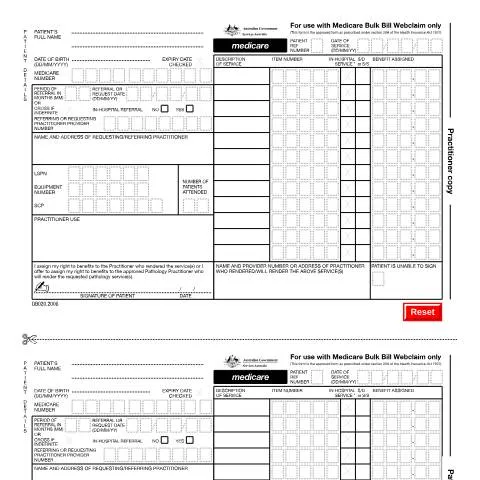
Navigating the Medicare Bulk Bill Assignment: A Vital Step for Health Professionals
For healthcare providers in Australia, understanding the intricacies of the Assignment of Benefit Medicare Bulk Bill Webclaim Form (DB020) is essential. This document plays a crucial role in facilitating the billing process for services rendered under Medicare. With the ever-evolving landscape of healthcare regulations, this guide aims to demystify the completion, submission, and implications of this form, ensuring that health professionals can navigate the process confidently and efficiently.
Understanding the Significance of the DB020 Form
The DB020 form is not just a mere piece of paperwork; it represents a formal agreement between health professionals and Medicare regarding the assignment of benefits. By completing and submitting this form, a provider can claim Medicare benefits directly on behalf of their patients, alleviating the financial burden on patients at the point of care.
Why Health Professionals Rely on This Form
- Streamlined Payments: The use of the DB020 form allows healthcare providers to receive direct payments from Medicare, rather than waiting for patients to reimburse them.
- Patient Convenience: Patients benefit from not having to pay upfront for medical expenses, improving access to necessary healthcare services.
- Compliance with Regulations: Completing the form ensures that health professionals adhere to Medicare policies, reducing the risk of claim rejections.
Historical Context and Regulatory Framework
The framework surrounding the DB020 form is rooted in the broader objectives of Medicare, which was established to provide accessible healthcare to all Australians. As part of this system, the Administrative Decisions (Judicial Review) Act 1977 (Cth) lays the foundation for the review of decisions made regarding Medicare claims, ensuring fairness and accountability in the process.
Key Regulatory Bodies and Their Roles
The role of Services Australia cannot be overstated in the context of the DB020 form. This agency oversees the administration of Medicare, Child Support, and various welfare payments. Understanding how Services Australia interacts with the DB020 form helps health professionals ensure compliance and smooth operations.
Who Should Complete the DB020 Form?
The DB020 form is primarily intended for registered healthcare providers who offer services eligible for bulk billing under the Medicare system. This includes, but is not limited to:
- General Practitioners (GPs)
- Specialists
- Allied health professionals (e.g., physiotherapists, psychologists)
Profile-Specific Considerations
Different categories of health professionals may have unique considerations when completing the DB020 form. For instance:
- General Practitioners: Often bundle services that may require additional documentation to support claims.
- Specialists: Must ensure they meet specific referral requirements to qualify for bulk billing.
- Allied Health Providers: Might need to provide evidence of patient eligibility for Medicare services.
Step-by-Step Process: From Trigger to Submission
Identifying the Trigger
The process begins when a patient receives a service that is eligible for Medicare bulk billing. Understanding the eligibility criteria for services is paramount for health professionals to ensure that they can successfully complete the DB020 form.
Gathering Necessary Information
Before filling out the form, it is crucial to gather all pertinent information, which typically includes:
- Patient’s Medicare number
- Details of the service provided (date, type, and duration)
- The provider's own details, including their Medicare provider number
Completing the DB020 Form
Once all information is collected, the health professional can proceed to complete the form:
- Access the form via the Services Australia portal or myGov.
- Enter patient and service details accurately.
- Confirm agreement to the assignment of benefits.
Tip: Ensure all information is double-checked to avoid delays or rejections in the claims process.
Submitting the Form
The completed form can be submitted through various electronic methods, particularly through the myGov platform. It is vital to follow the submission guidelines provided by Services Australia to ensure the claim is processed swiftly.
What Happens After Submission?
Upon submission, health professionals should anticipate several outcomes:
- Claim Processing: Services Australia will review the submission to verify eligibility and compliance with Medicare guidelines.
- Outcome Notification: Providers will receive confirmation of the claim status, whether approved or rejected.
- Payment Timeline: If approved, payments are typically processed within a stipulated period, directly credited to the health professional’s designated bank account.
Understanding Possible Outcomes
It is crucial for health providers to understand the implications of claim rejections. Common reasons may include:
- Incomplete information
- Ineligibility of service
- Incorrect patient details
Conclusion: Making the Most of the DB020 Form
Understanding the role and process of the DB020 form is vital for healthcare providers aiming to streamline their bulk billing practices. By familiarizing themselves with the form’s requirements and maintaining meticulous records, health professionals can ensure compliance, reduce claims rejections, and, ultimately, enhance patient care.
With ongoing changes in healthcare regulations and the importance of electronic submissions, keeping abreast of updates from Services Australia is equally crucial. Engaging with the broader community of health professionals can also provide insights and shared experiences, fostering a collaborative approach to navigating the complexities of Medicare billing.
Understanding the Medicare Bulk Bill Assignment of Benefit Process
The Medicare Bulk Bill Assignment of Benefit process is designed to streamline transactions between healthcare providers and patients, facilitating a more efficient method of billing for services rendered. This process allows healthcare providers to bill Medicare directly for services provided to patients who have consented to this arrangement. It is particularly beneficial because it minimizes out-of-pocket expenses for patients at the point of service, enhancing accessibility to necessary medical treatments.
When a patient opts for bulk billing, they essentially assign their Medicare benefit directly to the healthcare provider. This means that instead of the patient paying upfront and then claiming a reimbursement, the provider receives the payment directly from Medicare. To initiate this process, healthcare providers need to submit the Medicare Bulk Bill Webclaim Form (DB020) through the myGov portal or using compatible software. This form acts as a key document to ensure that the transaction is processed smoothly and efficiently.
For patients, understanding the implications of assigning benefits is critical. While bulk billing offers immediate financial relief, it is essential to be aware of what services are covered under this arrangement. Typically, general practices and some specialists offer this service, but patients should always confirm whether their chosen provider participates in bulk billing, as not all providers do. Furthermore, it’s crucial for patients to verify their eligibility for Medicare benefits and ensure their details are current in the Medicare system, as discrepancies can lead to delays or denial of claims.
Eligibility Criteria for Bulk Billing Under Medicare
Eligibility for bulk billing under Medicare is determined by several factors, including the specific medical services provided, the healthcare provider's policies, and the patient's individual circumstances. Generally, Medicare bulk billing is available to all Australian residents who hold a valid Medicare card. However, certain conditions may affect the extent of coverage, and it's important for patients to be informed about these limitations.
One primary consideration is the type of healthcare service being sought. Bulk billing is more commonly associated with primary care services, such as visits to a general practitioner (GP) for consultations, certain diagnostic tests, and preventive health checks. However, some specialists may not offer bulk billing, so patients might incur out-of-pocket expenses depending on the specialist's billing practices. Patients should always ask about any fees upfront and whether a bulk billing option is available.
Additionally, patients must remain compliant with Medicare rules. For instance, those with a chronic illness might have different requirements or need to engage in a care plan that affects their eligibility for bulk billing. Moreover, patients should be aware that bulk billing arrangements can be subject to change. Providers may opt out of bulk billing due to financial constraints or changes in practice management. Therefore, maintaining open communication with healthcare providers is vital to stay updated on billing practices.
Navigating the Webclaim Submission Process for Medicare Bulk Billing
Submitting a Webclaim for Medicare bulk billing involves several steps that can be navigated effectively with the right preparation and understanding. The process begins with healthcare providers ensuring they have appropriate access to the Webclaim system via their myGov account or through compatible billing software. Providers must enter precise details regarding the patient, including the patient's Medicare number, the service rendered, and the date of service.
Once the information is accurately entered, the healthcare provider submits the DB020 form electronically. This submission not only saves time compared to traditional paper-based methods but also enhances the accuracy of claims processing. Providers can expect to receive confirmation of their claim status almost immediately, reducing the waiting period associated with paper claims.
However, it is essential to note that thorough documentation is critical. Providers should keep detailed records of the services rendered and any correspondence with patients regarding their bulk billing status. In the event of an audit or query by Medicare, these records will serve as necessary evidence to substantiate the claim. Additionally, if a claim is rejected, providers will need to understand the specific reasons and rectify any issues before resubmitting.
Patients can also play a role in ensuring the smooth processing of bulk billing claims by ensuring their Medicare details are up to date and clearly communicating with their providers about the services rendered. If patients have any concerns or questions regarding their Medicare benefits or the bulk billing process, they are encouraged to contact Services Australia for assistance.