The Importance of the Aged Care Funding Instrument Application
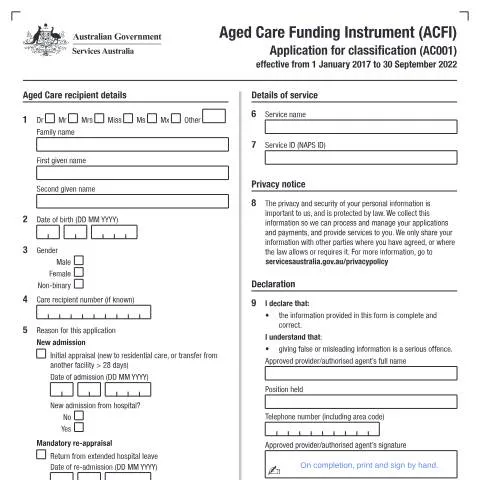
When it comes to the provision of aged care in Australia, funding plays a critical role. The Aged Care Funding Instrument (ACFI) Application for Classification Form, known as AC001, is a pivotal document in determining the funding level that aged care services receive. This form is not just a piece of paperwork; it is integral to ensuring that elderly Australians receive the care and resources they need. Understanding this document’s nuances can make a significant difference in the application process and subsequent service delivery.
Who Submits the AC001 Form and Why?
The AC001 form is typically submitted by aged care providers on behalf of residents entering or changing their care status. Both residential aged care facilities and operators of home care services are responsible for filling out this form. The completion and submission of the AC001 form are essential for accessing appropriate funding from the Australian Government. It allows the Department of Health to assess the individual care needs of aged individuals and allocate funding accordingly.
In essence, when you are managing an aged care facility, or if you are an individual seeking care for a loved one, recognizing the significance of this form can set the groundwork for a successful funding application. Moreover, the funding derived from the AC001 can directly influence the level of care that residents receive, making this not only a bureaucratic step but a crucial determinant of service quality.
Unpacking the Form: Essential Sections and Requirements
Completing the AC001 form necessitates a meticulous approach. Each section of the form is designed to gather specific information that reflects the care needs of the resident. Here’s a closer look at the various components of the form that must be filled out accurately:
- Resident Details: This section captures personal information, including the resident's name, date of birth, and unique identifier such as a Medicare number.
- Care Needs Assessment: Here, you’ll need to provide a comprehensive evaluation of the resident’s care needs, including their physical and mental health status.
- Service Provider Information: Details about the aged care service provider, including their registration and accreditation status, are essential.
- Documentation of Assessment: Attach any relevant assessments or documentation that support the claims made in the application, which may include medical reports or care plans.
It is crucial to be thorough and precise in completing each section of the AC001 form to minimize delays in processing and funding approval.
Methods of Submission: Navigating the Channels
Once the AC001 form is completed, the next step is submitting it. Understanding the various submission channels is vital because each has its own set of implications and processing times. The form can typically be lodged through the following methods:
- Online Submission: The most common method is via the myGov portal, where aged care providers can upload forms directly. This method is often quicker, and tracking submissions is generally easier.
- Paper Submission: While less common, submitting a physical copy of the AC001 form through the mail is still an option. It's essential to keep a record of the submission date, as processing via this method may take longer.
- In-Person Submission: Some providers may opt to deliver the form in person at a Services Australia office. This method allows for immediate confirmation of receipt.
Each of these submission methods has its pros and cons, and providers should assess which option best aligns with their operational needs.
Processing the AC001: What Happens Next?
After submission, the AC001 form enters a critical phase: processing by Services Australia. Understanding the timeline and what to expect during this phase can alleviate anxiety around the application process. The administration will review the details provided, liaising with other departments if necessary to verify the information.
Typically, after the review, the applicant will be informed of the outcome, which may include:
- Approval: If the form is approved, funding levels will be communicated, and the aged care facility can proceed with service delivery.
- Request for Further Information: Occasionally, the administration may require additional documentation or clarifications, delaying the process.
- Denial: In cases where the information provided does not meet the necessary criteria, the application may be denied. In such cases, providers will receive feedback on the reasons for denial.
To stay informed, service providers should monitor progress through myGov or stay in contact with the relevant administrative personnel at Services Australia.
Common Pitfalls in the Application Process
Navigating the AC001 form can be daunting, and there are several pitfalls that applicants should be aware of to ensure a smooth application process:
- Inconsistent Information: Any discrepancies in the resident's personal details can lead to delays. Keep all information consistent across documents.
- Insufficient Documentation: Not providing adequate supporting documents can result in requests for further information, creating delays. Always double-check that all necessary documentation is attached.
- Failure to Sign: Ensure that the form is signed where required. An unsigned form will not be considered valid, necessitating a resubmission.
Addressing these common issues proactively can significantly enhance the likelihood of a successful application.
Understanding the Impact of the ACFI on Care Services
The Aged Care Funding Instrument has wide-reaching implications for the quality of care provided to elderly Australians. By facilitating appropriate funding allocations, the AC001 form plays a crucial role in ensuring that aged care facilities can maintain high standards of service delivery.
With adequate funding, aged care providers can employ trained staff, maintain facilities to a high standard, and invest in equipment that enhances the quality of care. Moreover, proper funding enables facilities to offer a diverse range of services tailored to individual resident needs, promoting a holistic approach to elderly care.
As a provider or a family member, it’s imperative to understand that the funding obtained through the AC001 form directly correlates with the level of care that will be provided. This relationship underscores the importance of a thorough and accurate application process.
Conclusion: Empowering Aged Care Choices
In summary, while the Aged Care Funding Instrument Application for Classification Form (AC001) may seem like just another administrative hurdle, it is anything but. This form represents a vital process in securing the necessary funding that allows for the delivery of essential services to elderly Australians. Through careful attention to detail in completing the form and understanding the implications of funding on care provision, aged care providers and families alike can work towards creating a better quality of life for the residents they serve.
Understanding the Aged Care Funding Instrument (ACFI): A Comprehensive Overview
The Aged Care Funding Instrument (ACFI) is a critical component in determining the funding levels for residential aged care services in Australia. It is specifically designed to assess and classify the care needs of older Australians in care facilities. By understanding the ACFI, stakeholders—including aged care providers, residents, and their families—can navigate the framework more effectively.
The ACFI consists of three domains: Activities of Daily Living (ADL), Behaviour, and Complex Health Care. Each domain is assessed using a series of questions that help to gauge the level of assistance required by the resident. The outcomes from these assessments directly influence the funding that a facility receives from the Australian government, thereby impacting the quality of care that can be provided.
1. Activities of Daily Living (ADL): This domain evaluates a resident's ability to perform basic self-care tasks such as bathing, dressing, grooming, and mobility. The ACFI assesses the level of support needed in these areas, with a higher level of assistance indicating a greater funding requirement.
2. Behaviour: This domain addresses any behaviours that may pose a challenge to care. It includes considerations for cognitive impairment, agitation, or other psychological issues. Facilities must be prepared to demonstrate how they manage and support residents showing these behaviours, as this impacts funding outcomes.
3. Complex Health Care: This domain takes into account the medical needs of residents, covering conditions such as diabetes, respiratory diseases, and other chronic health issues requiring ongoing care. The complexity of care needs translates to different funding levels, making accurate classification essential.
The assessments carried out under the ACFI are periodic, meaning they don’t remain static. Regular reviews are essential for ensuring that the funding accurately reflects the current needs of residents. If a resident's condition improves or deteriorates, their classification must be updated to secure appropriate funding. Providers often engage dedicated staff to manage assessments and to ensure compliance with the ACFI requirements.
Application Process for the Aged Care Funding Instrument: Completing the AC001 Form
Completing the AC001 form is a crucial step in applying for classification under the Aged Care Funding Instrument. This form is the primary document used to collect information about a resident's care needs and supports the funding application process.
To initiate the application process, aged care providers must first ensure they meet all necessary prerequisites, including valid registration with the Aged Care Quality and Safety Commission. The following steps outline how to effectively complete the AC001 form:
1. Preparing Documentation: Before filling out the AC001 form, collect all pertinent documents, including the resident's medical history, assessment reports, and any existing care plans. This documentation should provide a comprehensive view of the resident's needs.
2. Detailed Responses: The AC001 form requires detailed responses that accurately reflect the resident's situation. Providers must be thorough and specific as vague or incomplete information can lead to delays or inaccuracies in funding approval. Utilize supporting documentation to clarify responses and justify the level of care indicated.
3. Consultation with Professionals: Engaging with health professionals who are familiar with the resident can provide valuable insights that enhance the accuracy of the application. They can help clarify complex medical needs and give feedback on care requirements.
4. Submission Process: Once the AC001 form is completed, it can be submitted through the myGov platform. Providers should retain a copy of the submitted document for their records and follow up to ensure the application is processed.
5. Review and Appeal: If the application is denied or the funding outcome is lower than expected, aged care providers have the right to request a review. Understanding the appeals process is vital, as it allows for reassessment of the application based on the evidence provided.
Additional Support and Resources for Aged Care Providers
To navigate the complexities of the Aged Care Funding Instrument and the AC001 application process effectively, aged care providers can access various support resources designed to facilitate understanding and compliance.
1. Online Training and Workshops: Many industry bodies offer online training sessions and workshops that cover the intricacies of the ACFI, including how to fill out the AC001 form effectively. These resources can be invaluable for new staff or those unfamiliar with the process.
2. Networking with Peers: Connecting with other aged care providers can provide insights and best practices that enhance the application process. Joining professional networks or forums can facilitate discussions on common challenges and strategies for overcoming them.
3. Consultants and Expert Advice: Engaging with ACFI consultants who specialise in the aged care sector can provide tailored support. They can advise on accurate assessment practices, documentation requirements, and compliance with regulatory standards.
4. Government Resources: The Australian Government offers comprehensive resources through Services Australia that detail the ACFI guidelines, funding structures, and best practices for aged care providers. Regularly reviewing these materials ensures providers remain informed of any updates or changes.
5. Feedback Mechanisms: Establishing feedback mechanisms within the aged care facility can be beneficial. Providers should encourage staff to share their experiences with the ACFI and AC001 process, which can help identify areas for improvement and streamline future applications.