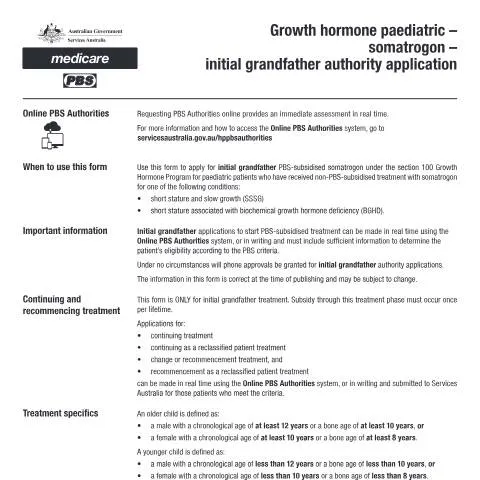
Navigating the PB339: A Critical Component for Pediatric Growth Hormone Treatment
For many families grappling with the complexities of pediatric growth hormone therapy, the Growth hormone paediatric - somatrogon - initial grandfather authority application form (PB339) serves as a vital tool. This document is mandated by Services Australia and designed to facilitate access to somatrogon, a crucial medication for children experiencing specific growth deficiencies. Understanding how to effectively navigate this application process, including when to start and the prerequisites involved, can be pivotal for parents and health professionals alike.
A Timeline for Submission: Key Dates and Milestones
Timelines are critical in healthcare, ensuring that patients receive timely access to essential treatments. For the PB339 application process, several key points must be recognized:
- Applications can generally be submitted at any time throughout the financial year, which runs from 1st July to 30th June.
- Upon submission, families can expect an initial response within a targeted timeframe, although the exact period may vary.
- If the application is approved, it typically aligns with the commencement of the necessary treatment, ensuring that children do not experience undue delays.
Once the application is lodged, tracking its status through Services Australia is advisable. Patients or guardians can use the myGov platform for real-time updates and communication with health professionals involved in the treatment process.
The Regulatory Framework: Understanding the Legal Context
The PB339 form exists within a broader regulatory ecosystem that governs access to medications for children undergoing growth hormone therapy. This includes the Administrative Decisions (Judicial Review) Act 1977, which ensures that decisions made regarding applications can undergo merits review through the Administrative Appeals Tribunal (AAT).
In addition, the Therapeutic Goods Administration (TGA) plays a crucial role in the approval of somatrogon, evaluating its safety and efficacy before it becomes available through the PBS (Pharmaceutical Benefits Scheme). Such regulatory scrutiny underscores the importance of the PB339 form as it represents not just an application for medication but a gateway to crucial healthcare for pediatric patients.
Distinguishing the PB339 from Related Forms
It's important to distinguish the PB339 from other forms that might be encountered in similar contexts. While there are several forms related to growth hormone therapies, the key differentiator for the PB339 lies in its specific focus on somatrogon for initial grandfather authority applications.
- PB338: Often confused with the PB339, this applies to different formulations or dosages of growth hormones.
- PB340: This is typically used for ongoing treatment approvals, while PB339 is strictly for initial applications.
Understanding these differences is essential for healthcare providers and families to ensure they complete the correct documentation for their specific needs.
Dealing with Special Circumstances: Complex Cases and Urgent Needs
Some families may find themselves in situations that complicate the application process. Whether due to being a non-resident or facing unique medical conditions, different protocols may apply.
- Non-Residents: For families residing temporarily in Australia, additional documentation may be necessary to verify eligibility for subsidized medications.
- Minors with Complex Needs: If a child has additional health complexities, a more detailed medical report might be required to justify the need for somatrogon.
- Emergency Situations: In urgent cases where immediate treatment is necessary, contacting Services Australia directly for a fast-tracked application process could be advisable.
In all of these cases, clear communication with healthcare professionals can facilitate a smoother submission process, ensuring that all necessary documentation is provided upfront.
Step-by-Step Journey: From Application to Decision
The pathway from the initial filling out of the PB339 form to receiving a decision involves several distinct phases:
- Preparation: Gather all required documentation, including medical history and supporting letters from healthcare providers.
- Submission: Submit the completed form through the myGov platform or via postal service, depending on the recommended procedures.
- Review Process: Once submitted, Services Australia will review the application, which may include consultations with medical experts.
- Decision Notification: Families will be notified of the decision, either via mail or digitally through the myGov portal.
It is crucial to proactively follow up on the application status, especially if there are any delays or requests for additional information from Services Australia.
What Happens After Approval: The Road Ahead
Upon receiving approval, families will gain access to somatrogon as part of their child's treatment plan. However, this transition into treatment comes with its own set of considerations:
- Monitoring and Follow-Up: Regular follow-ups with healthcare providers will be essential to monitor the child's response to the medication.
- Ongoing Documentation: Families may need to periodically submit or update documents to maintain eligibility for continued medication access.
- Understanding Treatment Plans: Clear communication with health professionals regarding dosage, administration, and potential side effects will be critical for successful outcomes.
The journey doesn't end with approval; ongoing care and assessment are essential components of effective treatment for pediatric patients utilizing somatrogon.
Insights from Families: Real Stories and Experiences
Many families have navigated the PB339 application process and emerged with valuable insights that can guide others in similar situations. Here are some reflections:
“The process felt daunting at first, but with the help of our doctor, we gathered everything we needed. It was a relief when we finally received approval for my son.”
- A Parent's Perspective
“We were not sure about the paperwork, but talking through it with other parents made it less overwhelming. Knowing we weren't alone helped a lot.”
- A Shared Experience
These narratives highlight the importance of community support and communication with healthcare providers, underscoring how collective experiences can ease the burden of navigating administrative processes.
Practical Tips for a Smooth Application Experience
As families prepare to fill out the PB339, certain practical recommendations can enhance the experience:
- Read Instructions Carefully: Each section of the form is there for a reason. Understanding what is required can prevent common pitfalls.
- Keep Copies: Before submitting, always keep a copy of the completed form and any supporting documents for your records.
- Use myGov Efficiently: Familiarizing oneself with the myGov platform can streamline tracking the application status and managing communications with Services Australia.
Being well-prepared and informed can significantly impact the overall experience of obtaining necessary treatments for pediatric growth disorders.
Final Thoughts: Empowering Families in Their Journey
The PB339 application form stands as a significant piece of the puzzle for families seeking growth hormone treatment for their children. By understanding the nuances of the application process, timelines, and engaging with healthcare professionals, parents can navigate the complexities with confidence. This proactive approach not only facilitates access to critical medication but also empowers families to advocate for their children's health effectively.
Understanding Growth Hormone Treatment in Australia
Growth hormone therapy is a crucial intervention for children diagnosed with growth hormone deficiency (GHD) or other related growth disorders. In Australia, paediatric patients are eligible for treatment through the Pharmaceutical Benefits Scheme (PBS), which subsidizes these medications to alleviate financial burden on families. Understanding the specifics of this treatment, the eligibility criteria, and the associated processes can significantly improve access and management of care for these children.
In general, the use of somatrogon, a long-acting growth hormone, is gaining traction due to its improved dosing schedule compared to traditional growth hormones. This means that children may need fewer injections, which can enhance adherence to treatment and ultimately lead to better health outcomes. Parents and guardians should be aware that the initial application for this medication involves navigating the complex bureaucracy of the PBS, including specific documentation and approvals required from healthcare professionals.
Navigating the Initial Grandfather Authority Application Process
The Initial Grandfather Authority Application Form (PB339) is an essential document for paediatric patients seeking access to somatrogon through the PBS. This form is specifically designed for children who have previously been prescribed growth hormone therapy prior to the availability of somatrogon. The application ensures that these children can continue receiving necessary treatment without interruption.
To complete the PB339 form successfully, it is vital to gather comprehensive medical documentation, including previous treatment records, growth assessments, and any relevant blood tests that support the patient’s diagnosis. Healthcare providers must be meticulous when filling out the application, as inaccuracies or incomplete information could delay access to treatment.
It's also worth noting the importance of outlining the child's growth history in detail, as the PBS prioritizes transparency and thoroughness in applications. The healthcare provider must justify the need for somatrogon specifically, as opposed to other available treatments, highlighting the child's unique circumstances and previous responses to growth hormone therapies.
Post-Approval Monitoring and Ongoing Assessments
Once the Initial Grandfather Authority Application Form (PB339) is approved, the journey does not end there. Ongoing monitoring and assessments are critical aspects of growth hormone therapy management in paediatric patients. Regular follow-ups with an endocrinologist or paediatric specialist are necessary to evaluate the effectiveness of somatrogon, track growth metrics, and monitor for any potential side effects.
Monitoring typically involves periodic measurement of height, weight, and growth velocity, as well as periodic blood tests to assess insulin-like growth factor 1 (IGF-1) levels. These evaluations help ensure that the child is responding adequately to the therapy and that the dosage remains appropriate over time.
Additionally, it is essential to maintain communication with the family regarding any changes in the child's health or lifestyle that could affect treatment efficacy. Such communication ensures that adjustments can be made promptly, reinforcing the importance of multidisciplinary care in managing a child’s growth hormone therapy.