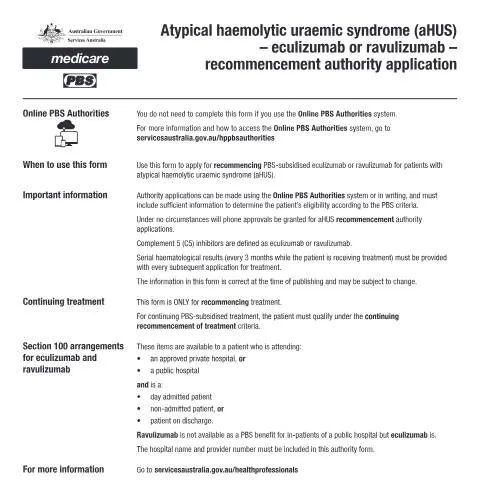
Understanding the Atypical Haemolytic Uraemic Syndrome (aHUS) Recommencement Authority Application Form
When it comes to managing complex health conditions like atypical haemolytic uraemic syndrome (aHUS), navigating the administrative aspects can be daunting. The PB176 form, officially known as the Atypical haemolytic uraemic syndrome (aHUS) - eculizumab or ravulizumab - recommencement authority application form, plays a critical role in facilitating patients’ access to essential treatments. Understanding this form is paramount for both healthcare professionals and patients involved in the recommencement of these therapies.
Defining the Scope: A Unique Document in Health Administration
In the realm of health-related administrative forms provided by Services Australia, the PB176 form stands out due to its specific focus on aHUS and the treatments associated with it. Unlike more general forms that cover broad categories of medical requests, this document is tailored for patients requiring a recommencement of drug therapies like eculizumab or ravulizumab.
Its distinctiveness lies in the intricacies involved in aHUS treatment protocols, necessitating a thorough understanding of both medical and administrative processes. The PB176 form is not to be confused with other health authorisation forms that may pertain to different conditions or medications, each having its own specific requirements and contexts for usage.
Deciphering the Details: Section Analysis of the PB176 Form
Completing the PB176 form requires careful attention to detail. Each section of the form has specific requirements that, if overlooked, could delay or derail the approval process for much-needed medical treatment. Here, we break down the critical components of the form:
Personal Information Section
- Patient Identification: This section requires accurate personal details, including the patient’s full name, date of birth, and Medicare number. Any discrepancies can lead to processing delays.
- Healthcare Provider's Information: The details of the prescribing healthcare professional must be filled out correctly, as the application is reliant on their credentials and ongoing care for the patient.
Clinical Information
Here, the healthcare provider must provide a comprehensive overview of the patient’s medical history related to aHUS. Ensure that:
- Diagnosis Dates: Include the date when aHUS was diagnosed. This history is crucial in determining eligibility for treatment recommencement.
- Previous Treatments: Document any prior treatments and their outcomes. This information is pivotal to establish the necessity for continuing with eculizumab or ravulizumab.
Request for Recommencement
This crucial section demands that the healthcare provider justify the need for the recommencement of treatment. Here, clarity and detail are key:
- Clinical Justification: A well-structured explanation of why the treatment needs to be restarted is essential. Consider outlining the benefits from the previous treatment cycle.
- Management Plans: Describe how the healthcare provider plans to manage the patient’s treatment moving forward, including any considerations for monitoring and follow-up.
Supporting Documentation
As with many administrative forms, the PB176 requires supporting documents to substantiate the application. Commonly requested items include:
- Clinical reports detailing the patient's current health status.
- Previous treatment logs, including dates and dosages.
- Any relevant test results that underscore the necessity for the recommencement of treatment.
Who Should Submit the PB176 Form: Patient Profiles and Considerations
The PB176 form is designed primarily for a specific group of individuals, which includes:
- Patients diagnosed with aHUS: The primary beneficiaries of this form are individuals suffering from atypical haemolytic uraemic syndrome who have previously been treated with eculizumab or ravulizumab.
- Caregivers and Healthcare Providers: In cases where patients are unable to complete the form themselves, caregivers or family members can assist, but must ensure they have appropriate authority to act on the patient’s behalf.
Special Cases: What About Minors and Non-Residents?
In circumstances involving minors, the form must be completed by a parent or legal guardian. It is imperative to have the guardian’s consent documented to ensure compliance with legal requirements. For non-resident patients seeking treatment in Australia, specific provisions apply, including:
- Eligibility Verification: Non-residents must ensure they meet the necessary criteria set forth by Services Australia for access to medications.
- Documentation in English: All supporting documents must be translated into English if they are not already, along with accompanying certified translations.
Consequences of Incomplete Applications: Understanding Rights and Obligations
Filing the PB176 form is not merely a procedural step; it carries significant implications for patients seeking ongoing treatment. Understanding the rights and obligations tied to this application is critical.
- Timely Processing: An incomplete application may lead to prolonged delays in treatment. It is vital to double-check all sections before submission to prevent unnecessary waiting periods.
- Right to Review: If an application is denied, patients have the right to review the decision through the Administrative Appeals Tribunal (AAT) process. Familiarity with this process can empower patients in navigating complex healthcare requests.
Gathering Required Documents: Preparation for Submission
Preparing to submit the PB176 application involves not only filling out the form accurately but also ensuring that all supporting documents are ready. This proactive approach can greatly enhance the chances of swift approval:
Essential Documentation Checklist
| Document Type | Details Required | Importance |
|---|---|---|
| Clinical Report | Overview of aHUS diagnosis and treatment history | Essential for establishing treatment necessity |
| Previous Treatment Logs | Dates and types of prior treatments | Supports recommencement rationale |
| Test Results | Recent lab results related to aHUS | Provides current health status context |
The Role of PB176 in the Larger Healthcare Framework
The PB176 form does not exist in isolation; it is part of a broader healthcare process involving various stakeholders. Understanding its role in this ecosystem can help patients and providers alike:
- Integration with Medicare: Successful submission of the PB176 form can facilitate seamless integration with Medicare benefits, enhancing the accessibility of treatments.
- Communication with Pharmacists: Once approved, the information on this form is crucial for pharmacists to dispense the medications safely and effectively.
Therefore, ensuring accuracy in this document is paramount, as it activates a series of procedures linked to a patient's health journey.
Next Steps After Submission: What to Expect
After submitting the PB176 form, the waiting game begins. However, it’s essential to know what comes next:
- Processing Times: Be aware that processing times can vary. Keep in regular contact with Services Australia to track the progress of your application.
- Approval Notification: Patients will receive official notification regarding the approval or denial of their request. In cases of denial, the notification will detail the reasons, allowing for informed next steps.
In summary, engaging with the PB176 form is a critical component for patients with aHUS seeking treatment recommencement. With a clear understanding of its structure, requirements, and processes, patients and healthcare providers can navigate this administrative landscape more effectively, ensuring access to essential therapies.
Understanding Atypical Haemolytic Uraemic Syndrome (aHUS)
Atypical Haemolytic Uraemic Syndrome (aHUS) is a rare but serious condition characterized by the triad of microangiopathic haemolytic anaemia, thrombocytopenia, and acute kidney injury. Unlike typical HUS, which is often triggered by infections (primarily Shiga toxin-producing E. coli), aHUS is frequently associated with genetic mutations affecting the complement system, leading to uncontrolled activation and subsequent damage to endothelial cells.
Symptoms of aHUS can vary significantly among patients. Common presentations include fatigue due to anemia, swelling related to renal failure, and signs of bleeding or bruising from thrombocytopenia. Early diagnosis is crucial as aHUS can lead to severe kidney damage and other life-threatening complications. Diagnostic tests typically include blood tests to assess hemolysis, kidney function tests, and genetic testing to identify underlying complement mutations.
Treatment options for aHUS have advanced significantly with the introduction of complement inhibitors like eculizumab and ravulizumab. These medications help to regulate the complement cascade, thereby preventing further damage to the kidneys and improving clinical outcomes. The decision between eculizumab and ravulizumab often depends on clinical considerations such as dosing frequency, patient tolerance, and specific clinical scenarios.
Applying for the Recommencement Authority: Completing the PB176 Form
The application for the recommencement authority for aHUS treatments using eculizumab or ravulizumab requires careful attention to detail. The PB176 form is specifically designed for patients who need ongoing treatment with these medications. This form is essential for securing continued access to these life-saving therapies under Australia’s Pharmaceutical Benefits Scheme (PBS).
When filling out the PB176 form, it is important to provide comprehensive medical history, including previous treatment responses, laboratory results, and any adverse effects experienced. The application must be endorsed by a specialist, usually a nephrologist or a haematologist, who can attest to the necessity of therapy for the patient’s condition.
Notably, the recommencement authority should be submitted in a timely manner to avoid any interruptions in treatment. Delays in processing can result in significant health risks, including deterioration in renal function. It is advisable to keep copies of all documents submitted and to monitor the application status through Services Australia’s online platform. In case of denial, patients or their healthcare providers can appeal the decision through the Administrative Appeals Tribunal (AAT), ensuring that their case is thoroughly reviewed.
Financial Assistance and Support Resources for Patients
Managing a chronic condition like aHUS can impose a significant financial burden on patients and their families. Fortunately, there are various support mechanisms available in Australia to help alleviate these costs. The Pharmaceutical Benefits Scheme (PBS) subsidizes the cost of treatments like eculizumab and ravulizumab, making them more accessible. However, patients should be aware of potential co-payments that may still apply based on individual circumstances.
Additionally, patients can explore financial assistance programs through non-profit organizations dedicated to supporting those with rare diseases. These organizations often provide resources for navigating the complexities of treatment costs, including possible grants and funding opportunities. Some may also offer counseling services to help patients understand their rights and the financial implications of their treatment journey.
Furthermore, for patients who face job loss or reduced working hours due to their condition, Centrelink offers various payments such as the Disability Support Pension or Carer Payment for those caring for individuals with severe illnesses. It is important to assess eligibility criteria and gather the necessary documentation to apply for these benefits, ensuring ongoing support during challenging times.