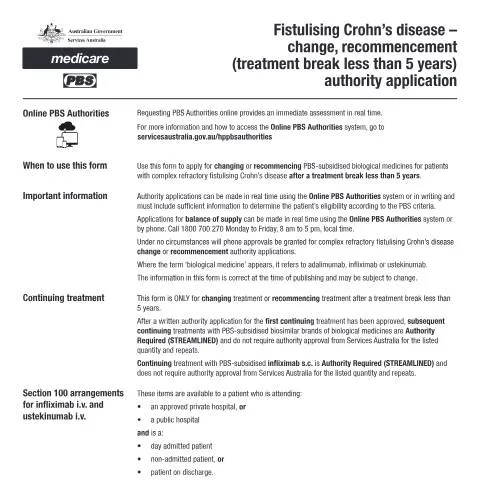
Navigating the PB236 Form: Your Essential Guide
For individuals living with fistulising Crohn's disease, the journey to obtain the necessary medical treatments can often feel overwhelming. One crucial step in this process is the completion of the PB236 form, which is an authority application for a change or recommencement of treatment after a break of less than five years. This document plays a significant role in determining whether you can access the treatments you need.
The Role of the PB236 Form in Treatment Continuity
Upon diagnosis, Crohn’s disease can necessitate various treatments. If a patient experiences a treatment break, the PB236 form becomes critical in facilitating the resumption of necessary medications or therapies. This form not only signifies the patient’s need for ongoing care but also serves as a formal request to health professionals and Services Australia for the approval to continue or change treatment plans.
Why is This Form Mandatory?
The requirement for the PB236 form stems from the regulatory landscape that governs health services in Australia. The treatment of chronic conditions such as Crohn’s disease often involves medications that can be costly. Thus, the purpose of the form is to ensure that there is documentation and justification for the re-entry into treatment protocols.
Who Needs to Submit the PB236?
While the form is primarily designed for Australian residents diagnosed with fistulising Crohn's disease, there are specific circumstances where unique cases arise, such as:
- Foreign Nationals: Patients visiting Australia on a temporary basis who may need to access treatment.
- Minors: Guardians must complete the form on behalf of eligible patients under 18.
- Complex Cases: Patients involved in legal disputes or with outstanding debts to Medicare may require additional documentation.
Each of these situations may have different implications on how the PB236 form is filled out and processed, which can be crucial for the applicant's outcome.
Completing the PB236 Form: A Step-by-Step Approach
Filling out the PB236 form requires careful attention to detail to ensure accuracy and completeness. The following sections outline the primary components of the form.
Personal Information
The initial section requests personal details such as:
- Full name
- Date of birth
- Contact information
- Medicare number
Ensure that all entries are accurate as discrepancies can lead to processing delays.
Medical History
Applicants will need to provide a detailed medical history as part of the application. This includes:
- Diagnosis details
- Previous treatments and medications
- Any complications experienced during treatment breaks
Being thorough here is vital, as it substantiates the need for continued treatment.
Justification for Treatment Recommencement
In this section, applicants must articulate the reasons for wanting to recommence treatment. It's advisable to link personal health impacts directly to treatment needs. An effective way to do this is to provide:
- Symptoms experienced during the break
- Impact on daily life and wellbeing
- Any relevant medical opinions from healthcare providers
Submission Channels for the PB236 Form
Once completed, the PB236 form needs to be submitted to Services Australia. There are three primary channels for submission:
- Online through myGov: The most efficient method for those with a myGov account. Ensure the account is linked to Services Australia for seamless processing.
- Paper Submission: For those who prefer traditional methods, the form can be printed and mailed to the appropriate Services Australia office. This option might take longer due to postal delays.
- In-person at a Service Centre: Submitting in person can provide immediate feedback or clarification on any section of the form.
Understanding the Processing Times
The time it takes for the PB236 form to be processed varies based on the submission method. Online submissions generally receive faster feedback compared to paper submissions, which can take several weeks. After submission, applicants can expect the following timeline:
- Online submissions: Typically processed within a few business days.
- Paper submissions: Can take up to four weeks for processing.
Once processed, applicants will receive notification regarding the outcome of their request.
Decoding the PB236 Form: Common Pitfalls
Understanding the PB236 form’s layout is crucial. Each section not only requires specific information but also demands clarity. Here are common oversights to be mindful of:
Incomplete Medical History
Omitting details about previous treatments can lead to significant delays. Make sure to include all relevant health information that supports the need for change or recommencement of treatment.
Missing Signatures
Ensure that all required signatures are included, especially when submitting on behalf of a minor. Missing a signature can halt the processing entirely.
Incorrect Personal Information
Double-check for typos in personal identifiers like names and Medicare numbers. Incorrect details can complicate future communications.
Laying Down the Legal Framework for the PB236 Form
The PB236 form is not just a procedural document; it operates within a broad legal framework that governs health services and treatments in Australia. This includes:
- Administrative Decisions (Judicial Review) Act 1977 (Cth) which sets the groundwork for appeals and reviews.
- Regulations surrounding Medicare that dictate how long treatment breaks can be before reapplication is necessary.
Familiarity with this legal backdrop not only aids in understanding the necessity of the PB236 form but also empowers applicants to navigate potential appeals if their application is denied.
Distinguishing the PB236 from Similar Forms
It's essential to recognize that the PB236 form is distinct from other health application forms, such as those for standard Medicare rebates or other chronic disease management plans. Here’s a brief comparison to clarify:
| Form Name | Purpose | Applicable Circumstances |
|---|---|---|
| PB236 | Authority application for treatment change/recommencement | For individuals with fistulising Crohn’s disease after a treatment break |
| PB123 | Request for general Medicare rebate | Standard claims for medical services provided |
| PB999 | Chronic disease management plan | For patients with various chronic conditions requiring ongoing monitoring |
From Submission to Decision: The Path Forward
Once the PB236 form is submitted, applicants can expect a defined process leading to the final decision. Here’s how it typically unfolds:
- Submission: Complete and submit the PB236 form via your chosen method.
- Initial Review: A Services Australia officer will review the submission for completeness.
- Assessment: The medical details will be assessed to determine the necessity and appropriateness of treatment recommencement.
- Decision Notification: Applicants will receive a formal notice regarding the outcome, which may include an approval for treatment or further queries.
- Appeal Process: If denied, applicants have the right to appeal the decision within the framework provided under the Administrative Decisions Act.
Closing Thoughts: Empowering Your Health Journey
The PB236 form serves not just as a bureaucratic hurdle but as a vital component in managing one’s health effectively. Navigating the complexities of chronic health conditions can be challenging, but understanding the role and process related to the PB236 empowers patients to advocate for their health needs.
As you prepare your PB236 application, remember to approach it with care, gather all necessary documentation, and don’t hesitate to seek assistance from health professionals when needed. Your health journey matters, and this form is a stepping stone towards ensuring you receive the ongoing support and treatment crucial for managing fistulising Crohn’s disease.
Understanding Fistulising Crohn’s Disease and its Treatment Options
Fistulising Crohn’s disease is a complex and challenging manifestation of Crohn’s disease, characterized by the formation of fistulas—abnormal connections between the intestines and other organs or the skin. These can lead to significant complications, impacting a patient’s quality of life. Understanding the medical aspects of this condition is essential when navigating the administrative processes for treatment in Australia.
When managing fistulising Crohn’s disease, the treatment plan can vary considerably based on individual circumstances, including the severity of the disease, the number and type of fistulas, and previous treatment responses. Common treatment approaches include medical therapies such as immunosuppressants and biologics, surgical interventions, and nutritional support. Each of these options may entail different administrative requirements, particularly when engaging with Services Australia for funding or support through treatments.
It's crucial for patients to maintain close communication with their healthcare team to tailor a bespoke treatment approach that aligns with their health status and lifestyle. This collaboration is particularly important when considering a treatment break, as the clinical implications of resuming or changing treatment can significantly influence the overall management of the disease.
Navigating the PB236 Authority Application Process
The PB236 authority application form is specifically designed for patients seeking to change their treatment regimen for fistulising Crohn’s disease or to recommence treatment after a break of less than five years. Completing this application requires careful attention to detail and an understanding of the criteria that must be met for approval.
As part of the process, it is essential to provide comprehensive medical documentation. This includes not just a detailed history of the patient's condition but also records of prior treatments and their outcomes. The treating physician plays a key role in this aspect, as their support and detailed report can significantly strengthen the application. Additionally, the physician should outline the medical rationale for the proposed treatment changes or recommencement, emphasizing the necessity of the requested medication based on the patient’s clinical history.
Patients can submit the PB236 form via myGov, ensuring that all supporting documents are attached electronically. It is advisable to keep copies of all submitted materials and any correspondence received from Services Australia for future reference. Understanding the timelines associated with the review of the PB236 application is also paramount, as patients may remain in a state of uncertainty about their treatment options during this period.
Appealing Decisions and the Administrative Review Process
In instances where the PB236 authority application is denied, patients and their healthcare providers have the right to seek a review of the decision. Under the Administrative Decisions (Judicial Review) Act 1977 (Cth), patients can request a merits review through the Administrative Appeals Tribunal (AAT). This process provides an opportunity for patients to present additional evidence and argue their case for the necessity of their treatment.
To successfully appeal a decision, it is vital to understand the grounds on which the initial decision was made. The AAT has the authority to review the facts and circumstances surrounding the case, potentially leading to a different outcome. Patients should gather all relevant documents, including the initial application, any correspondence from Services Australia, and updates from their healthcare providers regarding their condition since the application was made.
Engaging professional assistance, whether from legal advisors or patient advocacy groups, can enhance the chances of a favorable outcome. These entities can guide patients through the complexities of the appeals process, ensuring that the necessary documentation is submitted and that the patient’s voice is effectively represented.