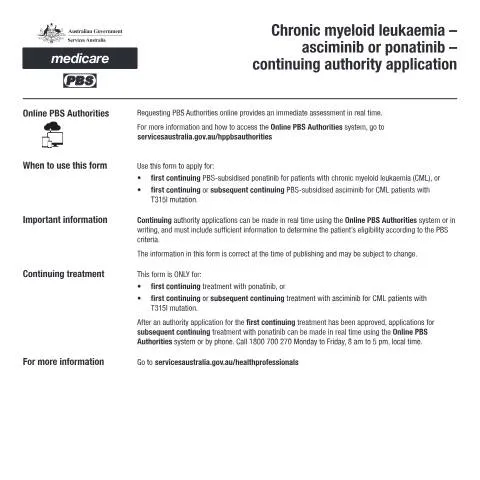
The Critical Role of Form PB084 in Chronic Myeloid Leukaemia Treatment
When managing a chronic condition like chronic myeloid leukaemia (CML), the necessity for effective treatment options is paramount. In Australia, health professionals use the Chronic myeloid leukaemia - asciminib or ponatinib - continuing authority application form (PB084) to apply for continued access to these specific treatments for their patients. This form stands out in the realm of medication authority applications, as it plays a crucial role in ensuring that patients receive ongoing medication that’s essential to their health and wellbeing.
Understanding the Importance of PB084 for Health Professionals
Health professionals, including oncologists and hematologists, are equipped to submit Form PB084 when they determine that a patient’s continuing treatment with either asciminib or ponatinib is essential. The form is vital as it assists in accessing subsidized medications under the Pharmaceutical Benefits Scheme (PBS), thus ensuring that financial constraints do not hinder patient care.
Unlike other application forms, such as those for initial PBS approvals, PB084 is specifically tailored for patients already on treatment. This distinction highlights its essential role in the continuity of care.
Navigating the Submission Process: Online vs. Paper Applications
Submitting Form PB084 can be done through various channels, and understanding the nuances of each option can facilitate a smoother application process.
- Online Submission: Utilizing the myGov platform, health professionals can conveniently submit the form directly to Services Australia. This method is often faster and allows for immediate tracking of the application status.
- Paper Application: For those who prefer traditional methods, completing a physical copy of PB084 and mailing it to the appropriate Services Australia address is still an option. However, this may lead to longer processing times.
It's worth noting that while online submissions are generally preferred for their efficiency, health practitioners should ensure they have the necessary setup with a myGov account linked to Services Australia. This requirement can sometimes lead to delays if not addressed prior to completing the application.
Key Components of the PB084 Form: A Detailed Look
Completing Form PB084 accurately is crucial for a successful application. The form comprises several sections, each requiring specific information:
- Patient Identification: This section requires the patient’s details, including their full name, date of birth, and Medicare number. Ensuring the accuracy of this information is fundamental, as discrepancies can lead to application delays.
- Medical History: Here, healthcare providers must document the patient's diagnosis and treatment history. Specific attention should be paid to detailing previous treatments and response levels to underscore the medical necessity for continuing therapy.
- Requested Treatment: Practitioners must specify whether the request is for asciminib or ponatinib. Misidentifying the requested medication can result in an outright rejection of the application.
- Supporting Documentation: This section may require additional documentation, such as pathology reports or specialist letters. These documents provide necessary context for the application and may significantly impact the approval outcome.
Each of these components serves to create a comprehensive picture of the patient’s needs and justifies the request for ongoing treatment.
What to Do in Case of Application Refusal
In the unfortunate event that an application submitted through Form PB084 is refused, there are specific steps that health professionals can take:
- Review the Refusal Letter: Understanding the reasons for refusal is the first step. Often, applications are denied due to incomplete information or lack of supporting medical evidence.
- Gather Additional Evidence: If the refusal is due to insufficient documentation, practitioners can compile additional evidence that strengthens the justification for the treatment.
- Reapply: Once the additional evidence is gathered, a new application can be submitted. It may be beneficial to address any concerns raised in the refusal letter directly.
- Consider an Appeal: If the application is still refused after re-submission, health practitioners may explore the option of appealing the decision through the Administrative Appeals Tribunal (AAT). This avenue can be helpful in challenging decisions that are deemed unjustified.
The Broader Context of PB084 in Patient Management
Form PB084 is a part of a larger framework for managing chronic myeloid leukaemia treatment in Australia, integrating various health services and supports. Recognizing how this form interacts with other processes can significantly enhance patient care:
- Referral Processes: Prior to submitting PB084, patients may require referrals to specialists, which can involve additional paperwork and time considerations.
- Collaboration with Pharmacists: Once approved, pharmacists play a crucial role in dispensing the medication, and ongoing communication between health professionals and pharmacists can ensure adherence to treatment plans.
- Patient Monitoring: Continuous monitoring and follow-up appointments are necessary to evaluate treatment effectiveness and side effects. The process surrounding PB084 thus feeds into a long-term strategy for effective chronic disease management.
Special Considerations for Unique Patient Circumstances
Certain patient situations may require tailored approaches when completing Form PB084:
- Minors: For patients under the age of 18, guardians must provide consent and may need to supply additional documentation to verify their legal authority.
- Patients with Complex Medical Histories: If the patient has multiple health conditions, it is essential to detail these in the application to justify the need for continued therapy with asciminib or ponatinib.
- Non-residents or Temporary Residents: In certain cases, individuals who are not permanent residents may face additional requirements or limitations regarding access to treatments. It is crucial to fully understand these parameters when applying using PB084.
A Step-by-Step Guide to Completing Form PB084
To ensure a successful submission of Form PB084, here’s a structured approach for health professionals:
| Step | Action Item | Notes |
|---|---|---|
| 1 | Gather Patient Information | Ensure all personal details are accurate and up-to-date. |
| 2 | Document Medical History | Include all significant treatments and responses. |
| 3 | Specify Requested Treatment | Clearly indicate whether asciminib or ponatinib is being requested. |
| 4 | Collect Supporting Documentation | Gather pathology reports and letters from specialists. |
| 5 | Confirm Submission Method | Decide whether to submit online or via post, ensuring myGov access if needed. |
| 6 | Submit the Application | Double-check for completeness before submission. |
By following this structured approach, health professionals can minimize errors and enhance the likelihood of a successful application.
Final Thoughts on the Unique Nature of Form PB084
Within the broader landscape of bureaucratic processes, Form PB084 serves a specialized function that directly impacts patient care for those suffering from chronic myeloid leukaemia. The implications of timely and effective treatment are profound, and navigating the administrative aspects with precision is paramount. For health professionals, understanding the intricacies of this form is essential for advocating for their patients' needs and ensuring the best possible health outcomes.
Understanding the Continuing Authority Application Form (PB084)
The Continuing Authority Application Form (PB084) is pivotal for patients requiring ongoing treatment for Chronic Myeloid Leukaemia (CML) with medications such as asciminib or ponatinib in Australia. This form facilitates the assessment and approval of continued access to these treatments under the Pharmaceutical Benefits Scheme (PBS). Patients and healthcare providers must understand the nuances of this application to ensure that all necessary information is provided and to avoid delays in treatment.
To begin, it is essential to clarify that the PBS provides subsidised access to certain medications for eligible patients. Asciminib and ponatinib, being newer therapies, often have specific criteria that a patient must meet to qualify for ongoing subsidisation. The PB084 form requires details regarding the patient's diagnosis, previous treatment history, and current health status. Accurate completion of this form is crucial as any discrepancies or missing information can lead to rejection of the application.
When filling out PB084, consider the following practical tips:
Diagnosis Documentation: Ensure that you attach relevant diagnostic reports that detail the CML diagnosis. This includes cytogenetic (karyotyping) and molecular studies that confirm the presence of the Philadelphia chromosome or BCR-ABL gene fusion.
Previous Treatments: Clearly outline any previous treatments, including the duration, effectiveness, and any adverse effects experienced. This history not only informs the choice of therapy but also supports the case for continuing treatment with asciminib or ponatinib.
Current Treatment Status: Include information about the current treatment response, such as any recent blood tests or imaging that may indicate the current state of the disease. This can help demonstrate the necessity of continuing with the prescribed medication.
Healthcare Provider Involvement: It is advisable to have the application endorsed by the treating haematologist or oncologist. Their input adds significant weight to the case, affirming that ongoing treatment is medically necessary.
Submission Process: After completing the PB084 form and gathering the required documentation, submission can be done electronically through myGov or by mailing a hard copy to Services Australia. Keep a copy of all submissions for your records.
Understanding the requirements and the appropriate processes for completing the PB084 form can significantly streamline the access to essential treatments for CML patients.
Eligibility Criteria for Asciminib and Ponatinib Treatment
To qualify for treatment with asciminib or ponatinib under the PBS, patients must meet specific eligibility criteria. It is vital to understand these requirements to enhance the chances of a successful application and to ensure patients are receiving the most appropriate medication for their condition.
Diagnosis Confirmation: Patients must have a confirmed diagnosis of CML with specific genetic markers. For asciminib, the treatment is generally indicated for patients who have failed at least two prior therapies or have specific mutations that render other treatments ineffective. For ponatinib, it is typically reserved for patients with the T315I mutation or those who have not responded to other tyrosine kinase inhibitors.
Previous Treatment History: As mentioned earlier, a detailed record of prior treatment regimens is crucial. Patients who have not responded adequately to other therapies may be prioritised for these treatments. The PBS guidelines stipulate that evidence of intolerance or resistance to earlier treatments must be provided.
Monitoring and Follow-Up: Patients must commit to regular monitoring as part of their treatment plan. This includes scheduled appointments for blood tests to evaluate response to therapy and to monitor for potential side effects. Ongoing engagement with healthcare providers demonstrates a proactive approach to managing health and can influence the approval process.
Stage of Disease: The specific stage of the disease at the time of application can also affect eligibility. For instance, patients in the chronic phase of CML may have different treatment pathways compared to those in accelerated or blast phases.
Comorbidities and Additional Considerations: The presence of other health issues may affect treatment choices. For example, patients with cardiovascular conditions might not be suitable candidates for ponatinib due to its known cardiovascular risks. Providing comprehensive health information can assist in determining the most appropriate treatment option.
By fully understanding the eligibility criteria set forth by the PBS, patients and healthcare providers can navigate the complexities of treatment access more effectively.
The Role of Patient Advocacy and Support Services
Navigating the healthcare system, particularly with complex conditions like CML, can be daunting for many patients. Patient advocacy and support services play a crucial role in guiding individuals through the treatment process, including the application for programs like the Continuing Authority Application Form (PB084).
Accessing Resources and Information: Advocacy groups often provide valuable resources that educate patients about their rights, treatment options, and how to effectively complete necessary applications. These organizations can offer templates, guides, and examples of successful applications that can help demystify the process.
Connecting with Healthcare Providers: Many advocacy groups have networks of healthcare professionals who can assist in filling out forms or providing the necessary documentation. They can also facilitate communication between patients and healthcare providers, ensuring that all relevant health information is accurately conveyed in applications.
Emotional and Psychological Support: The diagnosis of CML and the subsequent treatment journey can be emotionally taxing. Support groups can offer a platform for patients to share their experiences, providing emotional relief and practical tips from those who have navigated similar journeys.
Navigating Financial Assistance: For patients facing financial burdens due to treatment costs, advocacy organizations often have access to information about various financial assistance programs. This can include accessing grants, subsidies, or other forms of support that can alleviate the financial strain associated with ongoing medication.
Policy Advocacy: Many patient advocacy groups also engage in broader policy advocacy efforts to improve access to treatments and support services. By raising awareness and lobbying for changes in healthcare policies, these organizations help create a more supportive environment for patients with CML and their families.
By leveraging the support of advocacy groups, patients can enhance their treatment experience and ensure they are making informed decisions about their healthcare options.