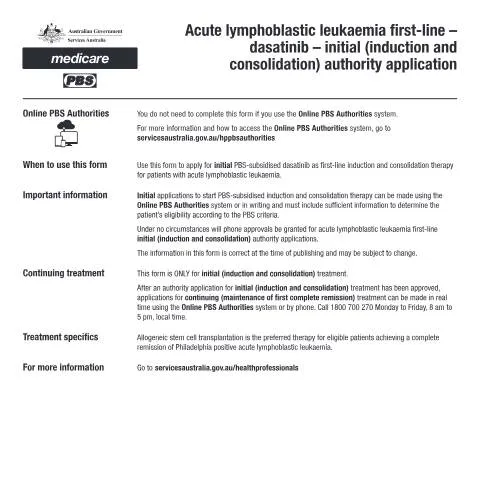
Navigating the Complexities of the PB271 Application Form for Acute Lymphoblastic Leukaemia Treatment
For patients diagnosed with acute lymphoblastic leukaemia (ALL), navigating the healthcare system can be daunting. The PB271 form is critical in obtaining authority for the initial treatment with dasatinib, a vital medication in the fight against this aggressive form of leukaemia. Understanding the intricacies of this application process can markedly ease the stress associated with treatment initiation. In this article, we will delve deep into the PB271 form, unraveling its purpose, detailing submission processes, and offering guidance for potential challenges.
Understanding the Importance of the PB271 Form
The PB271 form is not just a piece of paperwork; it represents a lifeline for many patients undergoing treatment for ALL. This form serves as a formal request to Services Australia for approval to access dasatinib as a first-line treatment option during both the induction and consolidation phases of therapy.
For healthcare professionals, submitting the PB271 form accurately ensures that patients receive timely access to necessary treatments, which can significantly impact their prognosis and overall health outcomes. A well-completed application is not merely procedural; it can mean the difference between timely treatment initiation and unnecessary delays.
Who Can Submit the PB271 Application?
The responsibility of submitting the PB271 form primarily lies with healthcare professionals involved in the treatment of patients with ALL. This typically includes oncologists or haematologists who are treating the patient. It's essential that these professionals are well-versed with the form's requirements to enhance the likelihood of approval.
- Oncologists: Specialists in cancer treatment, most often responsible for the initial submission.
- Haematologists: Focused on blood disorders, they may also take part in the application process.
- General Practitioners (GPs): While less common, GPs may assist in the initial assessment and referral.
Deciphering the PB271: Step-by-Step Form Breakdown
Completing the PB271 form requires meticulous attention to detail. Each section has specific requirements that must be addressed to avoid delays or rejections. Below is a breakdown of the form’s key sections, highlighting what information is required and common pitfalls that applicants should be aware of.
Section A: Patient Identification
This section captures crucial patient details, including personal information and medical record identifiers. Ensuring that the patient's demographic information is accurate is paramount.
- Full Name: Ensure the name matches exactly with official documents.
- Date of Birth: Use the correct format (DD/MM/YYYY).
- Medicare Number: Double-check the number for accuracy to avoid processing delays.
Section B: Treatment Details
Here, the medical professional must specify the treatment regimen prescribed, including dosage and frequency of dasatinib administration. Accurate entries are crucial for demonstrating medical necessity.
- Induction Phase: Clearly outline the intended duration and objectives of the initial treatment.
- Consolidation Phase: Detail any changes in dosages or treatment approaches.
Gathering Supporting Documentation: What is Essential?
To support the application, several pieces of documentation are mandatory. Compiling these documents ahead of time can streamline the submission process.
Essential Documents
| Document Type | Description | Importance |
|---|---|---|
| Medical History Report | A comprehensive report detailing the patient's medical background and diagnosis. | Critical for establishing the need for dasatinib. |
| Treatment Plan | An outline from the treating physician detailing the planned regimen. | Essential for validating the treatment request. |
| Pathology Results | Lab results confirming the diagnosis of ALL. | Fundamental evidence needed for application approval. |
Each of these documents must be current and accurately reflect the patient's condition to avoid any complications during the approval process.
Submission Process: A Timeline from Start to Finish
Filing the PB271 form involves several steps, from initial preparation to final submission. Understanding this sequence can alleviate concerns and encourage timely actions.
Step-by-Step Submission
- Gather Documents: Assemble all required paperwork to support the application.
- Complete the PB271 Form: Fill out the form carefully, ensuring that all sections are completed accurately.
- Review Submission: Conduct a thorough review of the form and supporting documents to detect any errors.
- Submit to Services Australia: Use the preferred method for submission (online via myGov, if applicable).
- Confirmation Receipt: Obtain confirmation of submission to track the application status.
What to Expect After Submission: The Review Process
Once the PB271 application has been submitted, it enters the review phase. During this time, patients and healthcare providers should be prepared for various outcomes.
Timeline for Review
The review process can take varying lengths of time depending on several factors, including the completeness of the application and the current workload of Services Australia. Generally, applicants can expect to wait several weeks for a decision.
Possible Outcomes:
- Approval: If granted, the approval will specify the terms under which dasatinib can be prescribed.
- Request for Additional Information: Services Australia may require further documentation or clarification.
- Denial: A rejection can occur if necessary information is missing or medical justification is insufficient.
Addressing Challenges: What if Your Application is Rejected?
Receiving a rejection can be disheartening, but it is not the end of the road. Patients and healthcare providers have several options to explore.
Next Steps in the Event of Rejection
- Review Denial Letter: Carefully read the reasons for denial provided by Services Australia.
- Contact Services Australia: Reach out for clarification on the decision and inquire about possible avenues for appeal.
- Reapply: If additional information or documentation can substantiate the case, prepare to submit a revised application.
It's crucial to act promptly if an appeal is necessary, as there may be time limits on when appeals can be made following a rejection.
Keeping Track of Your Application: Tips for Follow-Up
Once the application is in process, knowing how to follow up can provide peace of mind and help ensure that any issues are addressed swiftly.
Effective Follow-Up Strategies
- Use Tracking Information: If submitted online, utilize tracking details to monitor the status of the application.
- Document Communication: Keep records of all communications with Services Australia, including dates and reference numbers.
- Set Reminders: If follow-up is needed, schedule reminders to check on the application status regularly.
By maintaining proactive communication, healthcare providers can reduce the frustration often associated with waiting periods.
This HTML document provides detailed insights into the PB271 application form's process, ensuring that patients and healthcare professionals are well-informed about the steps, requirements, and potential challenges involved. Each section offers practical advice while adhering to the specified guidelines.