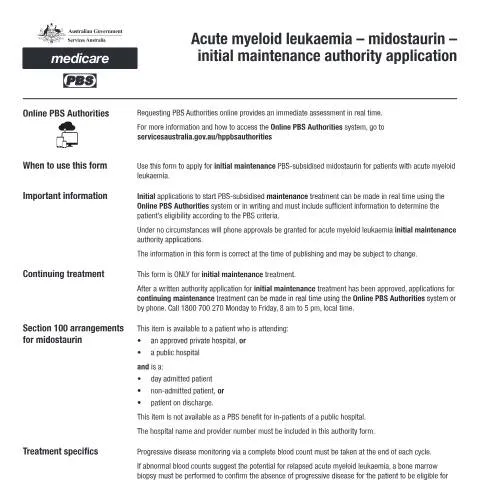
Understanding the Significance of PB253 in Acute Myeloid Leukaemia Treatment
The management of Acute Myeloid Leukaemia (AML) is a complex process that requires strict adherence to treatment protocols. One such protocol involves the use of midostaurin during the initial maintenance phase. The Acute myeloid leukaemia - midostaurin - initial maintenance authority application form (PB253) plays a pivotal role in this process. By facilitating access to this essential medication, PB253 helps ensure that eligible patients receive the necessary treatment to improve their chances of recovery.
The Regulatory Framework Supporting PB253
The administration of midostaurin is governed by a comprehensive regulatory framework established by Services Australia. This framework is rooted in principles outlined in the Therapeutic Goods Administration (TGA), which oversees the approval and regulation of medications in Australia. The necessity for a dedicated form like PB253 stems from the need for a structured approach that confirms eligibility, ensuring that only those who meet specific clinical criteria can access this treatment.
The Administrative Decisions (Judicial Review) Act 1977 (Cth) provides a legal backdrop for the authority application processes, allowing for proper review mechanisms. Understanding this framework is crucial for both healthcare professionals and patients, as it influences the application process and the potential outcomes of PB253 submissions.
Who Should Consider Submitting PB253?
The PB253 form is primarily designed for healthcare providers who are treating patients diagnosed with AML. However, it is vital to consider the patient’s specific circumstances. Here are several scenarios where a healthcare professional might need to submit this application:
- Initial Diagnosis: Patients freshly diagnosed with AML often require early intervention with medications like midostaurin.
- Relapsed Cases: Those who have experienced a relapse may also be eligible for midostaurin as part of their treatment regime.
- Access to Clinical Trials: Patients who are involved in clinical trials may need the PB253 to secure necessary treatments that fall under trial protocols.
It is also worth noting that the eligibility for midostaurin is contingent upon specific clinical criteria. Medical practitioners must assess each case meticulously and provide comprehensive documentation when completing PB253.
Steps to Completing PB253: A Detailed Guide
Filling out the PB253 form requires careful attention to detail. Here’s a breakdown of the primary steps involved:
- Gather Patient Information: Collect all pertinent patient data, including their medical history, diagnosis, and current treatment plan.
- Clinical Assessment: Conduct a thorough clinical evaluation to determine eligibility for midostaurin. Documentation of the assessment is crucial.
- Complete the Form: Ensure all sections of PB253 are filled accurately. This includes patient identification details and clinical justification for treatment.
- Attach Supporting Documents: Include any necessary supporting documents, such as test results, prescriptions, and previous treatment records.
- Submit the Application: Follow the submission guidelines provided by Services Australia to ensure that the application reaches the right department.
Completing the form accurately can significantly impact the speed and success of the application process. A well-prepared submission can reduce the likelihood of delays caused by missing information or documentation.
Submission Process: What to Expect After Filing PB253
Once the PB253 form has been submitted, several important steps follow. Understanding this process can help healthcare providers and patients know what to expect:
- Application Review: Services Australia will review the application to determine whether it meets all necessary criteria.
- Decision Notification: Usually, a notification regarding the decision will be sent to the submitting healthcare provider. This communication will outline whether the treatment has been approved or denied.
- Follow-Up Actions: In cases of approval, the provider will receive instructions for the next steps in administering midostaurin to the patient. Conversely, if denied, the notification will typically include reasons for the decision and guidance on possible appeals.
The entire process can take time, and healthcare providers should ensure that they keep the patients informed about any updates regarding their treatment status.
Understanding the Implications of a Refusal
In instances where the application for midostaurin is denied, it is essential to have a clear understanding of the implications and possible next steps:
Receiving a refusal can be disheartening for both healthcare providers and patients. However, it is crucial to approach the situation with a structured plan for addressing the outcome.
Here are steps to take if your application is refused:
- Review the Reasons for Refusal: The notification will outline specific reasons why the application was not approved. Understanding these reasons is the first step towards addressing them.
- Consult with Medical Professionals: Engaging in a discussion with the treating healthcare team can provide insights into alternative treatments or approaches that may be more favorable for approval.
- Consider Reapplication: If new information or documentation can support the case for midostaurin, it might be worthwhile to consider resubmitting the application.
- Explore Appeals: Under the Administrative Decisions (Judicial Review) Act 1977 (Cth), patients may have the right to appeal against the decision. It is advisable to seek legal counsel or guidance from healthcare professionals experienced in such matters.
While a refusal may feel like a setback, it is important to remember that options exist to navigate through the complexities of treatment access.
Timeline of PB253 Application: Key Dates to Remember
Timing is a critical factor in the treatment of AML, particularly concerning the timely administration of medications like midostaurin. Here’s a general outline of the timeline involved in the PB253 application process:
| Stage | Timeline |
|---|---|
| Application Submission | Upon clinical determination of eligibility |
| Review Period | Typically 28 days (may vary) |
| Notification of Outcome | Within 14 days after the review period |
| Follow-Up Actions | As per guidance from Services Australia |
It’s crucial for healthcare providers to keep track of these timelines to ensure that patients do not miss out on timely interventions necessary for managing their condition effectively.
The Future of PB253 and Acute Myeloid Leukaemia Treatment
The PB253 application form serves as a gateway for accessing vital medications that can significantly impact the treatment outcomes for patients with AML. As medical advancements continue to evolve, the criteria and processes surrounding PB253 may also undergo changes to adapt to new findings and therapeutic developments.
Healthcare professionals involved in the treatment of AML must stay informed about updates related to the PB253, as well as other treatment protocols. Regular training and engaging with the latest research can ensure that they are well-equipped to navigate the application process, advocate for their patients, and contribute to improving the overall quality of care.
Ultimately, the PB253 form is not just a bureaucratic requirement; it represents a crucial step towards securing potentially life-saving medication for individuals facing the challenges of Acute Myeloid Leukaemia.
Understanding the Initial Maintenance Authority Application for Midostaurin (PB253)
When diagnosed with Acute Myeloid Leukaemia (AML), treatment options can feel overwhelming. In Australia, midostaurin, a targeted therapy, is an essential part of the treatment for patients with FLT3 mutation-positive AML. The medication helps improve outcomes when used alongside standard chemotherapy. However, accessing midostaurin through the Pharmaceutical Benefits Scheme (PBS) requires an Initial Maintenance Authority Application, coded PB253. This document serves as a crucial step in the approval process for receiving subsidised medication.
The PB253 form is pivotal for patients transitioning from induction therapy to maintenance therapy. It is critical to ensure that patients do not encounter unnecessary delays in treatment due to administrative issues. The form needs to be submitted by a registered medical practitioner who has experience treating AML. The application must include specific patient details, including their Tax File Number (TFN), Medicare number, and information regarding their treatment history.
One of the most significant aspects of the PB253 application is the requirement for medical evidence of the patient's FLT3 mutation status. This evidence can include pathology reports, which must be up-to-date and conducted at an accredited facility. The application must also indicate that the patient has achieved a complete remission or partial remission after induction chemotherapy, which will further support the case for midostaurin usage.
Moreover, the PB253 application should clearly outline the treatment plan, including the dosage and duration of midostaurin therapy. It is prudent for healthcare providers to meticulously document the rationale for choosing midostaurin, as the PBS often requires a detailed justification for the use of newer therapies in the context of existing treatments.
Filing the application through myGov is a streamlined process, allowing healthcare providers to efficiently manage submissions. However, it is essential to double-check all entries for accuracy, as any discrepancies could lead to delays or denial of the application. The approval process can often take several weeks, so timely submission is crucial to ensure that patients receive the medication as early as possible in their treatment continuum.
Navigating the PBS and Midostaurin: Key Considerations for Healthcare Providers
Healthcare providers play a fundamental role in navigating the complexities of the PBS and ensuring that patients receive midostaurin promptly. One of the key considerations for medical practitioners is understanding the eligibility criteria for midostaurin under the PBS. This involves being well-versed in the clinical guidelines that govern the use of this medication in AML treatment.
Practitioners must ensure they are up-to-date with the latest clinical trials and studies related to midostaurin. This knowledge not only aids in the application process but also in counselling patients about their treatment options. The effectiveness of midostaurin in preventing relapse in FLT3-positive patients is well-documented, but healthcare providers must also discuss potential side effects, including gastrointestinal symptoms and cardiac issues, with patients.
Another important aspect for healthcare providers is the need for ongoing communication with patients throughout the application process. Many patients may feel anxiety and uncertainty while waiting for approval. Providing reassurance and clear information about the steps involved can help alleviate their concerns. It may also be beneficial to set up appointments to review treatment plans during the waiting period, ensuring that patients remain engaged and informed about their care.
Furthermore, providers should consider the implications of the Administrative Decisions (Judicial Review) Act 1977 (Cth) when handling applications. If a PB253 application is denied, patients have the right to seek a review of the decision through the Administrative Appeals Tribunal (AAT). Understanding this process allows healthcare professionals to guide their patients effectively through potential appeals, if necessary.
Lastly, providers should be aware of the importance of multidisciplinary care in managing AML. Collaborating with oncologists, pharmacists, and allied health professionals can ensure a comprehensive approach that addresses the various facets of treatment and support for patients receiving midostaurin.
Patient Support and Resources for Managing Acute Myeloid Leukaemia Treatment
Accessing midostaurin and navigating the PBS can be challenging for patients diagnosed with AML. Therefore, it is essential to leverage available resources and support systems. In Australia, several organisations provide valuable information and support for patients and their families dealing with AML. These resources can assist in understanding treatment options, navigating the healthcare system, and providing emotional support during a challenging time.
One of the first stops for patients is the Leukemia Foundation of Australia, which offers a wealth of information related to AML, including educational materials, support groups, and financial assistance options. They can help patients understand their diagnosis and treatment options, including the nuances of accessing medications like midostaurin.
Additionally, hospitals and treatment centres often have patient navigators or social workers who can guide individuals through the complexities of treatment planning and administrative applications. These professionals can help answer questions about the PB253 form, assist with gathering necessary documentation, and provide insights into the expected timeline for approval and treatment initiation.
Patients should also take advantage of online forums and peer support groups. Sharing experiences with others who are undergoing similar treatments can foster a sense of community and reduce the feelings of isolation that often accompany a cancer diagnosis. These groups can provide emotional support and practical tips from individuals who have successfully navigated the challenges of obtaining treatments like midostaurin.
Finally, education about self-care during treatment is vital for patients. Nutrition, exercise, and mental wellness play significant roles in recovery. Engaging with dietitians, physiotherapists, and psychologists can contribute positively to the overall treatment journey, empowering patients to take an active role in their care.