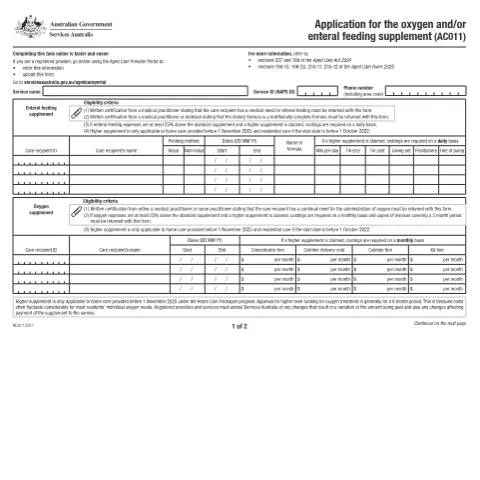
Navigating the AC011: A Necessity for Health Support
Imagine a scenario where a loved one suffers from a chronic health condition requiring continuous oxygen supply or enteral feeding. The financial burden can be significant and often overwhelming. In Australia, the Application for the Oxygen and/or Enteral Feeding Supplement (AC011) serves as a crucial lifeline for eligible individuals, providing much-needed financial assistance to alleviate this burden. Understanding how to navigate the application process is vital for those seeking aid.
A Deep Dive into the Purpose of the AC011 Form
The AC011 form is designed to support individuals who require oxygen therapy or enteral feeding due to medical conditions. It facilitates the application for additional financial support, which is administered by Services Australia. This assistance plays a crucial role in helping patients manage the costs of essential medical supplies and services.
While the primary aim of the form appears straightforward, the implications of its approval can significantly impact the quality of life for applicants and their families. Thus, understanding the form's context is essential for effective completion and submission.
Understanding the Legislative Framework Behind AC011
To grasp the importance of the AC011 form, one must appreciate the legislative framework supporting it. Under various health support initiatives, this form aligns with Australia’s commitment to providing equitable healthcare access. The Social Security Act underpins this initiative, ensuring that individuals facing ongoing medical challenges are not left to navigate these difficulties alone.
Services Australia operates within this framework to facilitate the provision of financial assistance to eligible patients, reinforcing the government’s role in safeguarding public health through accessible support mechanisms. The application for the AC011 is a reflection of broader social policies aimed at supporting vulnerable populations.
The Application Process: Step by Step
Completing the AC011 form can seem daunting, but breaking it down into stages clarifies the process. Here’s a chronological breakdown of what applicants can expect:
- Initial Assessment: Before filling out the AC011 form, individuals should assess their eligibility. Generally, this applies to those with documented medical needs for oxygen or enteral feeding, as verified by a health professional.
- Gathering Necessary Documentation: It's crucial to collect all required documents, such as medical reports, prescriptions, and identification.
- Filling Out the Form: The form itself can be accessed through myGov. Each section must be filled out accurately to avoid delays or rejection.
- Submission: Once completed, the form can be submitted online, or alternatively, mailed to Services Australia, depending on the preference.
- Awaiting Decision: After submission, applicants should monitor their application status through their myGov account or by contacting Services Australia directly.
Breaking Down the AC011: Key Sections and Common Pitfalls
Understanding the specific sections of the AC011 is imperative for a successful application. Here’s a detailed look at each part of the application along with some common pitfalls to avoid:
| Section | Description | Common Pitfalls |
|---|---|---|
| Personal Details | Includes basic information such as name, address, and date of birth. | Ensure all details are accurate, as discrepancies can cause delays. |
| Medical Needs | Documenting the medical justification for oxygen or enteral feeding. | Omitting this information or providing insufficient evidence can lead to rejection. |
| Financial Information | Details on the applicant’s financial situation may be required. | Inaccuracies here can impact the assessment of eligibility. |
| Health Professional Verification | A section for a health professional to verify the application. | Ensure that the health professional provides all requested information and signatures. |
Who Should Consider Applying for the AC011?
The AC011 form is not a one-size-fits-all solution. It primarily targets individuals facing specific health challenges and their accompanying financial burdens. Here’s a closer look at the profiles of potential applicants:
- Chronic Respiratory Conditions: Patients with conditions that necessitate long-term oxygen therapy, such as COPD or severe asthma.
- Neurological Disorders: Individuals requiring enteral feeding due to conditions impacting swallowing or digestion.
- Age Considerations: While the form is open to all ages, elderly individuals often find themselves in the highest need due to age-related health decline.
- Temporary Conditions: Some may also qualify if they are recovering from surgery or a severe illness that temporarily increases their need for oxygen or enteral feeding.
The Implications of Application: Rights and Obligations
Filing the AC011 form comes with an array of rights and obligations for the applicant. Understanding these aspects ensures that applicants are fully aware of their responsibilities and entitlements:
- Rights: Eligible individuals are entitled to financial support, which can significantly alleviate the stress associated with ongoing medical costs.
- Obligations: There is a responsibility to provide accurate information. Any misrepresentation or omission could lead to penalties, including the loss of benefits.
- Feedback Mechanism: Applicants have the right to appeal a decision if their application is denied, as guided by the Administrative Decisions (Judicial Review) Act 1977.
Managing Your Application: Follow-Up and Tracking
After submitting the AC011 form, it is essential to know how to manage your application efficiently. Here are practical steps for effective follow-up:
- Use myGov for Tracking: Log into your myGov account regularly to check the status of your application. This can provide peace of mind and keep you informed on any additional requirements.
- Contact Services Australia: If there are delays beyond what is expected, don’t hesitate to reach out directly to Services Australia for clarification.
- Documentation: Keep copies of all submitted forms and correspondence for your records. This can be invaluable if issues arise.
What Happens After Submission?
Once the AC011 form has been submitted, applicants often wonder what to expect next. The process typically unfolds as follows:
- Assessment Period: Services Australia will review the application, which generally takes several weeks. During this period, they may request additional information from the applicant or their health professional.
- Decision Notification: Applicants will receive a notification regarding the outcome of their application. This will detail whether assistance has been granted and the amount of support provided.
- Commencement of Payment: If approved, payments are usually issued on a regular schedule, which can significantly aid in budgeting for medical needs.
- Annual Review: Recipients must be aware that ongoing eligibility is typically reviewed annually. This means keeping health records updated and submitting any necessary documents at renewal time.
Final Thoughts: The Importance of Persistence
The AC011 form serves as a critical connector between those in need of medical support and the necessary financial aid. While the application process may seem overwhelming, persistence and attention to detail are key. Ensuring that the form is completed accurately and submitted in a timely fashion can make a profound difference in the lives of those affected by chronic health conditions.
Seeking assistance through the AC011 form is not just about financial relief; it represents access to health resources that enable individuals to maintain a quality of life despite challenging circumstances. This process underscores the importance of advocacy and support systems in navigating the complexities of healthcare in Australia.
Understanding Eligibility Criteria for the Oxygen and Enteral Feeding Supplement
The Oxygen and Enteral Feeding Supplement form (AC011) is designed to assist individuals with specific medical conditions that necessitate long-term oxygen therapy or enteral feeding. To qualify for these supplements, applicants must meet strict eligibility criteria set forth by the Department of Health and Services Australia. It is essential to understand these requirements to ensure a successful application.
Individuals who are eligible for the supplement typically fall into specific categories based on their medical diagnosis. Those suffering from chronic respiratory conditions, such as severe chronic obstructive pulmonary disease (COPD) or interstitial lung disease, may qualify for oxygen supplementation. Similarly, patients who require enteral feeding due to conditions like neurological disorders, malignancies, or significant swallowing difficulties may also be eligible.
Furthermore, applicants must demonstrate that their medical condition significantly impacts their daily living and necessitates ongoing treatment. This evaluation is often supported by detailed medical reports from healthcare providers, which should outline the diagnosis, treatment plan, and the necessity of the supplement. Supporting documents are crucial, as they substantiate the claims made in the application and ensure that decision-makers have access to all relevant medical information.
The Application Process: Step-by-Step Guide
Applying for the Oxygen and Enteral Feeding Supplement can seem daunting, but breaking down the process into manageable steps can facilitate a smoother experience. Here, we provide a comprehensive step-by-step guide to assist applicants in navigating the application process effectively.
Step 1: Gather Required Documentation Before starting your application, it’s critical to collect all necessary documentation. This includes your Medicare card, Tax File Number (TFN), and detailed medical reports from your treating physician that justify your need for oxygen therapy or enteral feeding. Ensure that the medical reports clearly state your diagnosis and why the supplement is essential for your health.
Step 2: Complete the AC011 Form The AC011 form can be accessed via myGov or through Services Australia. It is essential to fill out the form accurately, as any discrepancies can lead to delays or rejection. If you are unsure about any sections, consulting with healthcare professionals or support services may provide clarity.
Step 3: Submit Your Application After completing the form, submit it electronically through myGov or send a printed version to the appropriate Services Australia address. Ensure that all supporting documents are included to avoid unnecessary delays. Keep a copy of your application for your records.
Step 4: Await Assessment Once your application is submitted, it will undergo an assessment by Services Australia. During this period, you may be contacted for additional information or clarification regarding your application. Be prompt in your responses to avoid stalling the process.
Step 5: Receive Notification and Review Options You will receive a notification regarding the outcome of your application. If approved, details about payment schedules will follow. If your application is denied, you have the right to request a merits review through the Administrative Appeals Tribunal (AAT). It is advisable to seek legal advice or support to assist with this process.
Common Challenges and How to Overcome Them
Challenge 1: Insufficient Medical Evidence One of the most prevalent reasons for application denial is inadequately substantiated medical evidence. To mitigate this issue, ensure that your healthcare provider comprehensively details your condition, treatment requirements, and the necessity for the supplement in the medical report. If possible, obtain a second opinion if your initial documentation is deemed insufficient.
Challenge 2: Misunderstanding of Eligibility Criteria Many applicants misinterpret the eligibility criteria, leading to the submission of ineligible applications. It’s essential to have a thorough understanding of the criteria outlined by Services Australia. Engaging with support groups or health professionals specializing in your condition can provide clarity on what is expected in the application.
Challenge 3: Navigating the myGov Portal Some individuals find navigating the myGov portal challenging, which can hinder their ability to submit applications effectively. Utilizing available online tutorials or seeking assistance from family members or friends who are familiar with the portal can alleviate this issue. Additionally, Services Australia provides support services that can guide users through the process.
Challenge 4: Delays in Processing Application processing times may vary, and delays can be frustrating. Keeping a record of your submission date and any reference numbers can help you follow up more effectively if you do not receive communication within the expected timeframe. Understanding that processing times may fluctuate can help manage expectations during the waiting period.
By proactively addressing these challenges, applicants can enhance their chances of securing the crucial supplements that support their health and well-being.