Understanding the Adult Crohn’s Disease Activity Index Form (PB393)
When living with Crohn’s disease, assessing the severity and impact of the condition is critical in managing treatment and support. The Adult Crohn’s Disease Activity Index form (PB393) serves as a vital tool for health professionals to quantify the disease's activity in adult patients. Through this article, we will explore the intricate details surrounding this essential document, its purpose, and how to navigate the process of completing and submitting it.
Who Needs to Engage with PB393?
The Adult Crohn’s Disease Activity Index form is primarily utilized by healthcare providers working with patients diagnosed with Crohn’s disease. Typically, the following individuals and circumstances may necessitate the use of this form:
- Healthcare Professionals: Physicians, gastroenterologists, and allied health professionals are primarily responsible for filling out the PB393. Their expertise is vital in accurately gauging the patient's condition.
- Adult Patients: Individuals aged 18 and over diagnosed with Crohn’s disease are directly assessed using this form to determine their disease activity.
- Special Circumstances: In situations where the patient is unable to fill out the form themselves due to severe symptoms, caregivers or legal guardians may input necessary information with the healthcare provider’s assistance.
Decoding the PB393: A Closer Look at the Form’s Structure
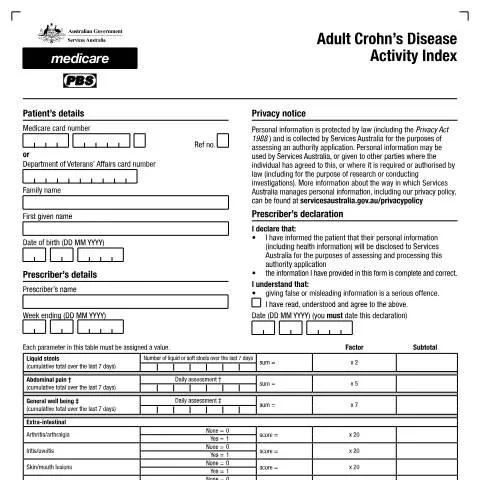
The PB393 form is meticulously structured to capture various aspects of a patient's health status. Each section of the form plays a crucial role in the overall assessment. Here’s a breakdown of its key components:
| Section | Description |
|---|---|
| Patient Details | Basic information such as name, age, and contact details. |
| Medical History | Previous treatments, surgeries, and any relevant comorbidities. |
| Symptom Assessment | Details of current symptoms, their frequency, and severity. |
| Quality of Life Indicators | Questions related to the impact of Crohn's disease on daily activities. |
| Medication and Treatment | Current medications being taken by the patient and their efficacy. |
The Journey of Submission: From Completion to Review
Once the form is filled out, understanding the submission process becomes paramount. Typically, the following steps outline what happens next:
- Review by the Healthcare Provider: Before submission, the healthcare provider should thoroughly review the completed form with the patient to ensure all information is accurate and comprehensive.
- Submission to Services Australia: The completed form must be submitted to Services Australia, specifically to the relevant department handling health support. This submission can often be done electronically through secure channels.
- Awaiting Analysis: After submission, the form will be analyzed to determine the level of disease activity. This evaluation is crucial for adjusting treatment plans or applying for necessary health services.
Important Timelines: When to Submit PB393
Understanding the timelines associated with submitting the PB393 is essential for both patients and health professionals. Here’s a general outline of key dates and deadlines:
- Regular Assessments: The PB393 form should ideally be submitted every six months to monitor changes in the patient’s condition.
- Post-treatment Evaluations: Following any significant changes in treatment or symptoms, the form should be filled out and submitted to reassess the patient's condition.
- Urgent Cases: In the event of an acute flare-up, it is advisable to complete and submit the form as soon as possible for immediate support services evaluation.
Distinguishing PB393 from Other Related Forms
The PB393 form may be confused with similar documents intended for different purposes. Here’s how it stands apart:
- Specificity: Unlike general health assessment forms, PB393 is tailored specifically for assessing Crohn’s disease activity, containing questions and metrics that directly relate to this condition.
- Targeted Audience: The PB393 is exclusively for adult patients, whereas other forms may cater to children or specific subsets of the population.
- Outcome Focus: This form influences treatment plans and health service eligibility uniquely for Crohn’s disease patients, whereas other assessments might not have such direct implications.
Preparing to Complete PB393: Documentation and Considerations
Before completing the PB393, it is crucial to gather all necessary documentation and consider some practical aspects:
- Gather Patient Records: Ensure that all previous medical records, treatment histories, and current medication lists are readily available for accurate reporting.
- Patient Input: Encourage patients to discuss their current symptoms and concerns openly, as their personal insights are vital for accurately filling out the assessment.
- Consultation Timing: Schedule the completion of the form at a time when the patient is least likely to be experiencing acute symptoms to ensure accurate reporting of their condition.
The Impact of PB393 on Treatment and Support
The successful completion and submission of the Adult Crohn’s Disease Activity Index form can have profound implications for both patient care and treatment outcomes:
- Personalized Treatment Plans: The information gathered through the PB393 enables healthcare providers to tailor treatment plans to each patient's specific needs and challenges.
- Access to Resources: By accurately assessing disease activity, patients may gain access to additional resources, therapies, or financial support that might not have been available otherwise.
- Tracking Progress: Regular use of the PB393 facilitates ongoing evaluations of treatment efficacy, ensuring that health professionals can make informed decisions regarding adjustments in care.
Final Thoughts: The Role of PB393 in Managing Crohn’s Disease
The Adult Crohn’s Disease Activity Index form (PB393) is more than just a document; it’s a critical element in the ongoing management of Crohn's disease. For health professionals and patients alike, familiarity with this form enables better communication, precise assessments, and ultimately, improved health outcomes. By paying close attention to the details of the form and the process surrounding it, stakeholders can navigate the complexities of Crohn's disease management with greater efficacy.