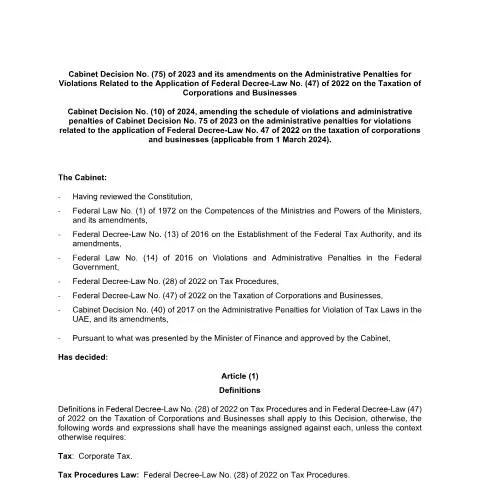
Understanding the New Administrative Penalties in UAE Tax Legislation
The United Arab Emirates (UAE) has recently introduced significant updates to its tax enforcement framework through Cabinet Decision No (75) of 2023. This decision, along with its subsequent amendments, aims to clarify and strengthen the administrative penalties applicable to violations related to the implementation of Federal Decree-Law No (47) of 2022 on the taxation of corporations and businesses. This guide provides an overview of the scope, key provisions, and implications of these regulatory changes for taxpayers and stakeholders operating within the UAE's federal tax system.
Scope and Objective of the Cabinet Decision
The primary purpose of Cabinet Decision No (75) of 2023 is to establish a clear and enforceable set of administrative penalties for violations that occur in the context of federal corporate and business taxation. It is designed to support the effective implementation of the tax law by encouraging compliance and deterring violations through proportionate penalties. The decision applies to all entities subject to federal taxation obligations, including companies, branches, and other taxable persons registered with the Federal Tax Authority (FTA).
Key Provisions and Types of Violations
The decision delineates various violations that may attract administrative penalties, categorized based on the nature and severity of the breach. These include, but are not limited to:
- Failure to register or notify: Non-compliance with registration requirements or delayed notification to the FTA about taxable activities.
- Failure to submit tax returns or reports: Missing deadlines or submitting incomplete or inaccurate tax declarations.
- Non-compliance with record-keeping obligations: Inadequate documentation or failure to maintain proper accounting records as stipulated by law.
- Obstruction or interference: Hindering the FTA’s inspection, audit, or enforcement activities.
- Incorrect or fraudulent information: Providing false information or intentionally manipulating data related to tax obligations.
Each violation type is associated with specific penalties, which are calibrated to the violation’s gravity, aiming to promote compliance while ensuring fairness.
Implementation and Enforcement Mechanisms
The Cabinet Decision emphasizes the role of the Federal Tax Authority in monitoring compliance and applying penalties. The FTA is empowered to issue notices, conduct investigations, and impose administrative sanctions in accordance with the procedures outlined in the decision. Importantly, the decision underscores the importance of procedural fairness, including the right of taxpayers to be informed of violations and to respond or appeal decisions through established channels.
Implications for Taxpayers and Business Entities
For businesses operating in the UAE, understanding these penalties is crucial to maintaining legal compliance and avoiding unnecessary financial or reputational risks. The decision encourages proactive compliance measures, such as timely registration, accurate reporting, and diligent record-keeping. It also highlights the importance of engaging with the FTA’s digital platforms, such as the UAE Pass and the federal portal, to ensure seamless communication and adherence to regulatory requirements.
Moreover, the amendments introduced by this decision aim to streamline enforcement procedures and enhance transparency. Entities are advised to regularly review their tax processes and seek professional guidance if needed, to align with the updated legal framework and mitigate potential penalties.
Conclusion
Cabinet Decision No (75) of 2023 marks a significant step towards strengthening the UAE’s tax compliance environment. By clearly defining administrative penalties for violations, the decision supports the broader objectives of the federal tax law—fostering a compliant, transparent, and efficient taxation system. Stakeholders are encouraged to stay informed about these developments and to leverage digital tools provided by the authorities to ensure adherence to their tax obligations.