Overview of the Recent Amendments to the Federal Tax Penalty Regulations in the UAE
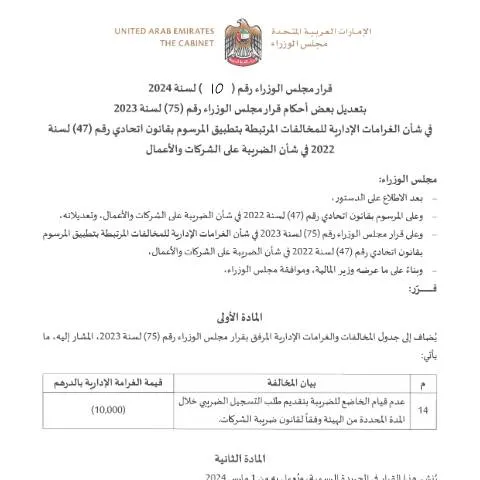
The United Arab Emirates continues to strengthen its commitment to a transparent and efficient tax system through ongoing legislative updates. The recent issuance of Cabinet Resolution No (10) of 2024 introduces important amendments to existing regulations concerning administrative penalties related to the implementation of federal tax laws. This notice provides an overview of the scope, implications, and key points of this new resolution, aimed at businesses and tax practitioners operating within the UAE’s federal framework.
Scope and Purpose of the Amendments
The primary objective of Cabinet Resolution No (10) of 2024 is to refine and clarify the administrative penalties applicable to violations of the provisions stipulated in Federal Decree-Law No (47) of 2022 concerning taxation of corporations and businesses. These amendments aim to enhance compliance, provide clearer guidance on penalties, and streamline enforcement procedures across federal and emirate-level tax authorities.
It is important to note that these amendments are part of the UAE government’s broader strategy to promote digital compliance and ensure that tax obligations are met efficiently through the use of advanced electronic systems managed by the Federal Tax Authority (FTA). The resolution emphasizes adherence to the legal framework established by the UAE Constitution, which balances federal authority with emirate-level autonomy, particularly in fiscal matters.
Impacted Parties and Compliance Obligations
The amendments are relevant to all entities subject to federal taxation under the applicable laws, including corporations, businesses, and their representatives. Taxpayers are advised to review their compliance procedures to align with the updated penalties and avoid potential sanctions. The resolution also addresses tax consultants and legal advisors involved in tax filings and dispute resolution, emphasizing the importance of accurate reporting and timely submission of tax documents.
Key Provisions and Changes Introduced
While the specific legal texts are available only in the official Arabic version, the resolution generally aims to:
- Refine penalty categories: Clarify the types of violations that attract administrative penalties, including late submission, incorrect reporting, or failure to maintain proper records.
- Adjust penalty amounts and procedures: Standardize the application process for penalties and ensure consistency across different violation types, with a focus on digital enforcement mechanisms.
- Enhance procedural transparency: Establish clear timelines and notification procedures for penalty imposition, leveraging the UAE Pass digital identity system for efficient communication.
- Introduce new enforcement measures: Enable the tax authorities to impose additional sanctions or corrective actions in cases of repeated violations or serious non-compliance.
Legal References and Authority
This resolution is issued by the Cabinet of the UAE, under the authority granted by the country’s legal framework to regulate tax administration and enforcement. It complements the existing provisions of federal law and aligns with the UAE’s commitment to digital transformation and legal clarity in tax matters.
Taxpayers and legal practitioners are encouraged to consult the official texts published through the UAE government’s digital portals, including the Federal Authority for Taxation (FTA) and the Ministry of Finance (MOF), for detailed legal references and procedural guidance.
Implications for Tax Compliance in the UAE
The amendments introduced by Cabinet Resolution No (10) of 2024 underscore the UAE’s strategic move towards a more digitized, transparent, and efficient tax administration system. Entities are urged to review their compliance frameworks accordingly, ensuring that their reporting, record-keeping, and communication channels are aligned with the updated regulations.
Adopting digital tools such as the UAE Pass and the integrated online portals provided by the FTA will be essential for timely and accurate tax filings. Staying informed about these legislative updates helps businesses avoid penalties and demonstrates proactive compliance with the UAE’s evolving tax legal environment.
For further details, stakeholders should refer to official communications issued by the Federal Cabinet and consult with authorized tax consultants or legal advisors familiar with the latest amendments.