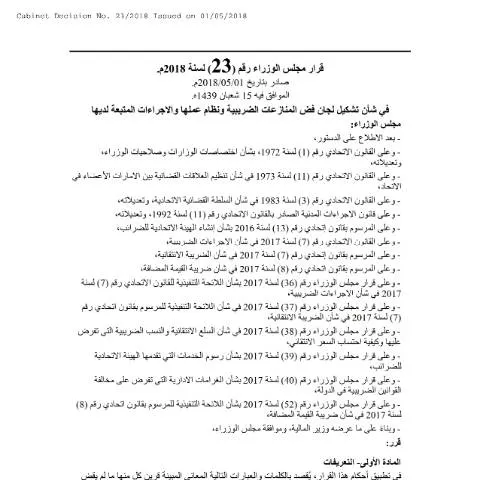
Understanding the Formation and Functioning of Tax Disputes Resolution Committees in the United Arab Emirates
The United Arab Emirates (UAE) has established a comprehensive legal framework to address tax disputes effectively, ensuring transparency and fairness in the resolution process. Central to this framework is the Cabinet Resolution No (23) of 2018, which delineates the formation, operational procedures, and jurisdiction of Tax Disputes Resolution Committees (TDRCs). This guide provides an overview of the resolution mechanisms outlined in this resolution, targeting taxpayers, legal practitioners, and tax authorities involved in tax dispute management within the UAE.
Context and Purpose of the Resolution
Cabinet Resolution No (23) of 2018 was enacted to formalize and streamline the process of resolving tax disputes between taxpayers and the Federal Tax Authority (FTA). Recognizing the importance of a specialized, efficient, and transparent dispute resolution system, the resolution establishes dedicated committees tasked with reviewing and settling disputes arising from tax assessments, penalties, and other tax-related issues. This legal instrument aligns with the UAE’s broader strategy to enhance the digitalization of tax procedures and reinforce compliance with tax laws under the federal legal system.
Composition and Formation of Tax Disputes Resolution Committees
The resolution specifies that TDRCs are composed of qualified members with expertise in tax law, finance, and administrative procedures. These committees are formed at the federal level, under the auspices of the FTA, and are designed to operate independently to ensure impartiality. The formation process involves appointment procedures managed by the FTA, which ensures that members meet the necessary professional standards and adhere to confidentiality and ethical requirements.
Scope of Work and Procedures
The primary role of the TDRCs is to review disputes concerning tax assessments, penalties, and other tax-related decisions issued by the FTA. The resolution emphasizes a structured process that encourages taxpayers to submit their disputes through a formal appeal system, which is accessible via the FTA’s digital platform. The resolution details the procedures for submitting appeals, including deadlines, required documentation, and the format of submissions, all designed to facilitate a smooth and transparent process.
Once a dispute is submitted, the committee conducts a thorough review, which may include hearings, examination of evidence, and consultations with relevant parties. The decision rendered by the TDRC is binding unless challenged through further legal channels, in accordance with the procedures outlined in the resolution. The emphasis on digital communication and documentation aligns with the UAE’s broader digital government initiatives, ensuring efficiency and traceability in dispute resolution.
Implications for Taxpayers and Authorities
Taxpayers are encouraged to utilize the dispute resolution mechanisms established by the resolution to address disagreements with the FTA’s assessments or penalties. The process aims to provide a fair, accessible, and efficient avenue for dispute settlement, reducing the need for lengthy litigation. For tax authorities, the resolution reinforces the importance of adhering to procedural fairness and transparency, fostering trust in the tax system.
References and Regulatory Framework
This resolution forms part of the UAE’s broader tax legislation framework, which includes provisions for tax registration, compliance, and enforcement. It complements other legal instruments and guidelines issued by the FTA and relevant federal authorities. The resolution underscores the UAE’s commitment to maintaining a modern, digitalized tax environment aligned with international standards.
For detailed information on the formation, procedures, and operational guidelines of the Tax Disputes Resolution Committees, stakeholders are advised to consult the official publications issued by the Federal Tax Authority and the relevant federal legal sources.