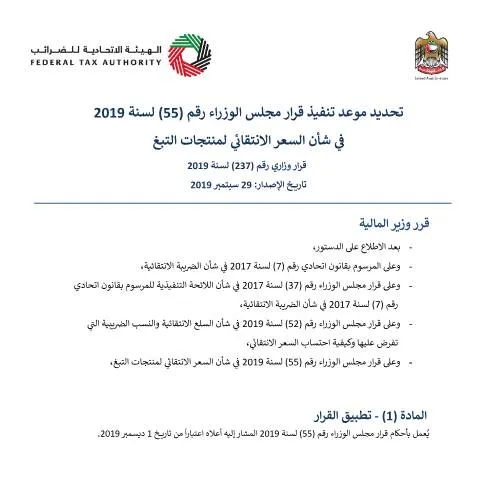
Understanding the Cabinet Resolution No (55) of 2019 on the Excise Price of Tobacco Products in the UAE
The United Arab Emirates (UAE) has implemented a comprehensive framework for regulating the taxation of tobacco products through Cabinet Resolution No (55) of 2019. This resolution is part of the country's broader efforts to align fiscal policies with public health objectives, ensuring that tobacco products are subject to appropriate excise duties. This guide provides an overview of the resolution’s scope, key provisions, and implications for stakeholders involved in the tobacco supply chain and taxation compliance.
Scope and Objective of the Resolution
The primary aim of Cabinet Resolution No (55) of 2019 is to establish the minimum excise price for tobacco products sold within the UAE. By setting a standardized excise price, the resolution seeks to prevent the under-invoicing and smuggling of tobacco, combat illicit trade, and promote health awareness among consumers. It applies to all tobacco products subject to excise tax under federal law, including cigarettes, cigars, and other smoked tobacco products.
The resolution complements existing federal legislation on excise tax, reinforcing the regulatory framework and ensuring consistency in tax application across all emirates. It is part of the UAE’s commitment to fiscal transparency and public health, aligning with international best practices in tobacco control.
Key Provisions and Regulatory Requirements
Setting the Excise Price
The resolution defines the minimum excise price for tobacco products, which serves as a threshold for taxation purposes. This minimum price is intended to be a baseline that manufacturers and importers must adhere to when pricing their products. The regulation mandates that the excise price must be clearly indicated on the packaging and invoices, ensuring traceability and compliance.
Scope of Application
- All tobacco products imported into or manufactured within the UAE.
- Products distributed through retail outlets, wholesale, or online platforms.
- Entities involved in the production, importation, distribution, or retail of tobacco products must comply with the prescribed excise pricing regulations.
Enforcement and Compliance
Authorities such as the Federal Tax Authority (FTA) are responsible for monitoring adherence to these provisions. Regular inspections, audits, and market surveillance are carried out to ensure that no tobacco product is sold below the established minimum excise price. Non-compliance may result in penalties, including fines, confiscation of goods, or suspension of trading licenses.
Implications for Industry Stakeholders and Consumers
Manufacturers, importers, and distributors must review their pricing strategies to ensure full compliance with the minimum excise price set forth in the resolution. Transparency in pricing, accurate invoicing, and proper labeling are essential components of legal compliance. Failure to meet these requirements can lead to legal penalties and reputational damage.
For consumers, the resolution aims to reinforce the legal market for tobacco products, reduce the availability of illicit goods, and promote awareness of the health risks associated with smoking. The clear indication of excise prices on packaging helps consumers make informed choices and discourages the purchase of cheaper, potentially untaxed products.
Conclusion
Cabinet Resolution No (55) of 2019 represents a significant step in the UAE’s efforts to regulate tobacco taxation effectively. By establishing a minimum excise price, the resolution seeks to enhance tax compliance, curb illicit trade, and support public health initiatives. All stakeholders involved in the tobacco supply chain should familiarize themselves with the provisions of this resolution to ensure adherence and avoid penalties. For detailed guidance and updates, entities are encouraged to consult the Federal Tax Authority and relevant official publications.