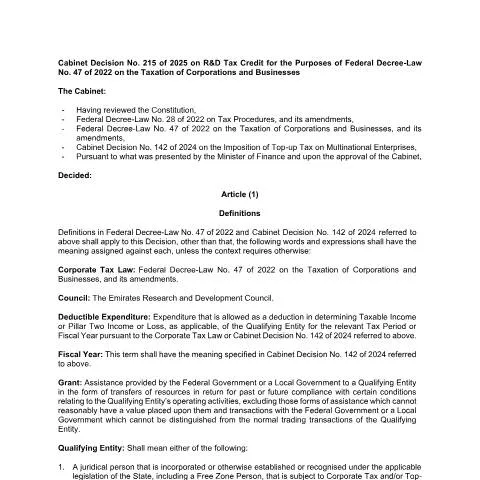
Overview of the Research & Development Tax Credit under Cabinet Decision No. 215 of 2025
The United Arab Emirates has recently introduced a significant legislative measure aimed at fostering innovation and encouraging investment in research and development activities within the country. The new regulation, known as Cabinet Decision No. 215 of 2025, establishes a framework for granting tax credits to entities engaged in qualifying research and development (R&D) projects. This initiative aligns with the UAE’s broader strategic goals of diversifying the economy and positioning itself as a global hub for innovation and technological advancement.
Scope and Objectives of the Legislation
The primary objective of Cabinet Decision No. 215 of 2025 is to incentivize companies operating within the UAE to increase their R&D activities by providing tax benefits. The legislation targets a wide range of entities, including local corporations, foreign investors, and specialized research institutions, that undertake eligible R&D projects aligned with national priorities. The decision aims to reduce the financial burden associated with innovation efforts and stimulate sustainable economic growth through technological development.
Key Provisions and Eligibility Criteria
Eligible Activities
- Development of new products, processes, or services that demonstrate innovation or technological advancement.
- Enhancement of existing products or processes through systematic research efforts.
- Implementation of pilot projects or prototypes that contribute to technological progress.
Qualifying Entities
- Legal entities registered and operating within the UAE, including companies, startups, and research institutions.
- Entities engaged in activities that meet the criteria defined by the legislation and approved by relevant authorities.
Conditions for Claiming the Tax Credit
- Proper documentation of R&D activities, including project plans, progress reports, and financial records.
- Registration of the R&D project with the designated federal or emirate-level authorities, as applicable.
- Compliance with the technical and financial reporting standards set forth by the Ministry of Finance and other relevant bodies.
Implementation and Application Process
Entities seeking to benefit from the R&D tax credit should initiate the process via the official digital platforms provided by the UAE government. This typically involves submitting an application through the relevant portal, which is integrated with the federal and emirate-level systems. The application must include detailed documentation of the R&D activities, financial statements, and proof of registration.
Once submitted, the application undergoes review by the designated authorities, which assess the eligibility based on the criteria outlined in the legislation. Approved applicants are then eligible to receive the tax credit, which can be applied against their corporate tax liabilities, subject to the conditions specified in the decision.
Implications for Businesses and the Innovation Ecosystem
The introduction of the R&D tax credit under Cabinet Decision No. 215 of 2025 marks a strategic step towards fostering an innovation-driven economy in the UAE. Businesses engaged in research activities can now benefit from reduced tax burdens, thereby increasing their capacity to invest in new technologies and innovative solutions. This policy is expected to attract foreign direct investment and encourage local startups to scale their research efforts.
Furthermore, the legislation promotes transparency and standardization in reporting R&D activities, aligning the UAE’s corporate tax framework with international best practices. It also complements existing initiatives aimed at building a robust innovation ecosystem, including funding programs, incubators, and partnerships with global research institutions.
Conclusion
Cabinet Decision No. 215 of 2025 introduces a comprehensive framework for supporting research and development through tax incentives. By clearly defining eligible activities, entities, and procedural steps, the legislation aims to create an attractive environment for innovation. Entities operating within the UAE are encouraged to review the detailed guidelines issued by the Ministry of Finance and related authorities to ensure compliance and maximize the benefits of this new policy.
As the UAE continues to position itself as a leader in technological advancement and innovation, the R&D tax credit represents a vital tool in achieving these national ambitions, fostering a culture of research, and accelerating economic diversification efforts.