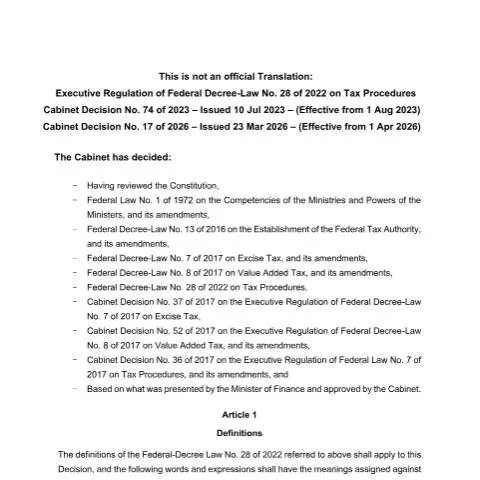
Understanding the Executive Regulation of Federal Decree-Law No (28) of 2022 on Tax Procedures in the UAE
The United Arab Emirates has recently introduced significant updates to its tax legislation framework through the issuance of Cabinet Decision No (74) of 2023. This decision serves as the executive regulation of the broader Federal Decree-Law No (28) of 2022 concerning tax procedures. It aims to clarify the operational aspects of tax compliance, reporting, and enforcement, aligning with the UAE's ongoing efforts to enhance its fiscal transparency and compliance environment.
Scope and Objectives of the Regulation
The regulation applies to all taxpayers operating within the UAE, including individuals, corporate entities, and other legal persons subject to federal tax laws. Its primary objective is to provide detailed procedures to ensure consistent application of tax laws across the emirates, supporting the UAE’s commitment to creating a transparent, efficient, and user-friendly tax system.
This regulation emphasizes digital processes and aims to streamline interactions between taxpayers and tax authorities. It aligns with the UAE’s broader digital transformation strategy, leveraging online portals and electronic communication channels to facilitate compliance and reduce administrative burdens.
Key Provisions and Operational Guidelines
Tax Registration and Identification
The regulation stipulates clear procedures for tax registration, including the issuance and management of the tax registration number, which is integral to all tax-related filings and communications. Taxpayers are encouraged to utilize the electronic platforms provided by the Federal Tax Authority (FTA) for registration and amendments, ensuring accuracy and timeliness.
Tax Filing and Payment Procedures
Taxpayers are required to submit their tax declarations electronically through the designated FTA portals. The regulation specifies deadlines, formats, and supporting documentation for filings, emphasizing the importance of timely compliance. Payment procedures are also streamlined via digital channels, with clear instructions on methods and confirmation of transactions.
Record-Keeping and Documentation
Maintaining accurate records is vital under this regulation. Taxpayers must keep detailed documentation supporting their tax declarations, including invoices, receipts, and financial statements. These records should be retained for the period specified by law to facilitate audits or reviews by tax authorities.
Audit and Enforcement
The regulation provides detailed procedures for tax audits, including notification processes, access to records, and rights of taxpayers during audits. It underscores the importance of cooperation and transparency, with the tax authorities empowered to impose penalties or sanctions in cases of non-compliance or fraudulent activities.
Implications for Taxpayers and Practitioners
For taxpayers, the regulation reinforces the importance of digital compliance and proactive engagement with the tax authorities. It clarifies procedural aspects that were previously less defined, reducing ambiguity and enhancing legal certainty.
Tax practitioners and advisors should familiarize themselves with the detailed procedures outlined in this regulation to assist clients effectively, ensuring adherence to the legal requirements and leveraging digital tools for efficient tax management.
Conclusion: Moving Towards a Digital and Transparent Tax Environment
The issuance of Cabinet Decision No (74) of 2023 marks a significant step in the UAE’s journey toward a sophisticated, transparent, and efficient tax system. By formalizing operational procedures and emphasizing digital channels, the regulation aims to facilitate compliance, improve enforcement, and foster a business environment aligned with international standards.
Stakeholders are encouraged to review the regulation thoroughly and integrate its provisions into their tax practices to ensure full compliance and benefit from the UAE’s progressive fiscal framework.